Black History Month – Alliance Statement and Interview with Dr. Akeem Stewart, Provincial Lead Black Health and Wellness

Alliance for Healthier Communities graphic with text that reads: Celebrating Black History Month 2026: Our Statement and Interview with Provincial Black Health Lead Dr. Akeem Stewart
Date: 
le Vendredi 13 Février 2026

Throughout Black History Month, there will be opportunities to celebrate Black history, culture and innovation, chances to learn about the achievements and contributions of Black Canadians to life in this country and beyond, and important lessons and history to learn. Especially during this month, but also every day, we have the chance to learn about history from the stark facts of oppression and the history of anti-Black racism here in Canada, and its ongoing impacts on Black people and communities and their health.

In Canada, it is a milestone year recognizing three decades officially marking Black History Month in February as a nation. The theme set out by the federal government this year is: “30 Years of Black History Month: Honouring Black Brilliance Across Generations — From Nation Builders to Tomorrow’s Visionaries.” Black history in Canada, and even Black History Month itself, predate the motion brought in the House of Commons in December 1995, made by the Honourable Jean Augustine, the first Black Canadian woman elected to Parliament. That motion, and the motion made in 2008 by Senator Donald Oliver, the first Black man appointed to Canada’s Senate, “to Recognize Contributions of Black Canadians and February as Black History Month” both passed unanimously. Black leaders, historians and community advocates spent decades before that bringing Black histories and stories to life, and advocating for regional Black History Months, in Ontario, Toronto and elsewhere. It is a month-long celebration and opportunity that was and is decades in the making. Black History Month is remade every year, with an eye on the past, present and future.

As we look ahead to the future, from a present that is increasingly unstable and often regressive and racist, in its attitudes, policies and system changes, we must continue to find ways to build on the solidarity and single voice used to speak out against anti-Black racism, oppression, and systemic discrimination. In health care and social services, ensuring health equity and culturally safe care is an issue of life and death, and a key path towards a more just and equitable future. At the Alliance for Healthier Communities, one of the key drivers of that path of health equity for Black people and communities in Ontario is the Black Health Committee. Made up of Alliance members working with Black health partners across Ontario and Canada, the Black Health Committee is striving to better understand the needs of Black people and communities, and the barriers they face, to innovate to serve African, Caribbean, Black communities better and in more culturally safe ways, and to measure the results and impacts.

The Alliance spoke with Dr. Akeem Stewart, Provincial Lead Black Health and Wellness, in advance of Black History Month, to get a deeper sense of the work being done right now to improve Black health and wellbeing, and where the focus of the Black Health Committee and its partners will be in the months ahead. Here are some of the highlights from our conversation:

Alliance: As Ontario is in the middle of a transformation and expansion of Primary Care teams, can you speak to the importance for Black health of focusing on the local needs of community, and tailoring Primary Care and its services and programs to be culturally safe?

Dr. Stewart: We have to understand that primary care is really important, especially when it comes to community. There is far more that goes into primary care than just seeing someone for a common cold. It is that first line of defence that educates and shows patients that changes to lifestyles can help with the preventative aspect of wellness. That is the cure to the heavy load of what is occurring at the tertiary and acute levels of health care. You have to reach communities where they’re at. It’s important to be sure that the visibility of what we’re doing is being seen through a lens that is honest and true that the community can relate with. This is also why communication is so important. The community has to be part of what we are trying to build together. We can't build something for people if we don’t have their input. The community is the heart and foundation of primary care, and their support is critical in determining how we step forward to be able to serve them better.

Alliance: Can you speak to some of the work that you and the Black Health Committee and its members and partners have undertaken so far?

Dr. Stewart: When you start to see exactly where the health disparities exist and understand the population that you’re engaging and communicating with, as well as treating, certain trends will become apparent. Whether it’s Black men’s health, Black maternal health, Black seniors’ health or otherwise, it gives you opportunities to start to create conversations when it comes to preventative care, and give people opportunities to come into places where they’re safe. It’s important to have these conversations from a space of resilience, but not from a space of lack. For example, if I need to speak to someone about prostate cancer and screening, I would speak about the importance of prostate cancer, how we can become stronger as men within the role, for our families, by making sure we get tested and not taken by a disease that is curable. But I wouldn’t speak to someone about prostate cancer and say, “Oh, I've had a family member who’s died and I wouldn't want that happen to you.” Both examples are conveying the same message, but one narrative comes from a place of fear-mongering, and the other from a place of empowerment.

That’s the principle that Ubuntu lies within. I am because you are. It’s supposed to empower you to be able to step forward and embrace that sense of togetherness that you find within community. That is the cure for a lot. Once we have community, you have unlimited access to the support it provides, and you have people around who you can have those health-related conversations with. Then you can start to really remove those myths, barriers, and taboo misconceptions from conversations about health that really and truly should be more normalized. 

Alliance: Can you speak to some of the work that’s been done and is being done to address health disparities faced by Black people and communities through better, more tailored primary care?

Dr. Stewart: There is the SCAGO (Sickle Cell Awareness Group of Ontario), who are doing fantastic work on sickle cell anemia and being able to treat it at a primary care level. We are also looking at the Ontario Renal Network, where they are focusing on making sure that Black people with chronic kidney disease, who we know face significant disparities accessing care, are getting the treatment that they need. This ranges from dialysis to transplants.

You can see systemically that they’re trying to address the gaps. The concern is that there are many, and they are multi-faceted. We have a gap in knowledge and data with Black maternal health, despite the copious efforts being done to address this. There are also still major gaps with Black mental health – especially with our youth. That’s also being addressed with the great work being done by the Centre for Addiction and Mental Health (CAMH) and its AMANI program. They have built something special that is truly focused on Black youth, providing a safe space to have these conversations. However, there’s still a lot of opportunity to make it more widespread, but in the areas where they are doing it, it’s been seeing really great results so far.

Alliance: The Black Health Committee is engaged with medical students, and a program to introduce Black physicians to the Model of Health and Wellbeing that is used by Alliance members. How’s that work going?

Dr. Stewart: It’s been really good. So much so it’s been expanded, actually. We have four or five participating sites when the program first launched. As of last year we are up to eight or nine sites total. We had at least 10 students enrolled in the program last year as well. With the community health education program, we’re allowing students of Black culture to come into community health centres and see the work that’s being done to treat those of their community and learn about primary care at the level of community health. It’s important to be focused on diversity in our sector, and championing that representation of Black doctors coming through the pipeline, especially into primary care.

Alliance: What is ahead for the Black Health Committee right now, and what other message would you like to send about Black Health at the beginning of Black History Month across Ontario and Canada?

Dr. Stewart: I think the biggest thing is that we are really trying to ensure that a continued holistic effort is put forward and that we work as a collective. We want to continue to maintain the standard of transparency that is critical to what the Black Health Committee is. We’re really trying to make sure that everyone around us can look at the work being done and the partnerships being formed and say, “OK, we’re ready to get involved and invigorate and inspire.” That is what we want to do. With the work that is being discussed at all different levels, we have a special opportunity to come together and put that into action, and we want to make sure that we stay aligned with the community while we do this. The quantitative narrative is allowing us to speak in rooms where we may not be seated. That's where we want it to sit. So we can tell the story, show the trends, what works, what doesn't work – and how it is really making a difference in our communities. Sickle cell is a great example of that, how they took the model and went across many, many different areas. But it still has a lot of opportunity to grow. 

We don't want to get comfortable. We want to continue to keep growing to make sure that we can serve everybody. We’re opening the door for the population – the whole population. We’re talking about 2SLGBTQ+ communities; within that, there’s a Black population. We’re talking about the Indigenous communities; within that, there’s a Black population. We’re also talking about newcomers, Francophones, people experiencing homelessness. They all have a Black population. So, this is important to understand that the health that we are focusing on is not just Black; it stretches across every single high-priority population. We’re doing this work because we’re here to provide primary care for those who’ve been strategically marginalized for over 400 years, to ensure culturally safe care for all.

Lunch & Learn: Gender-Affirming Care for Youth

This event is presented by the Alliance for Healthier Communities 

We live in a gender-diverse world and youth are no different. From a healthcare perspective, providing gender-affirming care is not a choice; it is essential for all people. Many primary care teams feel that they lack the expertise or knowledge to perform gender-affirming care, but most of the services that 2SLGBTQIA+ youth need to access are primary care services. Gender-affirming care can be freely provided to all youth safely with the right tools. This is the message our guest, Dr. Ian Johnston, Consulting Pediatrician at Chatham-Kent Community Health Centre, wants all primary care providers to hear. Gender-affirming care for youth is safe and routine primary care, and they can be providing it, too.

Join us for the first 2026 Lunch & Learn from the Alliance’s 2SLGBTQIA+ Advisory Committee where you will hear from a physician on the ground who provides gender-inclusive care to youth. During this hour-long session, you will hear highlights of the clinic, details on the types of patients seeking care, and why Dr. Johnston believes everyone can provide gender-inclusive care. There will be an opportunity for attendees to ask questions after the presentation.

Détails
le Jeudi 5 Mars 2026 - 11:30
11:30 am - 12:30 pm
Coût : 
Free
Internal/External: 
Type d’événement : 
Emplacement

Public Health and Collaborative Governance in Extreme Heat Response: Evidence from Canadian Provinces and Urban Centers

This hybrid event is presented by the Collaborative Centre for Climate, Health & Sustainable Care at the University of Toronto as part of their Climate & Health Seminar Series

Join the Collaborative Centre for Climate, Health & Sustainable Care and the North American Observatory on Health Systems and Policies (NAO) for our upcoming seminar, Public Health and Collaborative Governance in Extreme Heat Response: Evidence from Canadian Provinces and Urban Centers featuring Dr. Sara Allin, Director of the NAO and Associate Professor of Health Policy, at the Institute of Health Policy, Management and Evaluation, Dalla Lana School of Public Health, at the University of Toronto.

This presentation will share results from a CIHR-funded project exploring the governance of heat responses in Canada, with two parts: first, a scoping review of the academic and grey literature to characterize the roles of public health authorities in climate action, with a focus on extreme heat in three provinces (British Columbia, Ontario, and Quebec); and, second, a qualitative comparative case study with interviews with key stakeholders to identify and assess governance mechanisms supporting collaborative action on extreme heat in three cities (Vancouver, Toronto, and Montreal). Implications for public health authorities and their role in climate action, and broader climate resilience, will be discussed.

Détails
le Mercredi 1 Avril 2026 - 12:00
12-1 pm (virtual), 12-2 pm (in person)
Coût : 
Free
Internal/External: 
Type d’événement : 
Emplacement
Hybrid Event (Zoom, University of Toronto)
Toronto, ON

Using An Equity-Focused Population Health Approach to Gender-Based Violence Prevention to enable local public health action

This webinar is presented by the National Collaborating Centre for Determinants of Health (NCCDH)

Gender-based violence has significant immediate and long-term impacts on health, yet it has not been systematically addressed by public health systems. This webinar brings together a talented panel of speakers from Ontario to present a framework that builds understanding and guides public health planning, policy, and action to prevent gender-based violence.

This webinar will be presented in English with simultaneous translation provided by Wordly.

# Speakers:Event poster listing date, time, and webinar description

  • Marianne Stewart, Manager, Children, Youth and Families, Thunder Bay District Health Unit
  • Lia De Pauw, Mental Health Promotion Specialist, Southeast Public Health
  • Dr. Helle Møller, Associate Professor, Lakehead University, Department of Health Sciences
  • Nana Nyarkoa-Oduro, MPH Student, Lakehead University, Department of Health Sciences
Détails
le Mardi 24 Février 2026 - 12:00
12-1:15 pm
Emplacement
Webinar

2026 Vohra Miller Lectures Event: Who Gets Care When Systems Are Under Strain? Equity and Primary Care in Public Health Emergencies

This lecture is hosted by the Institute of Health Emergencies & Pandemics at the University of Toronto

# Event Description  

The sixth-annual Vohra Miller Lectures in Critical Public Health Issues, in collaboration with the Institute of Health Emergencies and Pandemics, aims to foster a dialogue on how intersecting forms of oppression—such as race, disability, and immigrant status—compound the challenges faced by these groups in Ontario when trying to access primary care during health emergencies. We will explore the structural barriers that hinder their access to healthcare, rehabilitation, and social services, while discussing the broader impacts on mental health, access to care, and economic stability. The discussion will propose strategies that contribute to the creation of a more inclusive and equitable healthcare system. 

Panelists Prof. Chavon Niles, Hon. Kamal Khera P.C., and Liza Arnason will share learning outcomes and their perspectives to address topics posed by panelist and moderator Prof. Arjumand Siddiqi. 

# Panelists will explore some of the following issues: 

  • How intersecting oppressions shape access to primary care during health emergencies 
  • Structural barriers within Ontario’s healthcare, rehabilitation, and social service systems 
  • Downstream impacts on mental health, economic stability, and long‑term well-being 
  • Strategies and policy solutions for building a more equitable, inclusive, and resilient healthcare system 

The live event will only be held in person, but a recording will be available after the event on YouTube. Participants who attend in person are invited to join a meet-and-greet with the panelists after the event.  

Détails
le Jeudi 12 Mars 2026 - 17:30
5:30-7:30 pm
Coût : 
Free
Internal/External: 
Type d’événement : 
Emplacement
Faculty Club - University of Toronto
41 Willcocks Street
Toronto, ON M5S 3G3

Recommandations Prébudgétaires 2026 de l'Alliance: Renforcer les soins de santé primaires et accroître le rattachement à l’aide des maisons de santé de proximité et des agents de liaison

Date: 
le Lundi 2 Février 2026

30 janvier 2026

L’honorable Peter Bethlenfalvy Ministre des Finances de l’Ontario

Objet : Mémoire prébudgétaire – Renforcer les soins de santé primaires et accroître le rattachement

Monsieur le ministre,

L’Ontario s’est fixé un objectif louable et nécessaire : assurer, d’ici 2029, le rattachement de chaque Ontarienne et chaque Ontarien à une équipe de soins primaires, c’est-à-dire l’accès à une relation durable et documentée. L’Alliance pour des communautés en santé représente 118 organisations de soins primaires gérées par la communauté qui aident les personnes et les communautés faisant face aux plus grands obstacles dans l’accès aux soins. Chaque jour, nous observons et évaluons l’impact positif des soins primaires dispensés en équipe sur la santé de la population. Ces soins permettent de soulager la pression sur les services d’urgence et d’assurer la santé des gens dans leur propre communauté.

Nous vous remercions de l’attention particulière que votre gouvernement accorde à l’expansion des soins primaires et pour les mesures prises pour établir des modèles fondés sur le travail en équipe dans l’ensemble de la province. En tant que partenaires dans ces efforts, nous voulons mettre de l’avant dans le cadre du budget 2026 deux approches pratiques et très efficaces que les cliniciens communautaires utilisent déjà avec succès pour accroître le rattachement et améliorer l’efficacité : les maisons de santé de proximité et les agents de liaison.

Les maisons de santé de proximité, aussi appelées « maisons de santé de quartier », renforcent les capacités en mettant en commun et en partageant des ressources entre les partenaires locaux de soins primaires. Elles adoptent une structure en étoile : un établissement qui s’appuie sur le travail d’équipe, comme un centre de santé communautaire, est un carrefour qui fournit des soins primaires sur une base continue, des ressources sociales et des services de promotion de la santé. De plus, ces « maisons » mettent les patients en contact avec des programmes et services communautaires. Cette collaboration de proximité permet d’optimiser les ressources actuelles, d’améliorer l’accessibilité aux soins interdisciplinaires et de rattacher un plus grand nombre de personnes à une équipe de soins primaires. Cette méthode de travail améliore les résultats et l’expérience des patients et des prestataires, tout en optimisant l’utilisation des deniers publics.

Les agents de liaison sont une pièce maîtresse de cette démarche concertée. Ces personnes permettent aux médecins, au personnel infirmier praticien et à leurs équipes de se concentrer sur les soins médicaux, mais aussi de s’assurer que leurs patients reçoivent de l’aide pour les questions sociales et pratiques qui influencent leur santé. Lorsque les cliniciens repèrent un patient qui pourrait tirer profit d’un soutien non clinique, l’agent de liaison le redirige vers les ressources adéquates, qu’il s’agisse d’obtenir des prestations, de participer à des programmes d’exercices pour les personnes âgées, de trouver une aide au logement ou d’entrer en contact avec des groupes de pairs locaux. Cette démarche est souvent faite par l’intermédiaire d’organisations partenaires au sein de la maison de santé de proximité. L’accès aux agents de liaison par l’intermédiaire d’équipes de soins primaires permet de limiter les visites répétées pour des soins de santé primaires, de réduire le recours aux urgences, et de créer la capacité nécessaire pour rattacher davantage de patients. Cette approche est déjà mise en place dans plusieurs régions de l’Ontario, et elle présente un grand potentiel d’expansion et de flexibilité.

En même temps, le personnel de soins primaires en Ontario fait face à de lourdes pressions. Les défis de recrutement et de rétention, l’augmentation des coûts d’exploitation et les délais importants de modernisation des infrastructures rendent difficile pour les équipes de maintenir les services et d’accroître le rattachement. Nous savons également que, pour réussir dans les soins de santé mentale et de toxicomanie, nous devons investir dans des logements avec des services de soutien.

Nous pensons qu’avec des investissements ciblés, l’Ontario peut s’appuyer sur les récents progrès et renforcer le système d’une manière qui profite aux patients, aux communautés et au système de santé dans son ensemble.

Pour soutenir ces efforts, nous demandons respectueusement au gouvernement de l’Ontario d’examiner les priorités suivantes pour le budget 2026 :

  • Promouvoir l’approche des maisons de santé de proximité par l’expansion des EISP (aucun investissement supplémentaire requis) et étendre les rôles des agents de liaison à l’ensemble des équipes de soins primaires, notamment en les intégrant comme élément obligatoire de l’expansion des EISP afin d’accroître les capacités et le rattachement ;
  • Accélérer le financement pour le recrutement et la rétention en débloquant immédiatement les fonds pour les années 2 et 3 afin que les équipes puissent stabiliser leurs effectifs et combler les écarts salariaux de longue date; cela comprend 430,9 millions de dollars sur cinq ans dans le secteur des soins primaires, dont 164,5 millions de dollars nécessaires pour les membres de l’Alliance ;
  • Investir dans des outils numériques qui améliorent le rattachement et l’efficacité, notamment des systèmes interopérables, la prise de rendez-vous en ligne et des innovations comme la transcription assistée par l’IA ;
  • Moderniser et accélérer la procédure d’approbation des immobilisations pour les organisations de soins primaires communautaires. Ces améliorations permettront de contribuer au renforcement des capacités locales et à l’amélioration de l’accès aux soins ;
  • Continuer à accorder des fonds pour la stabilisation et les activités opérationnelles, notamment par une hausse de 5 % du budget de base (33,7 millions de dollars) destiné aux organisations de soins de santé primaires gérées par la communauté ;
  • Investir dans les logements avec services de soutien (60 millions de dollars sur deux ans) en vue de créer 5 000 nouveaux logements avec services de soutien, dans le cadre du continuum de soins en santé mentale et en toxicomanie, et ainsi assister les Carrefours AIDE et contribuer à lutter contre l’itinérance et l’offre de drogues toxiques dans tout l’Ontario.

Avec les ressources appropriées, nous pouvons accroître le rattachement des patients et garantir que les Ontariennes et Ontariens reçoivent les soins appropriés près de chez eux.

Nous vous remercions de prendre en considération ce mémoire pour le budget 2026 et de continuer à faire preuve de leadership dans le renforcement des soins primaires en Ontario. Nous serions ravis de pouvoir discuter de ces recommandations et de continuer à collaborer pour atteindre nos objectifs communs. 

Cordialement,

Sarah Hobbs PDG, Alliance pour des communautés en santé


c.c. L’honorable Doug Ford, premier ministre de l’Ontario L’honorable Sylvia Jones, vice-première ministre et ministre de la Santé Matt Anderson, PDG, Santé Ontario


Investir dans les ressources humaines et les activités opérationnelles dans le domaine des soins de santé primaires complets : une base solide pour un système de santé intégré  

Les membres de l’Alliance perdent du personnel de soins de santé primaires au profit d’autres secteurs et d’autres parties du système de santé. Lorsque les résidents de l’Ontario ne peuvent obtenir des soins de santé primaires dans leur communauté, d’autres parties du système de santé, comme les soins d’urgence et les soins actifs, sont soumises à une forte pression.    

Nous pensons que des investissements pour le financement adéquat des soins de santé primaires complets sont essentiels à la mise en place d’un système de santé intégré et durable. Un système de soins de santé primaires doté d’un effectif complet peut soulager la pression sur les services d’urgence et les hôpitaux tout en garantissant une utilisation efficace des ressources consacrées aux soins de santé. 

Les personnes et les communautés de l’Ontario qui font face aux plus grands obstacles en matière d’accès aux soins de santé comptent sur les membres de l’Alliance pour des communautés en santé pour leur fournir des soins de santé primaires, des services de santé mentale, des services communautaires et d’autres ressources. Il est essentiel pour l’ensemble de notre système de santé que les personnes qui font face à des obstacles puissent avoir accès aux ressources et services dont elles ont besoin dans leur communauté. 

Nous remercions le gouvernement pour ses investissements initiaux visant à régler les problèmes de recrutement et de rétention dans le secteur des soins primaires en Ontario. Toutefois, sans investissements supplémentaires, il existe un risque réel que l’objectif de 100 % de rattachement pour les Ontariennes et Ontariens d’ici 2029 ne soit pas atteint. L’Ontario doit remédier à la crise des ressources humaines dans le domaine des soins primaires en accordant un financement adéquat pour le recrutement et la rétention des professionnels de la santé. Les organisations de soins de santé communautaires ont également besoin d’un financement de base solide pour leurs activités. Avec un financement suffisant, les membres de l’Alliance pourraient immédiatement rattacher davantage de personnes en Ontario à des soins de santé primaires. 

Résumé  

# 1. Investir dans les ressources humaines en santé pour les équipes de soins de santé primaires interdisciplinaires.

Demande budgétaire - Combler l’écart salarial pour atteindre les objectifs en matière de rattachement aux soins primaires

430,9 millions de dollars sur cinq ans

L’Ontario doit débloquer les fonds destinés au recrutement et à la rétention pour les années 2 et 3 (le reste des 142 millions de dollars déjà annoncés) en 2026-2027 afin de garantir que nous puissions atteindre les objectifs en matière de rattachement. L’Ontario doit investir environ 430,9 millions de dollars sur cinq ans, y compris un ajustement annuel de 2,90 %, dans le secteur des soins primaires, afin de combler l’écart salarial important. De cette demande, les membres de l’Alliance ont besoin de 164,5 millions de dollars du gouvernement de l’Ontario pour que les salaires recommandés pour 2023 soient atteints et que le recrutement et la rétention soient possibles. Ainsi, ils seront en mesure de contribuer à l’objectif du gouvernement d’atteindre un taux de rattachement de 100 %.

Ce financement permettra de garantir un système de soins de santé primaires doté d’un effectif complet, capable d’aider les personnes et les communautés et d’éviter une surcharge du système de santé dans son ensemble. 

# 2. Augmenter le financement de base des organisations communautaires de soins de santé primaires afin de préserver la santé des communautés en Ontario.

Demande budgétaire - Financement de base :  

33,7 millions de dollars

L’Ontario doit augmenter de 5 % (33,7 millions de dollars) le budget de base des organisations de soins de santé primaires complets gérées par la communauté. Au cours des 27 dernières années, les membres de l’Alliance n’ont connu qu’une hausse de 6 %. Cette injection financière permettra de maintenir et d’améliorer la qualité des services, de maintenir les activités et de répondre aux besoins croissants des clients et des communautés alors qu’ils vieillissent et s’épanouissent. 

# 3. Allouer des fonds pour l’embauche d’agents de liaison pour mettre les gens en contact avec des soins de santé primaires équitables et adaptés sur le plan culturel.

Demande budgétaire - Agents de liaison :  

9,7 millions de dollars

Les agents de liaison mettent les personnes en Ontario en contact avec des programmes et des services non cliniques qui favorisent leur santé et leur bien-être.  

Les agents de liaison allègent la charge administrative des médecins, du personnel infirmier praticien et des prestataires de soins de santé interdisciplinaires, puisqu’ils mettent les clients en contact avec des programmes communautaires (p. ex., sécurité alimentaire, activité physique, arts et culture, liens sociaux). L’Ontario doit investir 9,7 millions de dollars pour permettre aux équipes de soins de santé primaires de la province d’embaucher des agents de liaison. 

Des programmes d’agents de liaison sont en place dans diverses communautés qui servent notamment les personnes francophones, noires, autochtones et âgées.  

Dans le cadre du projet-pilote de prescription sociale « Rx : Communauté », mené par l’Alliance, 42 % des prestataires ont signalé une baisse du nombre de visites répétées chez leurs clients qui participaient à un programme d’agents de liaison. Un sondage récent a révélé que 59 % des médecins de famille estiment que les agents de liaison peuvent alléger leur charge de travail. Cela permettra aux cliniciens en soins primaires d’accroître le rattachement des personnes sans prestataire de soins primaires.  

# 4. Investir dans les logements avec services de soutien (60 millions de dollars sur deux ans) afin de créer 5 000 nouveaux logements avec services de soutien, dans le cadre du continuum de soins en santé mentale et en toxicomanie.


Demande budgétaire - Logements avec services de soutien :

60 millions de dollars

Les logements avec services de soutien sont des éléments incontournables au rétablissement des maladies mentales. Ils aident les personnes à se rétablir et à éviter des problèmes de santé mentale graves. En termes simples, le logement avec soutien intégré au continuum des soins de santé primaires et des services de traitement en santé mentale constitue un élément extrêmement important des soins de santé préventifs. Il permet de soulager la pression sur les services d’urgence, les soins aigus et les soins primaires. Pour assurer le succès des Carrefours AIDE et d’autres services de santé mentale, il est essentiel d’adopter une approche globale, un modèle « Logement d’abord », qui a fait ses preuves pour sauver des vies et réduire les coûts pour les services de santé publique et les services sociaux, tout en contribuant véritablement à éliminer les obstacles sous-jacents auxquels les personnes font face en matière de santé mentale et de bien-être.

Investissement total : 534,3 millions de dollars 

# Conclusion

Selon les données de l’ICES (Institute for Clinical Evaluative Sciences), la plupart des membres de l’Alliance s’occupent de personnes ayant des besoins sociaux et médicaux plus complexes. Cependant, ils réussissent significativement mieux que les autres modèles de soins primaires à prévenir les visites aux urgences des hôpitaux pour ces personnes.

Nous demandons au gouvernement d’investir 430,9 millions de dollars sur cinq ans pour régler la crise des ressources humaines dans le secteur des soins primaires, notamment une augmentation de 5 % (soit 33,7 millions de dollars) du financement de base des organisations communautaires offrant des soins de santé primaires complets; 9,7 millions de dollars pour embaucher des agents de liaison, ce qui permettra d’offrir des soins interdisciplinaires en équipe qui sont équitables et adaptés à la culture; ainsi que 60 millions de dollars pour des logements avec services de soutien indispensables afin d’assurer le continuum des soins en matière de santé mentale et de toxicomanie dans tout l’Ontario. Ce financement crucial renforcera la santé de l’ensemble de la population ontarienne. Il garantira que chaque individu en Ontario ait accès à des soins adaptés, au moment opportun, et près de chez soi. En nous unissant, nous pouvons garantir que les soins primaires fonctionnent pour tous, constituant ainsi les bases de notre système de santé.

Audit & Feedback and Primary Care Access

This webinar series is presented by the Audit & Feedback MetaLab at Women's College Hospital as part of their Audit & Feedback and Equity Webinar Series

Audit and feedback approaches have the potential to improve access to primary care, but equity must be central to how they are designed and implemented. In this interactive, 60-minute webinar, Dr. Noah Ivers will open with key findings from his audit and feedback Cochrane review, followed by Canadian research and real-world experience shared by Dr. Mylaine Breton and Dr. Onil Bhattacharyya. The session will feature a Québec-based case study on adapted access models in primary care and a facilitated discussion exploring equity considerations, implementation challenges, and future directions for research, policy, and learning health systems.

#


Détails
le Vendredi 6 Février 2026 - 12:00
12-1 pm
Coût : 
Free
Emplacement

Alliance's 2026 Pre-Budget Recommendations: Strengthening Primary Health Care and Expanding Attachment Using the Neighbourhood Health Home and Link Workers

Date: 
le Lundi 2 Février 2026

January 30, 2026

Hon. Peter Bethlenfalvy Minister of Finance of Ontario

Re: Pre-Budget Submission – Strengthening Primary Health Care and Expanding Attachment

Dear Minister Bethlenfalvy,

Ontario has set a commendable and necessary goal: ensuring every Ontarian is attached to a primary care team by 2029. The Alliance for Healthier Communities represents 118 community-governed primary health care organizations that serve people and communities facing the greatest barriers to care. Every day we see and measure how team-based primary care strengthens population health, reduces emergency department pressures, and helps people stay well, in their own communities.

We appreciate your government’s focus on expanding primary care and the steps taken to grow team-based models across the province. As sincere partners in this work, we want to highlight for Budget 2026 two practical, high-impact approaches that community clinicians are using successfully to increase attachment and improve efficiency: the Neighbourhood Health Home and Link Workers.

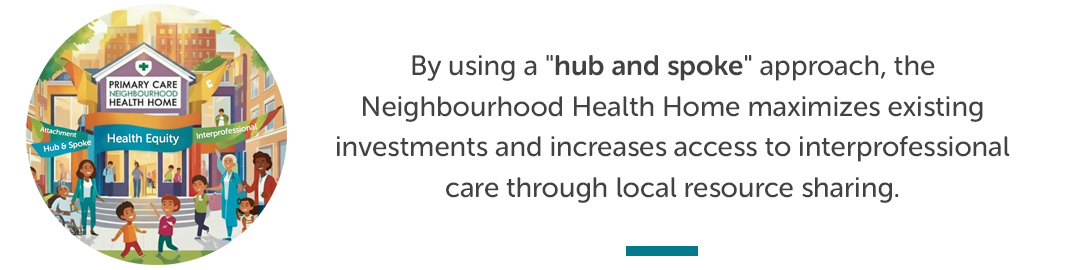
The Neighbourhood Health Home builds capacity by pooling and sharing resources among local primary care partners. It uses a “hub and spoke” approach: an established team-based organization  acts as the hub that provides ongoing primary care, social supports, and health promotion, while connecting patients to community programs and services. This neighbourhood-level collaboration helps maximize existing investments, increases access to interprofessional care, and allows more people to be attached to a primary care team. Overall, working this way improves patient and provider outcomes and experiences while being more efficient with taxpayer dollars.

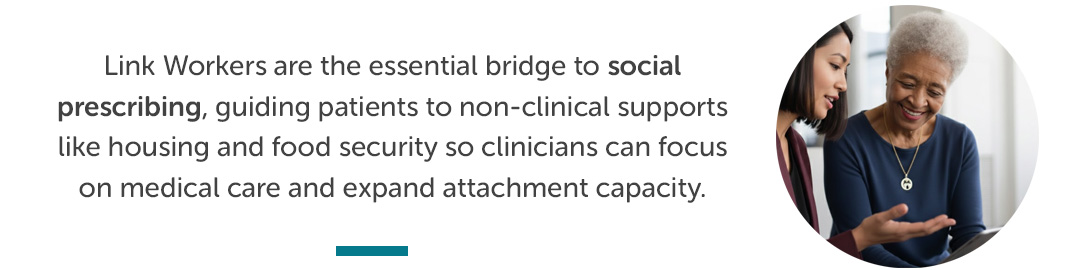
Link Workers are a critical component of this coordinated approach. Filling the Link Worker role allows physicians, nurse practitioners, and their teams to focus on medical care while ensuring their patients get support for the social and practical issues affecting their health. When clinicians identify a patient who would benefit from non-clinical supports, the Link Worker guides them to the appropriate resources — whether that involves accessing benefits, joining seniors’ exercise programs, finding housing supports, or connecting with local peer groups, often across partner organizations within the Neighbourhood Health Home. Ensuring access to Link Workers through primary care teams reduces repeat primary care visits, decreases emergency department use, and creates the capacity needed to attach more patients. This approach is already working in many parts of Ontario and shows strong promise for expansion and scalability.

At the same time, Ontario’s primary care workforce continues to face significant pressures. Recruitment and retention challenges, rising operational costs, and long delays in capital modernization make it difficult for teams to maintain services and expand attachment. We also know that to succeed in mental health and addictions care, we need investments in supportive housing.

We believe that with targeted investments, Ontario can build on recent progress and strengthen the system in a way that benefits patients, communities, and the broader health system.

To support this work, we respectfully ask the Government of Ontario to consider the following priorities for Budget 2026:

  • Support the growth of the Neighbourhood Health Home approach through the IPCT expansion (no further investment required) and expand Link Worker roles across primary care teams, including embedding link workers as a mandatory part of IPCT expansion to increase capacity and attachment.
  • Expedite recruitment and retention funding by unlocking Years 2 and 3 immediately so teams can stabilize staffing and close long-standing wage gaps; this includes $430.9 million over five years for the primary care sector, with $164.5 million needed for Alliance members.
  • Invest in digital tools that improve attachment and efficiency, including interoperable systems, online appointment booking, and innovations such as AI-enabled scribing.
  • Modernize and accelerate the capital approval process for community-based primary care organizations to help expand local capacity and improve access.
  • Continue stabilization and operational funding, including a 5% base budget increase ($33.7 million) for community-governed primary health care organizations.
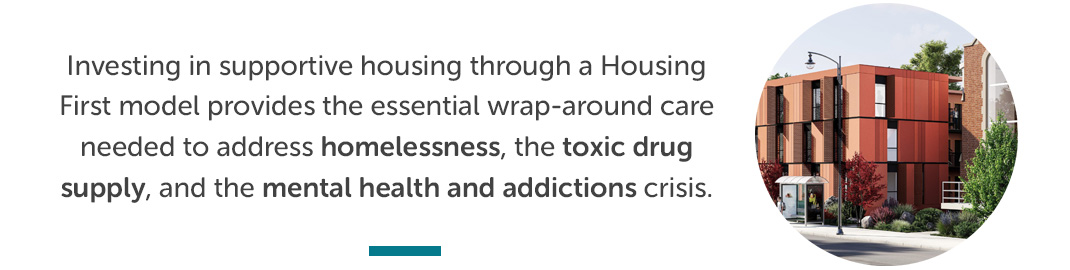
  • Investments in supportive housing ($60 million over two years) to create 5,000 new supportive housing units, as part of the continuum of care for mental health and addictions to support the work of HART Hubs and to help address homelessness and the toxic drug supply across Ontario.

With the right supports, we can increase patient attachment, and ensure Ontarians receive the right care, in the right place, close to home.

Thank you for your consideration of this Budget 2026 submission,   and for your continued leadership in strengthening primary care in Ontario. We would welcome the opportunity to discuss these recommendations and to continue working together toward our shared goals.

Sincerely,

Sarah Hobbs CEO, Alliance for Healthier Communities


Cc: Hon. Doug Ford, Premier of Ontario Hon. Sylvia Jones, Deputy Premier and Minister of Health Matthew Anderson, CEO, Ontario Health


# Invest in Health Human Resources and Operations for Comprehensive Primary Health Care: a strong foundation for an integrated health system  

Alliance members are losing primary health care staff to other sectors and parts of the health care system. When Ontarians cannot access primary health care in their community, it causes strain on other parts of the health care system, such as emergency and acute care.    

We believe investments in adequately funding comprehensive primary health care are critical to the foundation of an integrated and sustainable health system. A fully staffed primary health care system helps take pressure off emergency rooms and hospitals while ensuring efficient use of healthcare funding overall. 

The people and communities in Ontario who face the greatest barriers to health care rely on Alliance for Healthier Communities members to provide primary health care, mental health, community services, and supports. It is essential for our entire health system that people who face barriers can access the supports they need in the community.  

We thank the government for their initial investments to address recruitment and retention in primary care in Ontario. However, without further investments, there is a real risk to achieving the goal of 100% attachment for all Ontarians by 2029. Ontario must address the human resource crisis in primary care by properly funding recruitment and retention for health care professionals. Community health care organizations also need a solid base of funding for operations. With sufficient funding, Alliance members can attach more people in Ontario to primary health care, starting right now. 

Summary  

# 1. Invest in Health Human Resources for inter-professional primary health care teams

Budget Request—Close the Wage Gap to meet Primary Care Attachment Goals 

$430.9 million over five years 

Ontario needs to unlock Year 2 and 3 recruitment and retention dollars (the remainder of the $142 million already announced) in 2026/27 to ensure we can meet attachment goals. Ontario needs to invest $430.9 million over five years, including an annual adjustment of 2.90%, in the primary care sector in Ontario to close the significant wage gap. Of this ask, Alliance members require a Government of Ontario investment of $164.5 million to reach the 2023 recommended salaries to ensure recruitment and retention can keep up with the Government’s goal of 100% attachment. This funding will ensure a fully staffed primary health care system that can support people and communities and ensure the health system is not overwhelmed.


# 2. Invest in community primary health care organizations through base funding increases to sustain health for communities in Ontario.

Budget Request—Base funding:  

$33.7 million 

Ontario needs to invest in a base budget increase of 5% or $33.7 million for community-governed comprehensive primary health care organizations. Members have only seen a 6% increase over 27 years. This investment will maintain and improve service delivery, keep the lights on, and meet the growing needs of clients and communities as they grow and age. 
Budget Request—Link Workers:

$9.7 million 

Link Workers connect people in Ontario to non-clinical programs and services that support their health and wellbeing.  

Link Workers relieve administrative burden for doctors, nurse practitioners, and interprofessional health providers, as they connect clients with community-based programs such as food security supports, physical activity, arts and culture, and social connection. Ontario needs to invest $9.7 million so that primary health care teams in Ontario can implement Link Workers. 

Link Worker programs operate in diverse communities that serve people who are Francophone, Black, Indigenous, and seniors, among others.  

In the Alliance’s Rx: Community Social Prescribing Pilot, 42% of providers reported that they observed a decrease in the number of repeat visits among their clients who participated in a Link Worker program. According to a recent survey, 59% of family doctors stated that Link Workers can help reduce their workload. Ensuring Link Workers across Ontario will enable primary care clinicians to increase attachment for people without a primary care provider.


# 4.  Invest in supportive housing ($60 million over two years) to create  5,000 new supportive housing units as part of the continuum of care  for mental health and addictions across Ontario.


Budget Request—Supportive Housing:

$60 million

Supportive housing is an essential component of recovery from mental illness and can support people to recover from and avoid severe mental health issues. Simply put, supportive housing integrated with the continuum of primary health care supports and mental health treatment is a massively important part of preventative health care, with the potential to reduce strain on emergency departments, acute care, and primary care. Ensuring the success of HART Hubs and other mental health services requires a wraparound approach, a Housing First model that is proven to save lives and public health care and social services dollars, while truly helping to address the underlying barriers people face to mental health and wellbeing.

Total Investment: $534.3 million 

# Conclusion

Evidence provided by the Institute for Clinical Evaluative Sciences (ICES) found that, even though most Alliance members serve people with more socially and medically complex needs, they do a significantly better job than other primary care models at keeping these people out of hospital emergency rooms.

We call on the Government to invest $430.9 million over five years to address the HHR crisis impacting the primary care sector; a 5% increase or $33.7 million in base budget funding for community-governed comprehensive primary health care organizations; $9.7 million to fund Link Workers for equitable, culturally safe inter-professional team-based care; and $60 million for critically needed supportive housing to ensure a full continuum of care is available for mental health and addictions care across Ontario. These essential investments will improve population health for everyone living in Ontario, to ensure Ontarians have access to the right care, at the right time, close to home. Working together, we can ensure primary care works for everyone as the foundation of our health system.

Indoor environmental quality (IEQ) in shelter settings: What it means and why it matters

This webinar is presented by the National Collaborating Centre for Environmental Health (NCCEH)

The word “shelter” evokes a safe indoor environment. However, good indoor environmental quality (IEQ) requires careful building management to achieve and maintain. Parameters such as temperature, humidity, carbon dioxide (CO2) and fine particulate matter (PM2.5) can independently affect the health of shelter residents and staff and can be associated with increased risk of biotoxins and pathogenic agents. This talk will provide a holistic overview of IEQ and suggest strategies for managing risks in shelters and other congregate living environments.

# Learning objectives

Participants will learn how to:

  • Identify indoor environmental quality (IEQ) considerations for congregate settings
  • Explore impacts of aspects of IEQ on the health of people in shelters
  • Understand the connection between IEQ and the spread of infectious diseases

The presentation will be followed by a Q&A session.

Détails
le Mercredi 11 Février 2026 - 10:00
10:00 -11:00 am
Coût : 
Free
Internal/External: 
Type d’événement : 
Emplacement

Facing the Season Part II: Responding to a Changing Flu Landscape

This webinar is presented by the Canadian Association of Community Health Centres (CACHC).

Join CACHC for an engaging webinar focused on strengthening flu vaccine uptake in Canadian communities. In addition to key updates and guidance from our Public Health partners, Community Health Centres from across the country will share their strategies, challenges, and successes in promoting influenza vaccine uptake and confidence to support effective and equitable vaccination access.

Détails
le Mercredi 11 Février 2026 - 12:30
12:30-1:30 pm
Coût : 
Free
Internal/External: 
Type d’événement : 
Emplacement
Webinar