Favoriser la sécurisation culturelle ensemble (en français)

Ce webinaire se presente par Excellence en santé Canada

Participez à une table ronde sur la valeur de la collaboration pour rendre les soins plus respectueux des valeurs culturelles dans le réseau de la santé.

  • Mardi 16 juin 2026, de 12 h 30 à 13 h 30 (HE) : séance en anglais, avec interprétation simultanée en français. 
  • Mercredi 17 juin 2026, de 12 h 30 à 13 h 30 (HE) : séance en français, avec interprétation simultanée en anglais. 

Le racisme subi par les Premières Nations, les Inuit et les Métis dans le secteur de la santé nuit gravement à la sécurité des patients. Cela entraîne des préjudices, de la méfiance, un accès inéquitable aux soins et de moins bons résultats en matière de santé.  Les organismes de santé du pays reconnaissent de plus en plus le besoin urgent de lutter contre le racisme systémique et d’améliorer la sécurité culturelle.

Au cours de ce webinaire, nous présenterons le Parcours vers la sécurité culturelle, un outil pratique conçu pour aider les établissements à passer de la prise de conscience à l’action grâce à des conseils et des mesures concrètes. Vous y découvrirez également un nouveau programme d’ESC qui aide les organismes de santé à combattre le racisme systémique tout au long de la mise en œuvre du Parcours vers la sécurité culturelle, ainsi que les modalités d’inscription.


Détails
le Mercredi 17 Juin 2026 - 12:30
12:30-1:30 pm
Coût : 
Free
Type d’événement : 
Emplacement
Online Event

Advancing Cultural Safety Together (English-First Session)

This webinar is presented by Healthcare Excellence Canada

Join us for a panel discussion about the value of working together to create culturally safer care in health systems.

  • Tuesday, June 16, 2026, 12:30 p.m.-1:30 p.m. ET (this webinar will be offered in English with simultaneous interpretation in French) 
  • Wednesday, June 17, 2026, 12:30 p.m.-1:30 p.m. ET (this webinar will be offered in French with simultaneous interpretation in English 

This webinar will be offered in English with simultaneous interpretation in French.  

Racism experienced by First Nations, Inuit and Métis in healthcare is a critical patient safety issue. It leads to harm, mistrust, inequitable access to care and worse health outcomes.  Across the country, healthcare organizations are increasingly recognizing the urgent need to address systemic racism and improve cultural safety.

During this webinar, we will introduce the Cultural Safety Pathway, a practical tool designed to provide guidance and actionable steps to support organizations to move from awareness to action. We will also provide an overview of a new HEC program that supports healthcare organizations in addressing system racism as they implement the Cultural Safety Pathway steps, and how to register.

Détails
le Mardi 16 Juin 2026 - 12:30
12:30-1:30 pm
Coût : 
Free
Internal/External: 
Type d’événement : 
Emplacement
Online Event

Spotlight on Social Prescribing

This event is presented by the International Federation for Integrated Care (IFIC) Scotland's Self Management and Social Prescribing Special Interest Group and the Journal of Integrated Care. 

IFIC’s Self Management and Social Prescribing SIG and the Journal of Integrated Care (JICA) are pleased to announce the first of two special collections on social prescribing as a key enabler for integrated care. To mark this collaboration, we are pleased to host an international webinar featuring some of the special collection authors.

Join us to hear more about social prescribing in England, Canada and Wales. Connect with IFIC’s international community of practice to share your own experience and insights on social prescribing.

You can download the first five papers at: Social Prescribing: Using Integrated Approaches to Support Community Wellbeing in Rural and Urban Areas - Part 1.

# Presenters

# Facilitators: 

  • Prof Anne Hendry, IFIC Scotland
  • Grace Beaumont, Health and Social Care Alliance Scotland

# Speakers:

  • Angela Lorusso, Health Promotion Supervisor, Western Ottawa Community Resource Centre
  • Carly McMaster, Registered Social Worker, Western Ottawa Community Resource Centre
  • Kirstie Goodchild, Occupational Therapist
  • Michelle Howarth, Professor of Health and Social Care, Edgehill University
  • Michelle Symes, Research and Development Officer, Rural Health and Care Wales


Détails
le Mercredi 10 Juin 2026 - 11:00
11:00 am - 12:30 pm
Coût : 
Free
Internal/External: 
Type d’événement : 
Emplacement
Online Event

Conversations with Leaders presents: Understanding Palliative Care

This event is presented by Compassionate Ottawa as part of their Conversations with Leaders webinar series. 

Palliative care is often misunderstood, yet it plays an important role in supporting quality of life for people living with serious illness and those who care for them. In this Conversations with Leaders event, Dr. James Downar and Louise Hanvey will explore what palliative care is, address common myths and misconceptions, and discuss the different types of care and supports available in Ottawa and beyond. Together, they will reflect on how palliative care can support people in hospitals, hospices, and at home, while also highlighting current research and emerging conversations shaping the future of care. The discussion will conclude with an opportunity for audience questions.

# Presenters

James Downar is a Critical Care and Palliative Care physician in Ottawa, and has a Master’s degree in Bioethics. He is currently Professor and Head of the Division of Palliative Care at the University of Ottawa, where he holds a Clinical Research Chair in Palliative and End of Life Care. He is an adjunct professor at the Australian Centre for Health Law Research at the Queensland University of Technology. He is the past President of the Canadian Critical Care Society and co-chair of the Pan-Canadian Palliative Care Research Collaborative.  He has authored nearly 200 peer-reviewed publications and was the principal investigator on more than 30 peer-reviewed grants. In 2025, he received the King Charles III Coronation medal for contributions to Palliative Care in Canada, and in 2021 he received the Award of Excellence from the Ontario Medical Association’s Section on Palliative Medicine.

Louise Hanvey is the volunteer lead for the Conversations & Advance Care Planning program at Compassionate Ottawa. She is a retired registered nurse who has worked with many national palliative care initiatives. Most recently she was the Project Director for the Advance Care Planning in Canada Project with the Canadian Hospice Palliative Care Association. As part of her responsibilities she launched the campaign: Speak Up: Start the conversation about end-of-life care. Louise has nursing experience in public health, hospitals and nursing education.

Détails
le Jeudi 11 Juin 2026 - 10:00
10:00-11:30 am
Coût : 
Free
Internal/External: 
Type d’événement : 
Emplacement
Online Event

IFIC Canada Virtual Community Session | Indigenous Approaches to Integrated Community-Based Primary Healthcare

This webinar is presented by the International Federation for Integrated Care (IFIC) Canada.

Building on a March session on integrated community-based primary health care, this session focuses on how First Nations, Métis, and Inuit communities approach health, wellbeing, through primary and integrated care.

Many Indigenous communities have long organized health and social services in ways that are holistic and rooted in relationship, community, and a broad understanding of wellbeing, and this session is an opportunity to explore what that means for the wider conversation about integrated care.

With Dr. Lindsay Crowfoot from the Alberta Network Environments for Indigenous Health Research (NEIHR), Nina Larsson and Kyla Wright from the Government of the Northwest Territories and Alisha Matte from the Boardwalk Group, as well as LaZell Hammons and Erica Srisaneha from the Southcentral Foundation's Nuka System of Care in Alaska, we will learn about indigenous insights on building pathways toward wellness.


Détails
le Mardi 9 Juin 2026 - 12:00
12:00-1:30 pm
Coût : 
Free
Internal/External: 
Type d’événement : 
Emplacement
Online Event

Alliance Social Prescribing and Health Promotion Professional Learning Event 2026

# Wednesday, September 23, 8:30 am – 4:00 pm

# Sheraton Parkway North Toronto Hotel & Suites

This in-person event is hosted by the Alliance and is intended for our members only. 

Join us in Richmond Hill for a day of learning, networking, and fun.    

Participants will come together for a full day of learning, networking, and collaboration focused on social prescribing and health promotion. The program offers opportunities to share best practice, strengthen connections across the sector, and engage in interactive discussions supporting person-centred, community-based care. 

  • Early bird rate: $50 +HST - available until 5pm on August 23, 2026 

  • Regular rate: $60 +HST  

# Hotel Accommodations 

The Alliance has negotiated a special rate $289 +Taxes and Fees for a limited number of hotel rooms for the night of Tuesday, September 22, 2026. These discounted rooms are available on a first-come, first served basis and must be booked by August 31, 2026.

Please note, room rates will also be subject to a non-commissionable daily Amenity Fee (AF) of $10.00 per room per night, these charges are separate and distinct from and in addition to the room rate and from taxes. 

  • Please note that the hotel room block and discounted group rate are no longer available.

  • Hotel Onsite Reservations Team Telephone Number: 1-800-668-0101  

If you have any questions please email: socialprescribing@AllianceON.org. 

#  

# Event Outline

8:15 - 9:00 

Arrival, Registration, Breakfast & Networking 

9:00 - 9:30 

Opening | Elder Jimmy Dick

Welcome | Jennifer Rayner and Natasha Beaudin, Alliance for Healthier communities

9:30 - 9:40

Impact of Social Prescribing across Ontario and Canada | Sandi Pelly, Walton’s Trust 

As a major funder of Social Prescribing across Canada, Sandi will share some of the amazing impacts of this work

9:40 - 10:40

Using Culturally Safe Practices to Build Meaningful Relationships with Indigenous Communities | Rebekah Clause and Lillian Souliere-Lamb, Indigenous Primary Health Care Council 

By the end of the presentation, participants will be able to recognize existing barriers or obstacles that may explain why mainstream organizations are struggling to engage and build partnerships with Indigenous organizations and identify potential next steps that can be taken to continue their cultural safety journey so that relationship-building can be approached with sensitivity and care. This presentation will highlight the importance of developing equal partnerships with Indigenous communities so that Indigenous perspectives are meaningfully incorporated into larger program and policy decisions that impact Indigenous populations.

BREAK

10:55 - 11:55

Research Results and Program Planning – How it’s Done!

  • The Power of Socio Demographic Data | Dr. Jennifer Rayner and Sara Bhatti, the Alliance for Healthier Communities
  • Health Promotion Evaluation Project Results | Sara Bhatti and Isabelle (Izzie) Fortuna, Alliance for Healthier Communities
  • From Policing to Public Health: Mental Health for Black children and youth | Subrana Rahman, Access Alliance Multicultural Health and Community Services
  • Building a Social Prescribing Pathway in the EMR | Amanda McConkey and Olivia Lawson, CHCs of Northumberland

LUNCH

12:45 -1:45 

Poster Presentations and Conversation Tables 

Pick up to 3 topics and join the conversation.

  1. Data, Socio-Demographic Collection, PSS forms | Christine Randle, the Alliance for Healthier Communities (Richmond CD)
  2. Links2Wellbeing and Seniors Active Living Centres | Dena Silverberg and Sarah Feeney-Martin, Older Adult Centres’ Association of Ontario (OACAO) (Richmond CD)
  3. Social Prescribing at the Toronto Public Library | Eleni Pallotta and Justine Gerroir, Toronto Public Library (Richmond CD)
  4. Healthcare Excellence Canada – Community Paramedics Social Prescribing Program | Kaeli O’Connor (Richmond CD)
  5. Ontario Caregivers Organization – Social Prescribing | Felicia Hart (Richmond B)
  6. Woolwich CHC – A Framework for Social Prescribing at Intake | Courtney Bauman (Richmond B)
  7. Evaluating Health Promotion Programs in CHCs | Sara Bhatti and Isabelle (Izzie) Fortuna (Richmond B)
  8. Canadian Writer’s Collective | Shelley Lepp and Marijke Vander Klok (Richmond A)
  9. Measuring Complexity and Intersectionality to Improve Health Care | Dr. Grace Spiro, McMaster University (Richmond A)
  10. Session de réseautage francophone | Natasha Beaudin (Richmond A)
  11. Open Space for hot topics (Hallway)

1:50 – 2:20  

Experiential Activities – Social Prescriptions

Choose one activity and try it for yourself.

  1. Writers Collective of Canada: Re/writing Connection

    Experience for yourself how Writers Collective of Canada's (WCC) powerful workshops ignite meaningful human connection! Come write with us: share your voice, listen deeply to one another, and build community one story at a time. No writing experience needed. (Location Richmond CD)  

  2. Dancing with Parkinson’s: A Social Prescription for Brain Health

    Participants will experience a short, adapted excerpt from a Dancing with Parkinson’s (DWP) class, followed by a brief introduction to the social prescription model. No dance experience or particular mobility level is required; participants can take part seated or standing, or simply observe if they prefer. (Location Richmond B)  

  3. Community Singing for Connection and Wellbeing 

    Join us for a joyful, participatory workshop where simple songs are taught by ear in a welcoming space where every voice belongs. Inspired by Kate's work co-facilitating Singing Together at Access Alliance, we'll experience how singing together can support healthier people and stronger communities. (Location Richmond A)

BREAK

2:30 – 3:30 

Practical Trainings

Choose one skill-building session and engage in hands-on learning.

  1. Participatory Evaluation | Kisa Hamilton and Denise Bishop-Earle, Transform Practice 

    Get ready to roll up your sleeves and rethink what “evaluation” can look like. This lively, interactive session introduces participatory evaluation methods that flip the script from power‑over to power‑with. We’ll explore how language shapes relationships (yes, funder‑speak vs. community‑speak is a whole thing), explore creative engagement tools for stakeholder mapping, art-based data collection tools, and troubleshoot real‑world challenges together. Expect movement, collaboration, and plenty of “aha” moments as we re‑imagine evaluation as something communities can actually enjoy. (Richmond CD)  

  2. Income Assistance for low-income individuals | Angelica Navarette and Jennifer Rogers, Community Legal Clinic of York Region

    This presentation will provide general information about income maintenance programs available to low-income individuals in Ontario. These programs include Ontario Works, Ontario Disability Support Program, Canada Pension Plan, Old Age Security and more. Find out how you can support your clients with income security prescriptions. (Richmond A)

3:30 – 3:45

 Group photo and paper quilt exercise

3:45 – 4:00 

Wrap up + Send off  

Door prizes 

# Presenters and Facilitators


Elder Jimmy Dick
Jimmy is from Moose Cree First Nation and the community of Moose Factory, Ontario. He is fluent in the Cree language and is a Teacher/Educator on Native Culture and Spirituality. He is an Elder and guest speaker at international conferences and is an active volunteer and board member. Jimmy has been actively involved in Toronto’s Indigenous community since 1975 and is a member of the Eagleheart Singers drum group.
Rebekah Clause - Program Coordinator, Indigenous Primary Health Care Council (IPHCC)
Rebekah Clause is a member of Six Nations of the Grand River and the Bear Clan, with mixed Mohawk, English, and French ancestry. As a Program Coordinator with IPHCC's Traditional Wellness and Reconciliation team, she brings over 17 years of experience in community development, advocacy, and engagement. Her work focuses on Indigenous health advocacy, traditional wellness, and advancing reconciliation in healthcare systems.  Rebekah does this work to honour her ancestors and their teachings, while helping build a healthier, more just future for the next seven generations and beyond.
Lillian Souliere-Lamb - Program Coordinator, Indigenous Primary Health Care Council (IPHCC)
Aanii, I'm Lillian Souliere-Lamb (she/her). I am of mixed ancestry (Anishinaabe/Scottish heritage) and a registered member of Wiikwemkoong Unceded Territory with ties to Serpent River First Nation, and I am currently living in Toronto, ON. I have completed my Bachelor of Social Work at McMaster University with a minor in Indigenous Studies, as well as a Master of Social Work in Indigenous Trauma and Resiliency from the University of Toronto. I come with experience working as a frontline worker in the mental health field, as well as come with experience in developing and delivering cultural safety curriculum with a focus on healthcare and mental health care.


Jennifer Rayner, Director of Research and Policy, Alliance for Healthier Communities
Jennifer Rayner is the Director of Research and Policy at the Alliance for Healthier Communities and supports 100+ community-based primary care organizations in Ontario. She is an applied health services researcher with interests in primary healthcare, interprofessional teams, health equity and learning health systems. She is a research professor at Western University within the Centre for Studies in Family Medicine and an associate professor at the University of Toronto in the Department of Community and Family Medicine, and the Institute of Health Policy, Management and Evaluation. Jennifer works in collaboration with researchers, evaluators and policymakers to improve care for people with barriers. Her community-based primary care experience includes leadership roles in research, policy, planning, performance, accountability and quality improvement. She received her PhD in epidemiology and biostatistics from Western and completed postdoctoral training at Ryerson University.
Sara Bhatti, Learning Health System Manager, Alliance for Healthier Communities
Isabelle (Izzie) Fortuna, Research and Policy Analyst, Alliance for Healthier Communities
 
Subrana Rahman | Research Assistant, Access Alliance Multicultural Health and Community Services Subrana is a public health professional with experience in community-based research, knowledge translation, and health equity. She holds a Master of Public Health in Social and Behavioural Health Sciences from the University of Toronto. Her research experience spans vaccine access and confidence, primary care, immigrant and newcomer health, and community-based approaches to addressing health inequities. She is particularly interested in research that centres community knowledge and lived experience to support equitable health systems and meaningful change.

Dr. Grace Spiro | Assistant Professor, Department of Health, Aging & Society, McMaster University

Grace is an applied health scientist focused on health equity and person-centred care. Her research explores how health systems can better understand and address inequities by using sociodemographic and patient-reported data in meaningful ways. Working closely with health system partners, providers, and communities, she examines how data can be translated into practical action to improve access, experiences, and outcomes for diverse populations. Her work spans health services research, population health, and learning health systems, with a particular interest in intersectionality and equity-informed decision-making.

Shelley Lepp (she/her), Chief Executive Officer and Facilitator, Writers Collective of Canada
Shelley joined Writers Collective of Canada as a volunteer facilitator in 2018, as Co-Executive Director in 2019, and as Chief Executive Officer in 2024. She holds a certificate in Management of Volunteer Programming in addition to a Master’s Degree in Adult Education and Community Development from OISE, University of Toronto. Her SSHRC-funded research focused on the practice and pedagogy of expressive writing as a non-clinical mental health intervention. Shelley is a passionate writer, mental-health advocate, and community builder.
Marijke Vander Klok (she/her), Manager of Volunteers & Programs and Facilitator, Writers Collective of Canada
Marijke stumbled upon WCC in 2019 and soon engaged as a volunteer facilitator training. While completing a Master’s degree in Adult Education and Community Development at OISE, she joined the WCC staff team in 2022. With keen interests in building community, promoting social justice, and encouraging volunteerism, she is proud to support WCC's volunteer facilitator community and expand the reach of accessible writing workshops across Canada.
Aldonna Stremecki (she/her), Special Projects and Strategic Partnerships Associate, WCC facilitator 
With WCC since 2022, Aldonna first trained with Writers Collective of Canada as a workshop facilitator before joining its team as Special Projects Associate. Previously, she taught English and Drama, directed theatre, and went on to work with Friendship in Action, a charity which facilitated peer-to-peer support groups in schools. At WCC, Aldonna co-ordinates virtual and in-person events such as arts-health expert panels and spoken word evenings which celebrate its writers. She is deeply appreciative of the opportunity to support and write with the magnificent, brave voices of WCC, and to witness its powerful community building. 
Jessica Dargo Caplan, Director, Outreach and Engagement, Dancing With Parkinson's
A community-engaged arts leader with over 25 years of experience in multidisciplinary arts programming grounded in social practice. As Director of Outreach and Engagement with Dancing With Parkinson's (DWP), Jessica works at the intersection of arts and health, building strategic partnerships, leading outreach and engagement initiatives, and developing evaluation frameworks that centre participant voices, increasing access to DWP's free, research-backed dance for brain health programs for people living with Parkinson's and seniors. She holds a Master's of Education from OISE/University of Toronto and volunteers on the Board of Directors with Henna, an arts and cultural organization and online media platform led by newcomer and refugee artists, writers and activists.
Claire Wootten, Instructor and Arts in Health Consultant, Dancing With Parkinson’s 
Claire is a graduate of the Professional Division at Canada’s Royal Winnipeg Ballet and of the Teacher Training Program at Canada’s National Ballet School. She holds an MA in Dance from York University and was on faculty at York’s Department of Dance for nearly 30 years, specializing in contemporary ballet and dance education. 
 
A certified Dance for PD® Teaching Artist, Claire joined the teaching roster of Dancing with Parkinson’s (DWP) Canada in 2015. In addition to her teaching at DWP, she is the Arts in Health Consultant, connecting DWP with institutions, organizations, and individuals practicing and advocating for social prescribing. 
 
Claire is also certified Instructor of 3-D Workout ™, an integrated fitness program based on the work of Irmgard Bartenieff and Rudolf Laban.
 
Other interests that continue to take her on stimulating adventures: studying music, practicing Argentine Tango, attending conferences, and serving on a patient advisory council for the University of Toronto’s Department of Family and Community Medicine.
Kate Keenan
Kate Keenan is a Toronto-based community song leader, expressive arts therapist, multidisciplinary artist, and Registered Psychotherapist (Qualifying). She is a co-founder of Songbirds and was among the first trained Singing Mamas leaders to bring the UK-founded community singing model to Canada. Kate has facilitated hundreds of singing experiences with children, families, newcomers, caregivers, and community groups. Most recently, she co-facilitated Singing Together at Access Alliance, an arts-based community singing program within Access Alliance's social prescribing work, supporting newcomer mental wellbeing, belonging, and cross-cultural connection. She is currently working with health-care partners to expand opportunities for community singing within health-care settings.
Kisa Hamilton, Co-founder / Worker Member, Transform Practice
Kisa Hamilton is a researcher, educator, and facilitator specializing in transformative practices rooted in trauma‑informed, healing‑centered approaches that honour lived experience, cultural specificity, and community wisdom. With two decades of experience supporting community‑driven initiatives across Canada, she brings an intersectional, equity‑focused lens to all her work.

As a long‑time practitioner in community‑based evaluation, she supports organizations in shifting from power‑over models to power‑with approaches that strengthen trust, belonging, and shared ownership.

Her work includes co‑designing tools, facilitating community verification sessions, and weaving together insights from participants, facilitators, and community partners.

Kisa currently co-leads the national Impact Assessment of Mental Health First Aid (MHFA) in Black, Caribbean, and African communities.

Denise Bishop-Earle, Co-founder / Worker Member, Transform Practice
As a continuously evolving Visual Artist, Healing Consultant, Knowledge Keeper and Social Entrepreneur, Denise centers community voices in all that she does and has devoted the past decade in facilitating healing/sharing circles, as part of a crisis response initiative, and more recently Indigenous Circles for Reconciliation. She has experience in workshop and program development, creative program facilitation and design, evaluation and healing centered reflection exercises. 

Currently, Denise has been working on an Impact Assessment study of Mental Health First Aid (MHFA) in the Black, Caribbean and African communities in Canada, both in person and online. As a member of Transform Practice workers co-op, she works towardsdecolonizing their programs and services, with a focus on diversity, inclusion and trauma informed, healing centered practices. 

Denise is also researching and documenting her family history through a trauma informed lens.

Jennifer Rogers, Licensed Paralegal, Community Legal Clinic of York Region
Jennifer is a licensed paralegal on the Social Assistance Team. She graduated from the Humber Paralegal Degree Program in 2019. Her career goal was to work within the Ontario legal clinic system. She had previously completed an Undergraduate Degree at Trent University, specializing in film media and video. Her passion for helping people caused the shift to pursue clinic law. She has been at the clinic since 2022.
 
Angelica Navarrete, Licensed Paralegal, Community Legal Clinic of York Region
Angelica is a Licensed Paralegal that began her career with the Clinic in 2015 as a case manager for ODSP disability cases. She moved on to become a case worker in August of 2021 where she advocates for clients in Social Assistance matters. She has 21 years of experience working in the public sector and has obtained certifications in health & safety, alternative dispute resolution and WSIB, most recently graduating from the immigration consultant program at Humber College. Working at the Clinic has allowed he to work in what she enjoys doing as her passion has been advocacy, human rights and access to justice.
Détails
le Mercredi 23 Septembre 2026 - 09:00
9:00 AM - 4:00 PM
Coût : 
$60 +HST
Internal/External: 
Type d’événement : 
Emplacement
Sheraton Parkway Toronto North Hotel & Suites
600 Hwy 7
Richmond Hill, ON L4B 1B2

Déclaration sur le budget de l’Ontario : Renforcer les soins de santé primaires et accroître le rattachement

Date: 
le Mercredi 6 Mai 2026

L’Alliance pour des communautés en santé salue les progrès continus réalisés pour consolider les soins de santé primaires à l’échelle de la province, ainsi que les mesures prévues pour élargir l’accès aux soins, dont celles présentées dans le dernier budget provincial. Nous sommes ravis d’annoncer que bon nombre de nos membres ont déjà reçu de nouveaux financements, et nous félicitons le gouvernement pour ses avancées, alors que la province vise à ce que 100 % de la population soit rattachée à une équipe de soins primaires, garantissant ainsi l’accès à un fournisseur de soins pour chaque Ontarienne et chaque Ontarien d’ici 2029. 

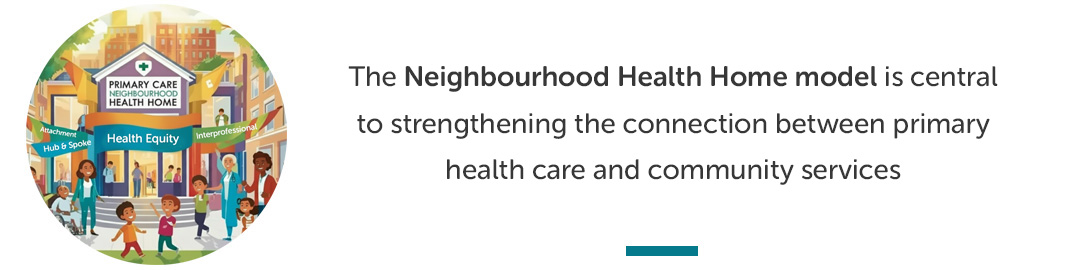
L’Alliance a toujours pour priorité fondamentale de renforcer les liens entre les soins de santé primaires et les services communautaires. Le modèle de maison de santé de proximité (également appelé maison de santé de quartier) est au cœur de cette démarche. Ce modèle, que nos membres ont mis en œuvre et qu’ils incitent le gouvernement à adopter pour arrimer les soins cliniques aux services communautaires, permet d’agir sur les déterminants sociaux de la santé et d’offrir des services adaptés aux réalités locales. Nous pressons le gouvernement d’inscrire le soutien au modèle des maisons de santé de proximité dans le Plan d’action pour les soins primaires. Cela permettra d’accroître le taux de rattachement - et donc l’accès à un fournisseur de soins primaires - tout en réduisant les coûts hospitaliers évitables pour les contribuables. 

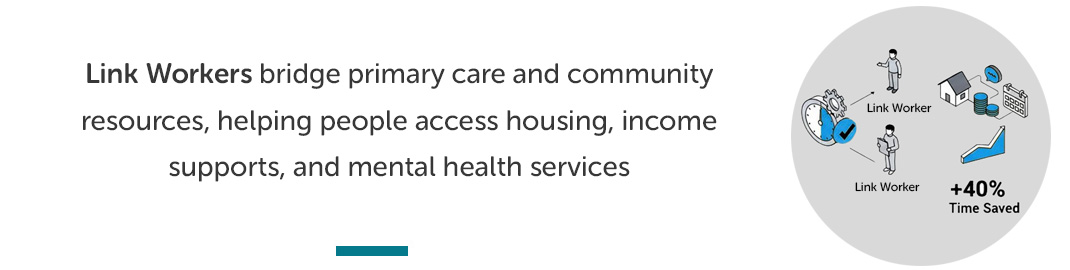
En complément des maisons de santé de proximité, nous réclamons des investissements ciblés pour les agents de liaison [étude de cas]. Ces derniers servent de trait d’union entre les soins primaires et les ressources communautaires en aidant les gens à accéder au logement, aux mesures de soutien du revenu, aux soins de santé mentale et de toxicomanie, ainsi qu’à d’autres programmes sociaux favorisant de meilleurs résultats en matière de santé. Il est essentiel de déployer et de pérenniser le rôle des agents de liaison pour alléger la pression sur les équipes de soins primaires et les services d’urgence de la province, tout en veillant à ce que la population reçoive des soins holistiques axés sur la communauté. 

Les membres de notre Alliance continueront de soutenir les initiatives visant à maintenir ces fonds au sein de la communauté et à obtenir des investissements supplémentaires dans les logements avec services de soutien. Il s’agit d’un complément indispensable aux maisons de santé de proximité et aux efforts déployés pour rattacher les patients à un fournisseur de soins primaires. 

L’Alliance souhaite poursuivre sa collaboration avec le gouvernement de l’Ontario afin de resserrer les liens entre les soins primaires et la santé communautaire, et ce, grâce au modèle de maison de santé de proximité, aux agents de liaison et à des investissements durables axés sur l’équité.

Statement on the Ontario Budget: Strengthening Primary Health Care and Expanding Attachment

Date: 
le Mercredi 6 Mai 2026

The Alliance for Healthier Communities welcomes continued progress in strengthening primary health care across the province, along with the supports outlined to expand access to care, including those introduced through the last provincial budget. We are pleased to share that many Alliance members have already received new funding, and we commend the government’s progress as the province works toward 100 per cent attachment to primary care by 2029. 

Our priorities as an alliance remain focused on strengthening the connection between primary health care and community services. The Neighbourhood Health Home model is central to that work. The model that our members have implemented and have called on the government to integrate clinical care with community services addresses social determinants of health and ensures services are locally responsive. We urge the government to embed support for the Neighbourhood Health Homes model in the Primary Care Action Plan to increase attachment and reduce unnecessary hospital costs for taxpayers.  

In parallel with the Neighbourhood Health Home, we have been advocating for dedicated investments in Link Workers [case study]. Link Workers bridge primary care and community resources, helping people access housing, income supports, mental health and substance use services, and other social supports that drive better health outcomes. Scaling and sustaining Link Workers is essential to relieving pressure on primary care teams and emergency departments across the province and to ensure people receive holistic, community-centred care.  

Our Alliance members will continue to support efforts to ensure those funds remain in the community and to secure additional investment in supportive housing, an essential complement to the Neighbourhood Health Home and to efforts to attach people to primary care. 

The Alliance looks forward to working with the provincial government to strengthen the connection between primary health care and community health through the Neighbourhood Health Home model, Link Workers and sustained, equity-focused investments. 

2026 Audit & Feedback in Healthcare Conference: Better Feedback, Better Analysis, Better Care

This conference is presented by the Audit & Feedback Metalab

# Save the Date

# 10th International Audit & Feedback in Healthcare Conference: Better Feedback, Better Analysis, Better Care

Join us for the 10th International Audit & Feedback in Healthcare Conference, this November in Newcastle, UK! This event will bring together global experts, researchers, and practitioners to share the latest research, evidence-based strategies, and practical approaches to audit and feedback in healthcare.

  • Keynote Speakers & Presentations
  • Interactive Sessions
  • Networking Opportunities

Stay tuned for more details, coming late-May 2026!

Visit the A&F MetaLab website for updates.

Détails
le Jeudi 5 Novembre 2026 - 16:45
November 5-6
Emplacement
Newcastle, United Kingdom,