
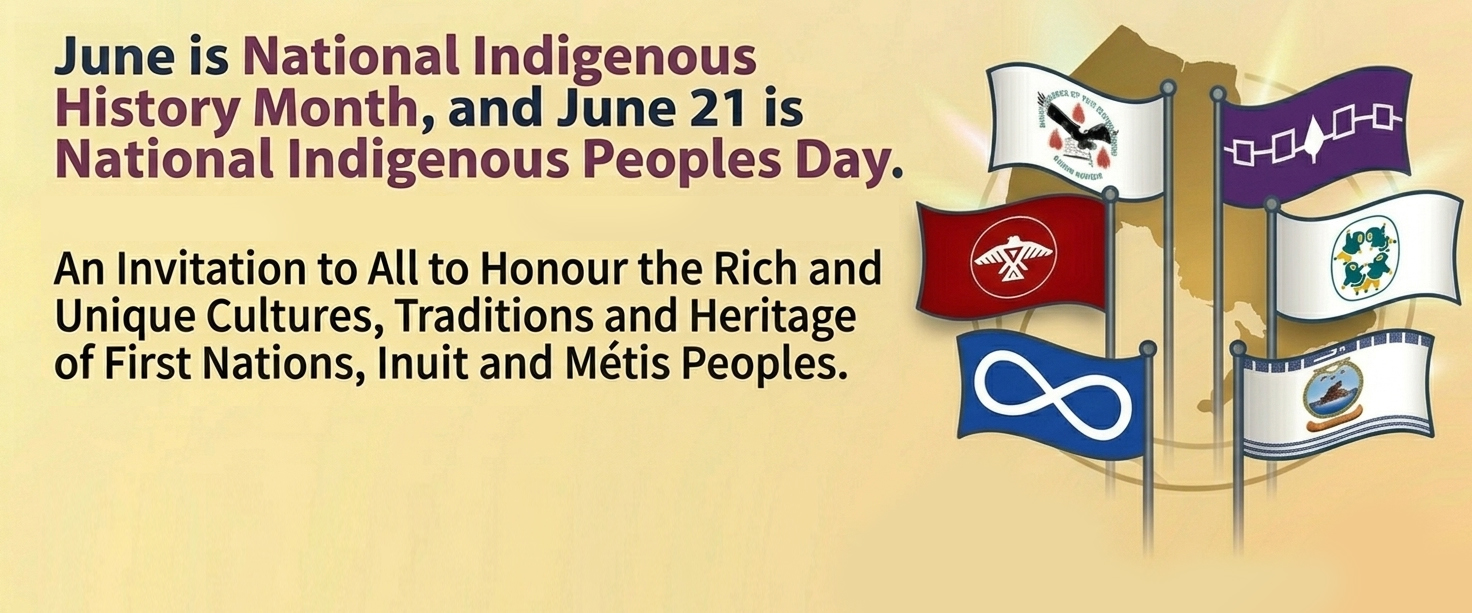
June is National Indigenous History Month in Canada, and June 21 was National Indigenous Peoples Day. Indigenous History Month is an invitation for all of us to honour the rich and unique cultures, traditions and cultures of First Nations, Inuit and Métis Peoples who have lived on this land since time immemorial – thousands of years before it was called “Canada.” Indigenous Peoples Day, celebrated every Summer Solstice, is a powerful reminder of Indigenous peoples’ deeply rooted connections to this land and their profound knowledge of its rhythms. For the Alliance, as a settler-led organization, these moments are an opportunity to reflect on our part in Ontario’s history of colonialization and ongoing colonial practices. They call us not only to honour Indigenous peoples but also to deeply consider our treaty obligations and our role in reconciliation and decolonization.
Earlier this month, we held our annual conference, Attachment for Everyone: Centring Health Equity in Ontario’s Primary Health Care Expansion. We were joined by an elder for the entire duration of the conference and the Annual General Meeting that preceded it. In the three days she spent with us, Grandmother Renée Thomas-Hill of the Cayuga Nation Bear Clan, from the Six Nations of the Grand River Territory, shared her teachings and brought us into a space of reflection, caring and gratitude. Learning from her is one of the many steps we’ll take in our ongoing journey to build connections, deepen our knowledge of Indigenous cultures, and become better allies and partners in reconciliation.
The conference also featured a keynote address by David A. Robertson, one of Canada’s most celebrated Indigenous authors and storytellers. His address tapped into the power of storytelling to bring to life his latest book, 52 Ways to Reconcile: How to Walk with Indigenous Peoples on the Path to Healing. Through his words, he showed us how story can help people to connect, heal, and build community. As he spoke of the impacts of past and present colonial policies on Indigenous Peoples, Robertson reminded us all that reconciliation is a shared movement and that everyone has a role to play in it. It requires unlearning and relearning, tearing down old foundations and building something new together. He concluded with a call to action: Do something that matters in your personal and professional lives.
We take that call seriously. In the journey of reconciliation and decolonization, we must bring to the forefront Indigenous voices, leadership and communities. We do this through partnerships with the Indigenous Primary Health Care Council (IPHCC), Indigenous Primary Health Care Organizations (IPHCOs) that are members of the Alliance, and other Indigenous-led organizations.
This work also calls for upholding and advancing the principle of Indigenous Health in Indigenous Hands, which reaffirms Indigenous governance and self-determination in health. For non-Indigenous organizations, this means supporting Indigenous rights to lead and govern the health systems, priorities, services, and resources that affect them. It also means understanding a crucial boundary: Non-Indigenous organizations must make their own services as culturally safe as possible, but they should not create Indigenous-specific programs, control Indigenous-specific funding; or take on traditional healing, ceremonies, or related roles. This work belongs with Indigenous-led organizations, Elders, Knowledge Keepers, Traditional Healers, and other Indigenous knowledge holders. Organizations looking to better understand their role in upholding Indigenous Health in Indigenous Hands and build their capacity to serve Indigenous clients in a culturally safe way are urged to take the Anishinaabe Mino’ayaawin (“People in Good Health”) Indigenous Cultural Safety training offered by the Indigenous Primary Health Care Council and to draw insights and guidance from the many resources available from the IPHCC.
The work of reconciliation and decolonization extends beyond the month of June. It is an ongoing, shared journey that requires everyone’s involvement. As we wrap up this year’s National Indigenous History Month, let’s remember David A. Robertson’s call to action and do something that matters in our personal and professional lives every day, year-round.