Health Equity Heroes: 'Every day I need to be part of the solution'

le Vendredi 20 Octobre 2017

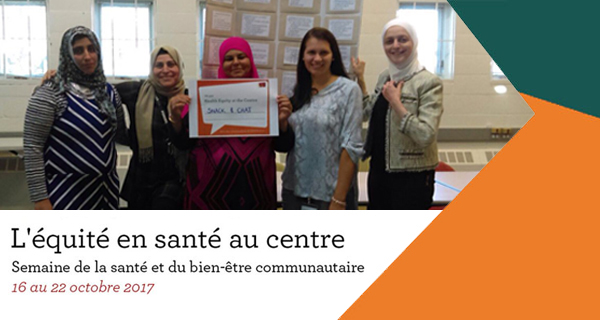
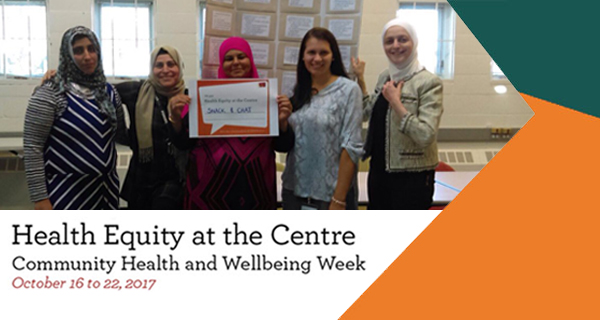
What is health equity? What is the work that enables and promotes it? Why is this work so vital? During Community Health and Wellbeing Week 2017, AOHC members are demonstrating the ways that they put Health Equity at the Centre. As part of those efforts, we're going to bring you a stellar lineup of Health Equity Heroes all of this week (and beyond). Get to know the heroes among you, and the ones in neighbouring communities, and let's all celebrate and support this important work that helps everyone achieve their best possible health and wellbeing. Follow this space to read about more heroes, and check out the hashtags #CHWW2017 and #HealthEquityHeroes on social media to learn about even more.

What’s your name, how long have you worked at the centre, and what role(s) do you fill there?

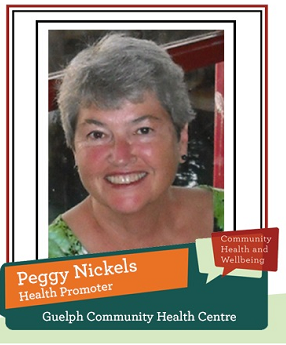
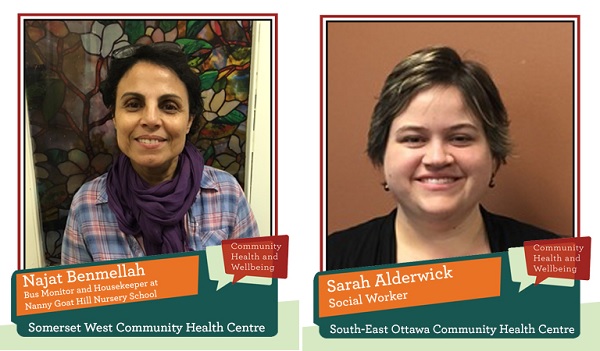
My name is Najat Benmellah, and I’ve worked at Somerset West CHC in Ottawa for 13 years as Bus Monitor and Housekeeper at Nanny Goat Hill Nursery School.

What does health equity mean to you, and how do make a health equity approach part of your work?

As the bus monitor at the Nanny Goat Hill Nursery School, I am often the main connection between parents and the school. By building strong, trusting relationships with parents, I have been able to better connect vulnerable families to the resources that they need; from services offered at our CHC, clothing donations, and parenting supports. My relationship with parents has also helped to encourage their involvement in our monthly parenting workshops and family events. Having engaged parents, equipped with the right resources, helps to encourage each child to realize his or her full potential.

Why is taking a health equity approach so important to your work?

When I first moved to Ottawa, I discovered that Somerset West CHC is a neighbourhod hub, where I could attend playgroups with my children, access primary health care services, and I soon learned about and became involved in the Headstart Nursery School programs.

A few years ago, I met a mother who wanted to enroll her child in our program. Her child had been diagnosed with autism, and as a newly divorced single parent, she had very little support. We worked with this parent to make sure that all paperwork was in place, so her child could start as quickly as possible. By getting to know this parent and building trust, I was able to connect her with other much needed resources, including counselling services at Somerset West, and practical items, such as clothing from our donation cupboard. This mom was also able to learn about different techniques that staff at the nursery school were using to manage her child’s behaviour. This had a positive impact on this parent, as she felt more empowered and in control of her family, and knew she had a support system in place.

In what ways is your centre able to support your health equity approach?

The centre enables us to meet people on a level playing field. All of our programs attempt to reduce any possible barriers that would prevent vulnerable families from accessing our services. In the nursery school program, we offer transportation, to make it very easy for children to attend. Having a monitor on the bus helps to ensure that staff can really connect with parents every day. By building this relationship, we are able to meet parents where they are at and make more successful referrals and connections.

__________________________________________________________________________

What’s your name, how long have you worked at the centre, and what role(s) do you fill there?

My name is Sarah Alderwick. I have been a Social Worker at South-East Ottawa Community Health Centre for almost one year. Currently I am providing programs for low-income and isolated seniors.

What does health equity mean to you, and how do make a health equity approach part of your work?

Health equity means that everyone can access the health services they need, and that their health is not negatively affected because of their gender, race, income, etc.

Why is taking a health equity approach so important to your work?

In my work, I support health equity by constantly thinking about the different barriers that could exist for people trying to access a program or service. I try and never make assumptions when planning activities, and this impacts every aspect of offering a program. For example, I may have to do outreach in different languages and ways (for example call people instead of just relying on a poster), offer help with transportation, provide food for participants, and think about how to create a safe space for diverse groups of people. One way I currently address barriers is by bringing programs directly to seniors where they live!

In what ways is your centre able to support your health equity approach?

Thinking about health equity is so important in my work because it is unacceptable to me that members of our community continue to have poor health outcomes due to things that are basic human rights such as access to transportation, food security, and housing. Every day I need to be part of the solution. Welcoming someone to the centre in their own language, giving bus tickets to get to a program, or filling a bag for them from the food cupboard may seem like small things, but they can have a huge impact.

Health Equity Heroes: 'This is by far the most important work I do'

le Jeudi 19 Octobre 2017

What is health equity? What is the work that enables and promotes it? Why is this work so vital? During Community Health and Wellbeing Week 2017, AOHC members are demonstrating the ways that they put Health Equity at the Centre. As part of those efforts, we're going to bring you a stellar lineup of Health Equity Heroes all of this week (and beyond). Get to know the heroes among you, and the ones in neighbouring communities, and let's all celebrate and support this important work that helps everyone achieve their best possible health and wellbeing. Follow this space to read about more heroes, and check out the hashtags #CHWW2017 and #HealthEquityHeroes on social media to learn about even more.

What’s your name, how long have you worked at the centre, and what role(s) do you fill there?

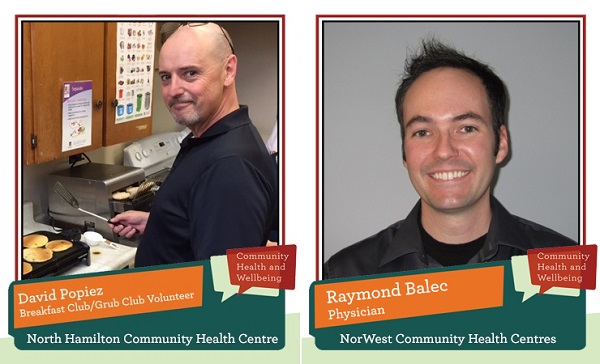
My name is David Popiez, and I’ve worked for a year as a volunteer at North Hamilton Community Health Centre’s Breakfast Program and Grub Club.

What does health equity mean to you, and how do make a health equity approach part of your work?

It means providing equal access to health care and social programs, regardless of your socioeconomic status. I volunteer at the centre’s programs to try and provide proper nutrition and knowledge to help youth be more independent, so they can learn important life skills.

Why is taking a health equity approach so important to your work?

It helps me to know I can make a difference. It is important that everyone has access to nutrition, and also that youth know that they are important. That way they can learn to care for and respect all people, and can develop skills and confidence to be contributors to society. This work is by far the most important work that I do, and it is the favourite part of my week.

In what ways is your centre able to support your health equity approach?

Watching Scott Paige and Jenna McHugh (Community Development Workers at North Hamilton CHC) – in the approach to how they deliver their programs, and how they interact with youth – has inspired me beyond words. They are amazing.

__________________________________________________________________________

What’s your name, how long have you worked at the centre, and what role(s) do you fill there?

I'm Raymond Balec, and I’ve worked for six years as a Family Physician at NorWest Community Health Centres.

What does health equity mean to you, and how do make a health equity approach part of your work?

A system with health equity is a system in which measures are taken to equalize the determinants of health. I make health equity a part of my work by offering health services to people who might not otherwise receive health care.

Why is taking a health equity approach so important to your work?

I have had a number of transgender patients tell me they had not previously been able to find a health care provider able to meet their needs for primary care. This has been rewarding.

In what ways is your centre able to support your health equity approach?

Our centre has supported a health equity approach to providing care to transgender patients by ensuring access to primary care providers and therapists experienced in addressing gender dysphoria, providing access to support groups, and by using inclusive language on all of our forms that ask about gender identity.


Ontario Indigenous Cultural Safety Program launches new brand and logo in push to educate providers across the province

le Jeudi 27 Juillet 2017

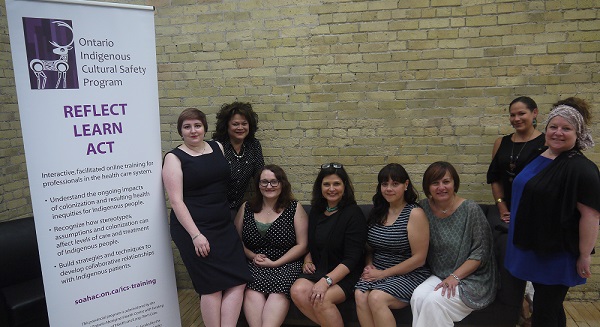
L to R: Jocelyn Raikes, Provincial Registration and Data Coordinator; Cheryl Ward, Interim Director of Indigenous Health at PHSA and San’yas ICS curriculum developer; Jessa Bear, ICS Online Facilitator; Diane Smylie, ICS Provincial Director; Leila Monib, ICS Provincial Practice Lead; Gertie Mai Muise, Provincial Director of Aboriginal Health Access Centre Transformation at the AOHC and former Associate Director of SOAHAC; Vanessa Ambtman-Smith, Indigenous Health Lead at the South West LHIN; Michèle Parent-Bergeron, Provincial ICS Practice Lead

It’s been an exciting summer for the Ontario Indigenous Cultural Safety (ICS) Program, which celebrated the launch of its new brand in June and July, complete with a new logo designed by Lisa Boivin, a member of the Deninu Kue First Nation, interdisciplinary artist, and a MSc candidate at the Rehabilitation Sciences Institute at University of Toronto Faculty of Medicine.

The ICS program is also marking the launch of its online training for health providers across the province. The program, which began in 2014, was developed for Ontario in partnership with San’yas ICS training – a program of the Provincial Health Services Authority of British Columbia. It is led and administered through the Southwest Ontario Aboriginal Health Access Centre (SOAHAC) and was originally funded through the South West LHIN. The ICS program now works across LHINs and all health/public health sectors to build collaborative partnerships that accelerate organizational and systemic changes to improve Indigenous patient experiences. Focused on eliminating systemic colonial narratives and stereotypes held by health and social service providers (usually unconscious), the ICS program aims to surface and address any and all biases that can cause harm and maintain barriers to equitable access for Indigenous people, families and communities. 

Using an innovative and hands-on approach of facilitated online learning, the ultimate goal of the ICS program is to ensure that Indigenous people can trust they will be treated with empathy, dignity and respect when seeking health and social services.

On June 15 in London, local Traditional Knowledge Keeper Liz Akiwenzie led a celebration and traditional ceremony to honour number of people who helped guide the development of the ICS program and ensure its success. Honourees included: Brian Dokis, Executive Director, SOAHAC; Kelly Gillis, VP of Strategy, System Design and Integration, South West LHIN; Lindsay Blackwell of the MOHLTC; Gertie Mai Muise, Director of Indigenous Strategy and Relations, AHACs, AOHC; Cheryl Ward, Director of Indigenous Health at PHSA and San’yas ICS curriculum developer; Guy Hagar, formally of SOAHAC; Jessa Bear, ICS Facilitator, SOAHAC; Vanessa Ambtman-Smith, Indigenous Health Lead, South West LHIN; Dr. Chris Mackie, London-Middlesex Medical Officer and CEO.

The new ICS logo, which features Boivin’s deer painting, was developed in consultation with the program’s partners, and the design is meant to be a meaningful representation of what the program aims to achieve, as reflected in ICS’s statement that accompanied the logo release: “The deer embodies generosity by giving us his flesh for nourishment, hide for clothing, bones for tools, and antlers for Sweatlodge. Deer’s generosity helps us to survive. Similarly, cultural safety training provides for us by offering intellectual nourishment for learners and the tools to interact with one another in a good way. Like the Deer, cultural safety provides for many needs. It is a versatile knowledge that is linked to all areas of life -- not just in the clinic or the office. Cultural safety must be practiced everywhere.”