TAIBU and Rexdale CHCs partner with Legal Aid Ontario to support better education outcomes for Black youth
le Jeudi 29 Juin 2017

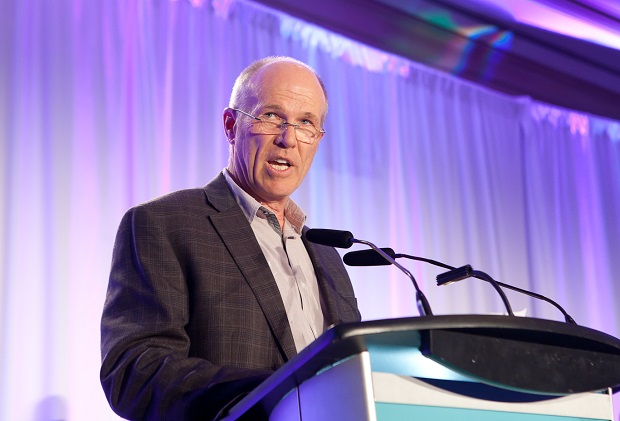
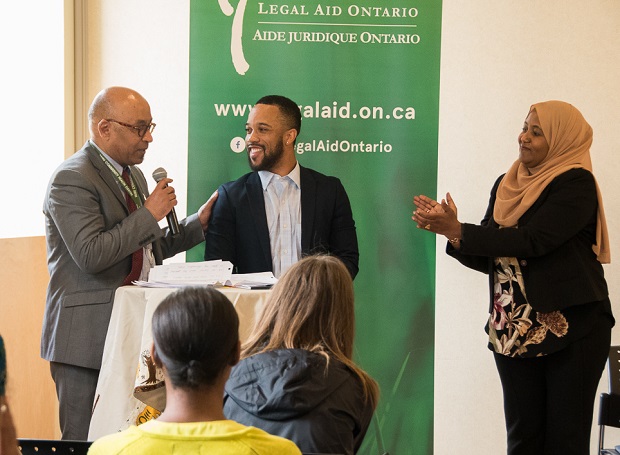
TAIBU Executive Director Liben Gebremikael, left, and Rexdale CHC Executive Director Safia Ahmed, right, welcome Rexdale CHC board member Alex Gattick to speak about the impact that a $100K Legal Aid Ontario grant will have for Black students facing conflict in the education system.

On Tuesday, Legal Aid Ontario (LAO) announced that it will partner with Rexdale CHC and TAIBU CHC to offer more robust and timely supports for Black high school students in conflict with the education system. LAO is also providing a one-time $100,000 grant to kickstart the process of working with the CHCs. Minister of Education Mitzie Hunter was on hand to offer the government’s endorsement of the partnership, which aims to reduce the impact of suspensions and expulsions by resolving conflicts between Black students and administrators and teachers before they escalate. The overall goal is more student success in the form of higher grades and graduation rates, and fewer suspensions and expulsions overall.

Alex Battick, a children and youth advocate who joined the board of Rexdale CHC earlier this year, noted that the collaboration is a natural fit, given the breadth of programs that the CHC offers to youth, such as Pathways to Education.

“There are already so many layers of programs and services available at the centres, and this just adds another layer, a legal layer,” Battick says. “Now when we’re providing legal services to youth, we can also offer support to them on physical and mental health issues, employment and economic opportunities, or on whatever challenges they’re facing.” Read the CBC story about the Legal Aid Ontario grant and LAO’s partnership with CHCs.
Video | Joe Leonard Award 2017: Gloria Daybutch recognized for leadership and commitment to Indigenous health

le Jeudi 15 Juin 2017

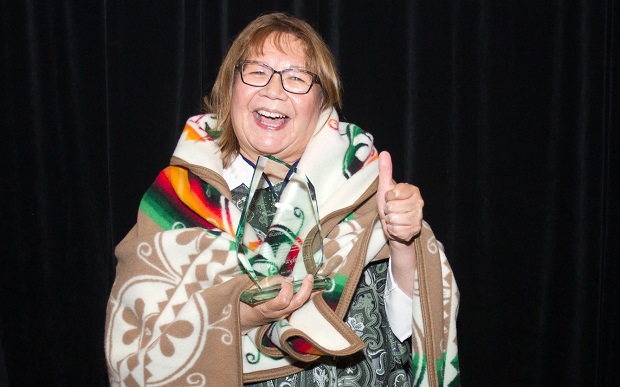
Gloria Daybutch, Executive Director of N’Mninoeyaa Aboriginal Health Access Centre, poses for a photo after receiving the 2017 Joe Leonard Award.

The Joe Leonard Award is the highest honour given by the Association of Ontario Health Centres (AOHC). Named after LAMP CHC’s first executive director, a staunch advocate for a strong, non-profit, public health care system, this award recognizes individuals who have exemplified extraordinary leadership, commitment, and support for creative solutions to accessible, quality and affordable health care. The 2017 honouree, Gloria Daybutch, embodies all those qualities and some beyond those, constantly driving herself and her staff forward to seek out new ways to deliver better programs and services to Indigenous people and communities.

Gloria has been the Executive Director of N’Mninoeyaa Aboriginal Health Access Centre since 2004. Under her leadership, the organization grew from a health department under Mamaweswen, The North Shore Tribal Council, to its current incorporated structure as Maamwesying North Shore Community Health Services Inc.

Gloria is a trailblazer when it comes to service development and design in Indigenous health. She has fostered strong working relationships with many organizations, and has worked diligently on the Aboriginal Health Care Reconciliation Action Plan. As Executive Director of Maamwesying North Shore Community Health Services, she is directly connected to the voices of the First Nation communities and the Indian Friendship Centre through the Standing Committee comprised of Health Directors.

Gloria is a Mohawk, Haudenosaune woman from the territory of Six Nations, who now resides as a member of the Mississauga First Nation. She exemplifies the values of the Seven Grandfather teachings with her humility, courage and compassion.

Related Links

Building trust and improving health services for Indigenous People

Aboriginal Health Access Centres and Aboriginal Community Health Centres - Report to Communities 2016

Model of Wholistic Health and Wellbeing

Video | Transformative Change Awards 2017: Focus on determinants of health sees Chigamik Community Health Centre and its Health Link partners honoured

le Jeudi 15 Juin 2017

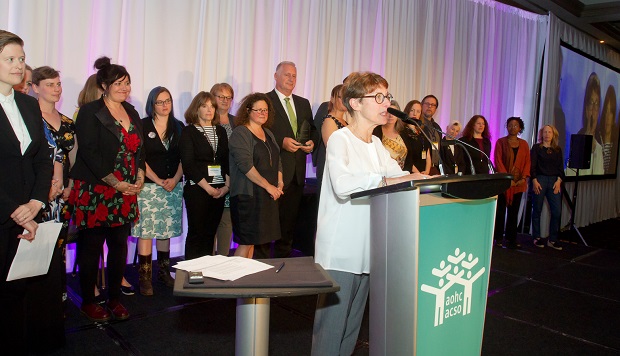
David Jeffery, Executive Director of Chigamik CHC, speaks at the 2017 Transformative Change Awards after accepting honours for the North Simcoe Community Health Link.

The Transformative Change Award recognizes leaders, innovators, collaborators and health champions who have been working at the forefront of transformative change helping us achieve our vision of the best possible health and wellbeing for everyone living in Ontario. On June 7, the Board of AOHC recognized the work of the North Simcoe Community Health Link, co-led by Chigamik CHC, for the difference it is making in the lives of complex clients in their Georgian Bay community, and the potential their work has to transform Primary Health Care across Ontario.

The North Simcoe Community Health Link, co-led by Centre de santé communautaire Chigamik Community Health Centre and the North Simcoe Family Health Team, has applied a rigorous Comprehensive Primary Health Care approach to reduce avoidable illness and hospital utilization in their region. The key to their success? They developed a deep understanding of the social, financial and cultural challenges faced by people with complex medical conditions. Using a “Be Well” survey that is based on Canadian Index of Wellbeing indicators, the Health Link implemented coordinated care plans to address high levels of poverty and social isolation. Over the course of one year, hospital utilization rates dropped 40 per cent. Chigamik carefully documented its efforts. In September 2016, a groundbreaking report revealed how a Comprehensive Primary Health Care approach pays off for people with complex needs, as well as Ontario’s health system. Similar reporting from AOHC members could be a game changer by shifting the conversation about how to improve health – and Ontario’s health system overall.

Related Links

Ontario's Community Health Centres: A Transformative Solution to Improve Health and Wellbeing

Transforming Primary Health Care in Ontario: Spotlight on Reducing Social Isolation


Video | Transformative Change Awards 2017: South Riverdale CHC, Sandy Hill CHC, and Parkdale Queen West CHC share honours for Supervised Injection Services

le Mercredi 14 Juin 2017

Lynne Raskin, CEO of South Riverdale Community Health Centre, speaks after accepting a Transformative Change Award for the centre's role in achieving government approval for Supervised Injection Services.

The Transformative Change Award recognizes leaders, innovators, collaborators and health champions who have been working at the forefront of transformative change helping us achieve our vision of the best possible health and wellbeing for everyone living in Ontario. On June 7, Parkdale Queen West Community Health Centre, Sandy Hill Community Health Centre, and South Riverdale Community Health Centre were recognized for their work in expanding harm reduction programs to included Supervised Injection Services.

For the past five years, Parkdale Queen West CHC, Sandy Hill CHC and South Riverdale CHC have worked to expand their longstanding harm reduction programs by adding Supervised Injection Services (SIS). Their years of hard work included collecting and presenting evidence, building partnerships, engaging communities, developing policies, preparing submissions to both the federal and provincial governments, and working with the media. Now, all three CHCs are on the cusp of getting (or have just received) government approval and funding to set up the first SIS in Ontario.

These services will undeniably save lives and help reduce risk factors that lead to infectious diseases. The fact that SIS will be located in Community Health Centres means more people who use injection drugs will have access to other much needed health and social supports. The impact of the work done by these three CHCs is already significant. Their efforts have helped shift the conversation around substance use and mental health, and enhanced the engagement in many communities towards transforming the landscape of harm reduction, drug policy and evidence-based practices.

Related Links

Reduction in overdose mortality after the opening of North America’s first medically supervised safer injecting facility: A retrospective population-based study

Ontario Health Centres Vote to Unanimously Support the Development of Supervised Injection Services in the Province

AOHC’s statement on changes to Ontario labour laws

Date: 
le Mardi 18 Juillet 2017

On May 30th Premier Wynne announced a number of changes to Ontario labour laws which aim to better protect part time and contract workers. These changes will be part of new draft legislation,The Fair Workplaces, Better Jobs Act, which will be introduced in the Fall. The legislation responds to the recommendations of the Changing Workplaces Review report which held consultations with stakeholders over the past two years. AOHC provided input to the consultations and has actively supported the ‘$15 and Fairness campaign’ and the Decent Work and Health Network in calling for 7 paid sick days and other specific changes to labour legislation.

AOHC welcomes the announced changes which will increase income for low wage workers, improve working conditions and support better health outcomes for precarious workers in Ontario. We applaud the government’s decision to raise the minimum wage to $15/hour by 2019 and to mandate equal pay for part time and temporary workers. Our members see firsthand the impact of poverty on health so we know that greater income security will improve the health and wellbeing of the people they serve in communities across Ontario.

AOHC is disappointed that the government chose not to ensure a minimum of 7 paid sick days for all employees. The decision to legislate a minimum of 2 paid sick days as part of 10 days of personal emergency leave for all workers is a step forward. We are pleased that there will be no requirement of a sick note when people take personal emergency leave as this was not a good use of health service providers’ time. As the legislation moves into committee discussion we will continue to call for a minimum of 7 paid sick days for all employees.

AOHC's Submission to the Standing Committee on Finance and Economic Affairs regarding Bill 148, Fair Workplaces, Better Jobs Act

Video: Let's close the gap on oral health care in Ontario

le Mercredi 24 Mai 2017

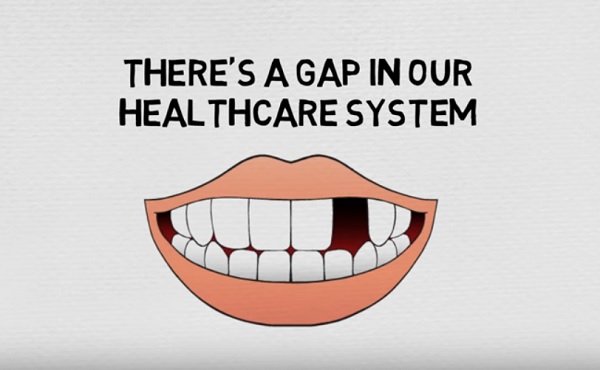
Most people in Ontario have dental services covered through a private insurance program. But an estimated two to three million people in our province don’t visit a dentist because they don’t have insurance and can’t afford the cost to see one.

To help people spread the word on social media about this gap in our healthcare system, the Ontario Oral Health Alliance produced a whiteboard video (below) that spotlights the connection between chronic disease and poor oral health care, as well as the social effects of not having access to dental care. 

The video also gives a good overview of the limited public oral health programs in the province (coverage for low income children 17 and under, and a patchwork of services for those on social assistance). And it also explains that those people who slip through the cracks often end up in emergency departments at hospitals, or at a doctor's office, neither of which is equipped to offer treatment for dental problems, costing Ontario's health system millions of dollars every year for ineffective care.

While the video is a great overview to introduce someone to the topic and the efforts to advocate for public oral health programs in Ontario for low-income adults and seniors, if you want to delve much deeper into the issue and its background materials, don't miss our complete oral health resource section.

The video was produced for the Ontario Oral Health Alliance by the Haliburton, Kawartha, Pine Ridge District Health Unit.

Spotlight on Health Equity: Improving cancer screening rates by focusing on the social determinants of health

le Lundi 15 Mai 2017

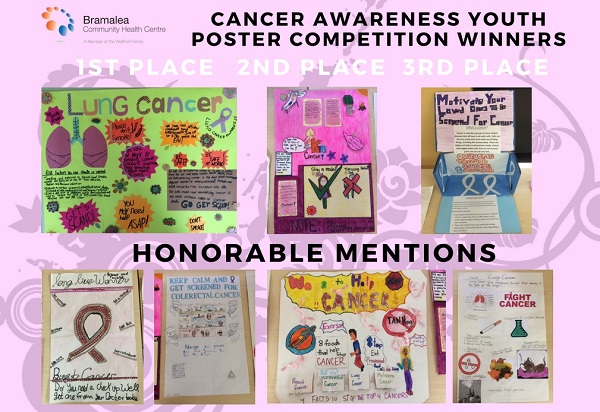
Bramalea CHC utilized an innovative youth poster competition to help raise the level of cancer awareness and screening education among the families it serves.

By Jason Rehel, story producer and editor, AOHC

Cancer screening rates in Ontario aren’t as high as they should be, and nowhere near provincial benchmarks. Health Quality Ontario (HQO) suggested as much in its April 2016 report, “Income and Health”. The report linked low income levels to lower rates of colorectal, breast, and cervical cancer screening, and included some startling statistics about disparities:

• Just over half (54.3%) of women living in the poorest urban neighbourhoods have had cervical cancer screening in the last three years, compared with two-thirds (66.7%) of women living in the wealthiest urban neighbourhoods.

• Nearly half (49.7%) of people living in the poorest urban neighbourhoods are overdue for colorectal cancer screening, compared with just over one-third (34.9%) of people living in the wealthiest urban neighbourhoods.

Being a newcomer to Canada can also mean you’re much less likely to receive preventive screening. For cervical cancer, Cancer Care Ontario (CCO) notes that “women with low income and education, who are older, who speak a foreign language or who are not Canadian-born are less likely to be screened.” In fact, CCO points out that “newcomers and immigrants often experience challenges [just] finding information about cancer screening.”

The provincial government tried using financial incentives for physicians to boost cancer screening rates in Ontario. But those efforts have mainly failed, owing to what Canadian health policy analyst Steven Lewis says is an over-emphasis on “extrinsic motivations” (money) and not enough attention to “intrinsic motivations” (the desire to do a good job, help people). Examining “the more durable and powerful” intrinsic motivations of both providers and patients, Lewis argues, is what allows us to get to the root causes of low screening rates, and thereby know what we might do to help nudge people towards getting screened.

“Appropriate screening should be baked into the performance expectations of organizations and individuals, and no extra pay or funding should be required,” Lewis says.

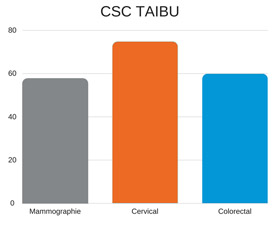
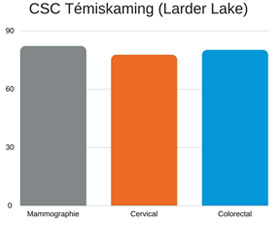
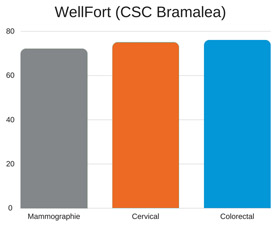
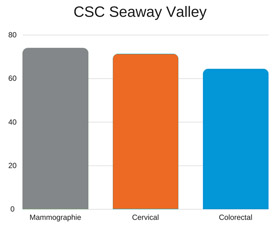
Without using financial incentives, and with doctors who are paid using a salary model, Ontario’s Community Health Centres are seizing opportunities to increase screening rates with a robust health equity approach that is “baked into performance expectations.” In the process, they’re achieving higher cancer screening rates than provincial averages. To better understand some of the ways that Ontario’s 74 Community Health Centres break down barriers that keep people from getting screened for cancer, here are six case studies from across the province:

TAIBU CHC: TRANSFORMING CANCER SCREENING THROUGH AN EQUITY LENS

Located in Scarborough, TAIBU Community Health Centre recognizes the prevalence of anti-black racism, including its impact on how the community they serve accesses services. “We plan and develop programs and services with a specialized focus on how we can address the needs and barriers faced by this community,” says Liben Gebremikael, Executive Director of TAIBU CHC.

What that means:

  • TAIBU’s staff start by understanding and then responding to cultural factors that affect screening rates: For example, its call-back program ensures providers do not call Muslim clients during Ramadan. 
  • Town halls deepen understanding of factors affecting screening, and awareness programs highlight that the black population served by the centre is disproportionately affected by cancer.

CSC TÉMISKAMING: SUSTAINING A CULTURE OF QUALITY IMPROVEMENT

“Examining things on a quarterly basis wasn’t good enough for us. So day-to-day attention to screening is now part of every encounter, even prescription renewals,” says Roxanne Rodgers, a Registered Nurse at the Larder Lake location of Centre de santé communautaire Témiskaming in northeastern Ontario. “Our [Electronic Medical Records] EMR dashboard is simplified so that all the indicators are in one spot, so that we can quickly see when a person is due for screening. Then we can prepare and offer a requisition right on the spot.”

What that means:

  •  Using an in-house designed dashboard tool, clinicians at the centre’s five sites can compare how others are doing, which helps to foster healthy competition and collaboration.
  • A volunteer driving initiative gets people without transportation to appointments, a key factor for a centre that serves mainly a rural and semi-rural population.

WELLFORT COMMUNITY HEALTH SERVICES: A UNIQUE AWARENESS APPROACH

“At WellFort, we continue to achieve our cancer prevention goals by living our values of being responsive to our community needs, and striving to be creative leaders on health equity in Peel,” says Mayo Hawco, Executive Director of WellFort.

What that means:

  • Clients have access to cancer screening education and awareness materials in languages they’re comfortable with, and delivered in a culturally-appropriate manner. For example, youth from the community were involved in a cancer awareness poster competition to broaden the reach of prevention messages and help tailor them to the community.
  • BIRT (an internationally recognized data analytics tool developed by AOHC and its members) is used to coordinate client appointments to take advantage of prevention opportunities for those due for screening.

SEAWAY VALLEY CHC: FROM EDUCATION TO PREVENTION

“People in the area we serve need a high level of education and support on how important cancer screening is to an overall prevention approach. Once people are educated, they become active partners in their own health,” says Debbie St. John-de Wit. “So our investment in education and explaining the ‘why’ of screening serves a purpose for years ahead.”

What that means:

  • Nurses lead the way to ensure prevention awareness is part of every encounter. Education is tailored to priority populations, such as seniors and the LGBTQ+ community, to ensure the right approach for people facing health equity barriers. 
  • Clinical and data management staff have taken steps to ensure staff utilize the Electronic Medical Records (EMR) in consistent ways, to ensure quarterly reports on cancer screening are as accurate as possible for nurses, who then can take a systematic approach to outreach.

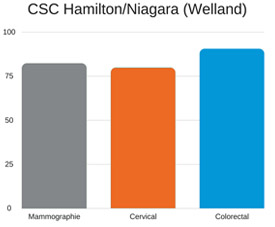
CSC HAMILTON/NIAGARA: FOSTERING RELATIONSHIPS THAT PROMOTE PREVENTION

“Relationships – both between the clients and their family members and their physician, and between interprofessional team members themselves – are at the core of how we keep our cancer screening rates high,” says Marcel Castonguay, Executive Director of the Centre de santé communautaire Hamilton/Niagara.

What that means:

  • French-speaking physicians develop strong relationships with the Francophone population they serve, partly by ensuring annual exams serve as important points for education of clients and their families, many of whom are also caregivers. 
  • Clinical and non-clinical team members collaboratively address barriers that clients face, through informal huddles and case conferencing where necessary to ensure no social determinant is left untouched if someone isn’t getting preventive care.

Of course, the examples above are only part of the story of how AOHC members are working to boost their cancer screening rates. Next month, at AOHC's annual Shift the Conversation Conference, the West End Quality Improvement (WEQI) collective, a group of seven GTA CHCs working collaboratively on cancer screening rates, will present the results of their initiative, and the process and tools that got them there. The session (C7) takes place at 3:30 p.m. on June 7. For details of that session and others, click here.