PRIDE 2020: Addressing isolation in the community and reminders of roots in resistance

le Jeudi 25 Juin 2020

Pride 2020 has, not surprisingly, been unfolding unlike any other Pride celebration in history. Events moved to online platforms; celebrations, campaignsgatherings and even Pride Toronto's large events have gone virtual; parades are still happening (at the neighbourhood scale), with physical distancing measures; and the roots of Pride, founded in the resistance of racialized transgendered people against police violence, are reinforced by current protests and resistance to anti-Black and anti-Indigenous racism, and state-sanctioned violence. In a time when isolation risks are high for everyone, but especially for LGBTQ+ and Two Spirit people at risk of re-closeting, the role of community is paramount. Across the province, Alliance members and their staff and volunteers continue to adapt to the realities of supporting LGBTQ2S communities during COVID-19, finding ways to address barriers to health and wellbeing.

“We’ve been hearing that it’s been pretty hard on youth, and people living in less supportive environments,” says Stephanie Vail, a community health worker at Quest Community Health Centre in St. Catharines. Vail works with LGBTQ2S as part of Quest’s Rainbow Niagara LGBTQ+ program serving people across Niagara Region. “But it’s hard for people of all ages being home this much. The LGBTQ community can feel isolated in general, and COVID-19 amplifies that sense of isolation and not being connected to their peers.”

Vail provides individual support for people 12 years of age and up around sexual identity and gender identity, and is continuing to offer phone counselling and Zoom appointments to Quest’s clients. “I’ve been doing a lot of checking in with people and seeing how their mental health is, and how they’re staying connected to people.”

Pride HistoryShe also notes that Quest CHC is still seeing people in person for care, including through Quest’s award-winning Rainbow Niagara program, as well as continuing peer support groups virtually. “Trans people who require injections for hormones, that’s still happening. For those taking hormone blockers, that’s still happening. But we’re trying to do as much as possible over the phone, or video.”

While working on the annual Pride Prom for youth in Niagara back in March, the planning committee had to quickly pivot. In conjunction with Niagara Falls Community Health Centre, staff and volunteers instead planned for a virtual Pride Talent Show, taking privacy and security concerns into consideration for a show of pre-recorded talent videos accompanied by a live online Zoom chat between participants.

That kind of approach to technology and finding ways to keep people connected is essential work for LGBTQ2S communities right now, says Cliff Ledwos, chair of the Alliance's Rainbow Communities Advisory Committee, and Associate Executive Director at Access Alliance Multicultural Health and Community Services in Toronto.

“Bars, restaurants, bathhouses are closed, services and agencies are shut down – all of those places that this community uses to meet people and to be able to interact with other people in the LGBTQ community are unavailable. Add in the requirement to self-isolate at home, and you’ve got a real increased risk of people being shoved back into the closet,” Ledwos says. “The silver lining is that we have technology available, and it allows us to stay connected. It allows agencies and organizations to stay open and in contact with people who are vulnerable. Mature use of this technology to maintain social ties and connections is critically important during COVID-19 for everybody. For LGBTQ communities, it’s life-saving.”[[{"fid":"2775","view_mode":"media_link","fields":{"format":"media_link","alignment":"right","field_file_image_alt_text[und][0][value]":"Pride History","field_file_image_title_text[und][0][value]":false},"link_text":null,"type":"media","field_deltas":{"3":{"format":"media_link","alignment":"right","field_file_image_alt_text[und][0][value]":"Pride History","field_file_image_title_text[und][0][value]":false}},"attributes":{"alt":"Pride History","height":248,"width":248,"style":"border-image-outset: 0; border-image-repeat: stretch; border-image-slice: 100%; border-image-source: none; border-image-width: 1; color: #000000; cursor: default; float: right; font-family: \\\" lucida grande","lucida sans unicode",sans-serif; font-size: 13px; font-style: normal; font-variant: normal; font-weight: 400; letter-spacing: normal; margin-bottom: 0px; margin-left: 20px; margin-right: 0px; margin-top: 0px; orphans: 2; text-align: right; text-decoration: none; text-indent: 0px; text-transform: none; vertical-align: baseline; -webkit-text-stroke-width: 0px; white-space: normal; word-spacing: 0px; border-width: 0px; border-color: currentColor; border-style: none; padding: 0px;","class":"media-element file-media-link media-wysiwyg-align-right","data-delta":"3"}}]]

Pride History2

While Pride 2020 is highlighting creative ways people and providers are staying connected during COVID-19, Ledwos points to the intersections of recent protests and resistance against anti-Black racism and police violence with Pride’s historical roots in resistance as a key theme this year.

“In terms of the LGBTQ community, it was Black transgendered people who were among the first people to stand up and say this is not acceptable,” Ledwos says. “Some members of the community, such as the trans community, still continue to experience state-sanctioned violence and oppression in more immediate ways today. We also see this in the intersectionalities in the LGBTQ+ and Two-Spirit communities. Some parts of the LGBTQ community still feels a lot of the burden, stress, pressure of systemic oppression and violence. That’s why Pride directly relates to Black Lives Matter. It’s important for people in the LGBTQ community, Black community, among women, and among other communities who’ve been excluded to take a really active role in defining what the future needs to look like, not just what it could look like.”

One of the key changes Ledwos and other health leaders say needs to change is the data collected in health care to help identify needs and support health equity for LGBTQ2S and other marginalized populations.

“Collecting data that’s about who people are and who LGBTQ people are, means that they have a voice at the decision-making table,” he says. “When data is collected for the right reasons and with care in the right ways, when it’s meaningful, and when there’s depth to it, the community being captured in that data has a voice from it,” he says.

For Vail, changing the system means that continuing her work of training social services, schools and medical providers in trans health care and LGBTQ2S health issues is vital.

“I did my first training session for other professionals via Zoom last month. That’s really important work and we need to continue it,” she says. “We need to look systemically at education for primary care providers on trans care, and also LGBTQ culturally safe practices in health care, across the board.”

Pride 2020 will be remembered in many different ways. For Ledwos, it’s importantly a time to consider the work still to be done.

“Pride needs to be both a celebration for the victories that have happened, for the changes that have happened, for the freedoms that society has, often grudgingly, given. But also it needs to continue to be an active resistance because the fight isn’t over.”

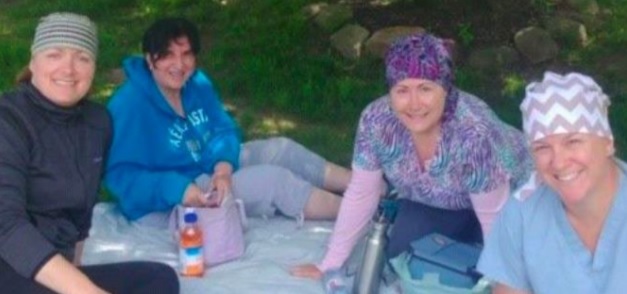
[All images in this post courtesy Rainbow Niagara/Quest CHC]


Celebrating Indigenous Peoples Day 2020

le Jeudi 18 Juin 2020
Text graphic that reads: Happy National Indigenous Peoples Day, June 21, 2020

Indigenous Peoples Day generally involves plenty of live events, celebrations, talks and gatherings. Of course, during COVID-19, most of these events have been cancelled, but the celebration continues – in many cases virtually. Here, we’ve collected some events, reads, films, resources, and more to help you celebrate, and also to engage and go deeper on expanding knowledge, awareness and understanding of First Nations, Métis and Inuit cultures, histories and issues.

Indigenous Cultural Safety Collective webinar series: 10 webinars and counting covering topics like racism in health, critical race theory, and the health impacts of anti-Indigenous racism

Indigenous Cultural Safety Training, and post-training modules like “From Bystander to Ally” and “Unpacking our Colonial Relationship”: Email Leresha Lickers, llickers@iphcc.ca for info.

Summer Solstice Indigenous Festival: Livestream the virtual edition of the Summer Solstice Indigenous Festival, until June 21.

Film: Documentaries and film are important media for learning about the diverse histories and complex issues faced by FNIM. Check out this list for some good places to start: Reel Injun (trailer); Smoke Signals (trailer); Colonization Road (full documentary); 50 Years of Indigenous-Made Cinema: A Celebration (article); Reel Canada catalogue of Indigenous Made Films

Podcasts: Check out this list of podcasts for their speakers, interviews and insights: Media IndigenaNative CurrentsRyan McMahon’s Red Man LaughingAll My RelationsThe Jig Is UpHomies ChattingMissing and Murdered: Finding CleoThis LandCoffee With My Ma.

Comedy: This episode of CBC Radio’s Unreserved from January brings together Indigenous comedians and satirists for almost an hour of learning through laughter.

Review the Truth and Reconciliation Commission’s 94 calls to action. No. 18-24 focus on health. It’s only by knowing and living these calls that we can hold our leaders and each other to account for them. Looking to go deeper on the TRC’s work? Here’s the full executive summary report.

Music: Art that appeals directly to the heart while also teaching us can be a powerful way to learn, and to understand others. Check out this list of Indigenous musicians across many genres to start your exploration.

Books, books and more books: We love to read and we know you do, too. Here’s a great list from CBC Books of 35 Indigenous authors and important reads that includes audio clips of many of the reads.

Déclaration des leaders de la santé des Noirs: le racisme contre les Noirs est une crise de santé publique

Déclarer le racisme contre les Noirs une crise de santé publique
Date: 
le Lundi 1 Juin 2020

Nos communautés sont en deuils.

Il s’agit d’un moment sans précédent, pourtant à bien des égards, c’est du déjà vu.

Depuis longtemps, les Noirs dénoncent la violence disproportionnée dont ils sont victimes aux mains des forces policières. Nous avons suivi de près l’horrible meurtre de George Floyd au Minnesota, et plus récemment la mort de Regis Korchinski-Paquet à Toronto en la présence de policiers. Regis fait partie d’une longue liste de personnes Noires qui sont décédées en présence de policiers, après que des appels furent faits pour obtenir de l’aide pour son bien-être. Nous n’oublions pas ce qui est arrivé à D’Andre Campbell à Brampton, à Abdirahman Abdi à Ottawa et à Andrew Loku à Toronto. Des milliers de dollars ont été dépensés pour des enquêtes et des recommandations ont été formulées; toutefois, les Noirs qui demandent de l’aide font face à du danger. Nous ne pouvons garder le silence devant les actes horrifiques dont des personnes Noires sont victimes en Ontario, ailleurs au Canada et aux États-Unis. Nous sommes solidaires avec les personnes Noires de partout pour réclamer que justice soit faite.  

En 2018, l’Association canadienne de santé publique a publié un énoncé de position reconnaissant que le racisme est un enjeu de santé publique. L’Ontario, comme les autres provinces et territoires au Canada, est un endroit qui a de la difficulté à lutter contre les torts causés par la suprématie blanche et où les séquelles de la colonisation, de l’esclavage, de l’inégalité structurelle et de la discrimination systémique ont un profond impact sur la vie des Noirs. 

Nous ne pouvons pas dissocier ces facteurs historiques des décès de personnes noires aux mains de forces policières. Une étude menée en 2018 par la Commission ontarienne des droits de la personne a montré que les Noirs sont 20 fois plus susceptibles d’être blessés ou tués par des policiers que leurs homologues. De façon générale, ils sont plus susceptibles de faire face à une force létale. Nous ne garderons pas le silence tandis que des personnes noires sont tuées ou meurent en présence de policiers à cause de brutalité policière qui n’est pas contestée. Nous refusons de dissocier ces décès du climat de racisme dirigé contre les Noirs dans lequel ces personnes doivent vivre.

Nous exhortons nos alliés à prendre des engagements pour lutter contre les nombreuses formes de suprématie blanche et de racisme dirigé contre les Noirs, à être solidaires avec les personnes noires, à s’engager à rompre les cycles de violence et à refuser de faire de cet enjeu, un enjeu qui n’est d’intérêt que pour les Noirs. Nous sommes tous concernés.

Nous sommes solidaires avec les Noirs de partout pour réclamer que les mesures suivantes soient prises rapidement pour lutter contre la suprématie blanche et le racisme dirigé contre les Noirs : 

  • Une déclaration proclamant que le racisme dirigé contre les Noirs est une crise de santé publique.
  • Une meilleure infrastructure de responsabilisation pour lutter contre la brutalité policière, la violence policière et les torts commis contre les communautés noires.
  • Le renforcement de la Direction générale de l’action contre le racisme par une stratégie systémique, clairement articulée et ciblée pour lutter contre le racisme dirigé contre les Noirs. 
  • Un engagement provincial envers l’attribution de fonds protégés pour fournir aux communautés noires des ressources et du soutien en matière de santé et de bien-être adaptés à leur culture. Les efforts visant à rendre la vie des Noirs supportable sont un aspect essentiel de l’élimination du racisme dirigé contre les Noirs.

Beaucoup trop de vies ont été perdues, l’enjeu est d’une trop grande importance et notre peuple ne peut plus attendre.

En solidarité

  • Comité pour la santé des Noirs (Angela Roberston, Cheryl Prescod, Denise Brooks, Florence Ngenzebuhoro, Francis Garwe, Keddone Dias, Liben Gebremikael, Lori-Ann Green Walker, Paulos Gebreyesus, Safia Ahmed, Simone Atungo, Suzanne Obiorah, Sané Dube)
  • Black Health Alliance
  • Network for Advancement of Black Communities (NABC)