Spotlight on Healthier Community Builders: How gardens grow community at North Hamilton CHC

le Jeudi 20 Décembre 2018

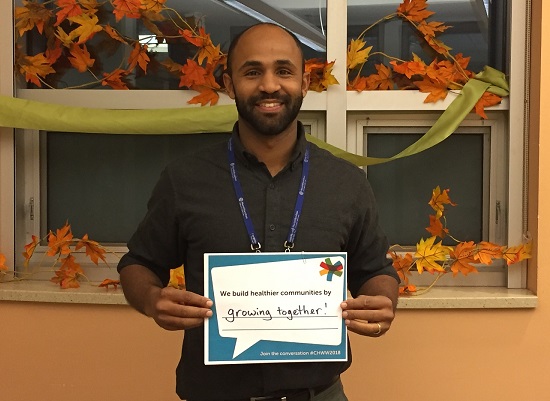
Community Development Worker Andrew Sweetnam says his main job is giving people chances and opportunities to come together, to learn, and to be well.

Healthier Community Builders work in partnership and cooperation with others to create the conditions for everyone to achieve their best possible health and wellbeing. We put the spotlight on these local heroes to bring their work into wider discussions of what it means to build healthier communities. This week, the spotlight is on community gardening at North Hamilton CHC.

When you first enter a group meal and end-of-year celebration of the North Hamilton Community Health Centre gardening group, you might feel like an outsider – for about five seconds. Then someone offers you a plate, and some home-cooked stew, while someone else passes you the bread and butter, and the lady next to you fills your cup. You might be new to this group, but their first message is: you’re welcome here among us. Their second is: What kind of tomato do you like to grow?

Community Development Worker Andrew Sweetnam isn’t about to take credit for the familial atmosphere among the gardening crew he supports.

“My role is a facilitator,” he says. “We initiate the contact people have in groups, but then it’s sort of up to them where they want to go, and how they want to connect. That’s kind of how it should be.”

Many people in the group, he notes, might otherwise be quite isolated, but those who’ve been gardening for a few years have built some strong ties that are sustained beyond the growing season. So while there is some discussion about practicalities for the spring (chief among them the desire for a new wheelbarrow for moving soil and compost to gardeners’ plots), there’s much more discussion about who had the best tomatoes of the season, who has family coming into the city for the holidays, and when they might see each other next.

“We have heard that some of the gardeners who are alone over the holidays, a group of them come together to have a meal together, outside of the garden group and the CHC,” Sweetnam says. “A lot of them have become good friends from meeting and working together in the gardens. That’s the best outcome we could hope for.”

And in terms of outcomes, Sweetnam and other Community Health Workers across Ontario know that gardens are one of the best and most cost-efficient ways to get people thinking more deeply about their diets and health. In fact, research has shown that there may be "measurable impacts on BMI" over time, helping people to battle obesity, among other health and social benefits. Community gardening may also help reduce food insecurity as well as strengthen relationships, according to other research from the U.S.

In his work at North Hamilton CHC, Sweetnam is always looking for ways to enhance the experiences of participants in programs like the gardening group. One of his latest involved seniors getting together in the CHC’s greenhouse space for a mindfulness and growing workshop. A little different from community gardening, this program focused on getting people in touch with the food they eat. Getting the group to think about what they consume -- and supporting those efforts through workshops with dietitians, and mindfulness activities such as drying herbs and making tea with them -- puts people in a better position to take control of their diets, Sweetnam says. Through shared meals, too, people who were isolated have chances to connect and share their experiences of eating healthy (and its challenges) with those around them.

Taking control of diet and eating healthy are important factors for many of the CHC’s clients who are living with multiple chronic conditions. Groups and workshops like the ones that Sweetnam facilitates give people a chance to take control of their own health and achieve their best possible wellbeing. It’s the Model of Health and Wellbeing in action.

“It’s more than just sharing seeds and plants,” Sweetnam says. “It’s also sharing a healthy lifestyle, sharing stories, sharing meals. The number one reason people come out, though, isn’t for the food. They come out to be with others, to make friends, to find a place where they belong.”

Le Centre de santé communautaire de Sudbury-Est ouvre la voie aux centres francophones utilisant Purkinje dans la transition du DME vers TELUS PS Suite

le Mercredi 12 Décembre 2018


Être le premier centre entièrement bilingue mis en ligne sur TELUS PS Suite est un exploit de taille. Pourtant, même s’il s’agit d’un centre de taille modeste, disposant de moins de ressources, le Centre de santé communautaire de Sudbury-Est (SECSC) était plus que prêt pour la transition. Le SECSC a également la distinction d’être le premier centre à passer de Purkinje à TELUS PS Suite. Nous nous entretenons avec le directeur général, Michel Mayer, de la mise en œuvre et des expériences de la mise en ligne dans son centre.
Commençant sur une note très positive, M. Mayer déclare sans ambages : « Le fournisseur [TELUS] était très impliqué et a investi pour aider le SECSC à réussir pendant tout le processus de migration et de mise en œuvre. Cependant, il y avait et il y a toujours des domaines importants qui nécessitent des améliorations. » Vous trouverez ci-dessous certaines des préoccupations et recommandations de M. Mayer.

Durée – Une mise en œuvre de près de 13 mois a maintenu le centre dans un état de mutation continue. Bien que les gens aient compris en général que cela était dû à la première migration d’un Centre de santé communautaire de Purkinje vers PS Suite, maintenir la concentration et l’engagement du personnel était un défi permanent. M. Mayer espère que les leçons tirées de la migration aideront le fournisseur à réduire la durée de l’exercice dans les autres centres qui possèdent Purkinje.

Migration de données – La complexité de la migration des données d’un DME à un autre a été rendue plus difficile par le manque de coopération du fournisseur précédent au tout début de la migration. Heureusement, cette situation a fini par s’améliorer. M. Mayer précise que le succès dépendait de la contribution des deux fournisseurs et recommande que les centres qui ont encore Purkinje insistent sur cette attente dès le début du processus.

Validation des données – Le SECSC continue de se débattre avec des problèmes de qualité des données dans le nouveau DME. Les valideurs de données ont fait face à de nombreux défis, notamment une compréhension insuffisante du nouveau système. Certaines données de Purkinje n’ont pas été facilement transférées vers PS Suite et le centre a dû lancer un processus de nettoyage des dossiers. Ils estiment que cela prendra environ neuf mois. Il est recommandé de commencer à travailler maintenant sur la correction des données dans le DME existant.

Hardware/Software and Internet InfrastructureInfrastructure matérielle/logicielle et Internet – Dans le cadre de la mise en œuvre de Nightingale on Demand, les centres devaient procéder à un inventaire complet et à l’analyse de leur infrastructure matérielle, logicielle et Internet. L’ancien DME de Purkinje était installé localement dans chaque centre et la modification vers la version nuagique (ASP) du DME de PSS était importante. Pour le SECSC, il s’agissait d’un tout nouveau processus. Comprendre les exigences matérielles et d’infrastructure Internet requises pour accéder au DME et s’assurer qu’il répondait aux normes optimales au chapitre de la bande passante, de la confidentialité et de la sécurité était essentiel à la réussite de l’entreprise. M. Mayer recommande aux centres de démarrer le processus d’infrastructure matérielle/logicielle et Internet le plus rapidement possible.

Gestion du changement – La gestion du changement était un sujet de préoccupation majeure. M. Mayer cite plusieurs domaines auxquels tous les centres devraient accorder une attention particulière :

      • Rôles – Comme le recommandait le CSC de South Riverdale, il était très important de définir clairement les rôles et responsabilités du personnel de l’équipe de mise en œuvre. Les petits centres disposant de moins de ressources pourraient se trouver débordés. 
      • Flux de travail – Le centre n’a pas eu l’impression que suffisamment de temps a été consacré aux flux de travail et à aider les utilisateurs à comprendre comment leur flux de travail existant serait modifié ou disparaîtrait. Ils ont également estimé que le fournisseur ne comprenait pas bien les CSC et leur fonctionnement. De plus, le fournisseur n’a pas compris ni expliqué clairement le bien-fondé des modèles standardisés de l’Alliance et leur utilisation, ce qui a créé une certaine confusion après la mise en ligne.
      • Formation – La formation n’était pas axée sur les CSC et a donc omis plusieurs éléments clés. Le formateur n’a pas pu traiter de domaines importants des flux de travail, de l’utilisation de formulaires électroniques et d’autres fonctionnalités propres aux CSC. En l’absence de corrélation directe avec leur propre travail, certains membres du personnel n’ont pas été en mesure d’internaliser correctement la formation.
      • Soutien – Après la mise en ligne, le soutien, y compris les groupes d’apprentissage et les super utilisateurs, ont été des éléments très importants pour la capacité du personnel à effectuer son travail.

M. Mayer félicite le personnel du SECSC pour le travail effectué sur ce projet, affirmant sans équivoque que sans leur dévouement infatigable et déterminé, la mise en œuvre n’aurait jamais abouti. Nous tenons à exprimer notre sincère gratitude à tous les membres du Centre de santé communautaire de Sudbury-Est pour leur diligence, leur travail acharné et leur engagement à réussir cette transition.

Centre de santé communautaire de Sudbury-Est leads the way for Francophone, Purkinje-based centres in TELUS PS Suite EMR transition

le Mercredi 12 Décembre 2018

Being the first fully bilingual centre to go live on TELUS PS Suite is a significant achievement. Yet, even though they are a smaller centre, with fewer resources, Centre de santé communautaire de Sudbury-Est (SECSC) was more than up to the task. SECSC also had the distinction of being the first centre to migrate from Purkinje to TELUS PS Suite. We spoke with the Executive Director Michel Mayer about his centre’s implementation and experiences at going live.

Starting on a positive high note, Mayer emphatically stated: “The vendor [TELUS] was very engaged and invested in helping SECSC succeed during the entire migration and implementation process. However, there were, and continue to be, significant areas that require improvement.” Following are some of the areas of concern along with recommendations from Mayer.

Duration – An almost 13-month implementation kept the centre in a continuous state of flux. Although people generally understood that this was due to the vendor’s first Purkinje to PS Suite migration for a Centre de santé communautaire, keeping people focused and engaged was an ongoing challenge. Mayer hopes that lessons learned during the migration will help the vendor shorten the duration for other Purkinje centres.

Data migration – The complexity of migrating data from one EMR to another was made more challenging by the lack of cooperation from the legacy vendor in the early stages of the migration. Fortunately, this situation eventually improved. Mayer noted that success was dependent on the contribution of both vendors and recommended that the remaining Purkinje centres emphasize that expectation early in the process.

Data validation – SECSC continues to struggle with data quality issues in the new EMR. Data validators had many challenges including an inadequate understanding of the new system. Some of the data in Purkinje was not easily moved to PS Suite and the centre has had to implement a chart cleanup process. They estimate this will take about nine months to complete. It is recommended to begin working on data remediation in the legacy EMR now.

Hardware/Software and Internet Infrastructure – As part of the Nightingale on Demand implementation, centres had to conduct an entire inventory and analysis of their hardware, software and Internet infrastructure. The Purkinje legacy EMR was locally based at each centre and the change to the cloud-based version (ASP) of PSS EMR was a significant one. For SECSC, this was a brand new process. Understanding the hardware and Internet infrastructure requirements that were needed to access the EMR and ensuring that they met optimal standards such as bandwidth, privacy and security was crucial to their success. Mayer recommended that centres start the hardware/software and Internet infrastructure process as soon as possible.

Change management – An area of substantial concern was change management. Mayer identified several areas that all centres should pay particular attention to:

      • Roles – As recommended by South Riverdale CHC, having well-defined roles and responsibilities for staff on the implementation team was very important. Smaller centres with fewer resources could find themselves stretched. 
      • Workflows – The centre did not feel enough time was spent on workflows and helping users understand how their existing workflow would either change or be non-existent. They also felt that the vendor did not quite understand CHCs and how they worked. Also, the vendor did not understand or clearly articulate the reason for, and use of, the Alliance standardized templates and this caused confusion after go live.
      • Training – Training was not specific to CHCs and therefore missed many key elements. The trainer could not address important areas of workflows, the use of eForms and other CHC-specific functionality. With no direct correlation to their own work, some staff were not able to properly internalize the training.
      • Support – After go-live, support - including learning groups and super users - have been very important components to staff’s ability to get their work done.

Mayer praised the staff at SECSC for the work done on this project, saying unequivocally that without their tireless and focused commitment, the implementation would never have succeeded. We would like to express our sincere gratitude to everyone at Centre de santé communautaire de Sudbury-Est for their diligence, hard work and commitment to success in this implementation.

Spotlight on Healthier Community Builders: Lori Kleinsmith receives top honours for health promotion in Ontario

le Jeudi 29 Novembre 2018

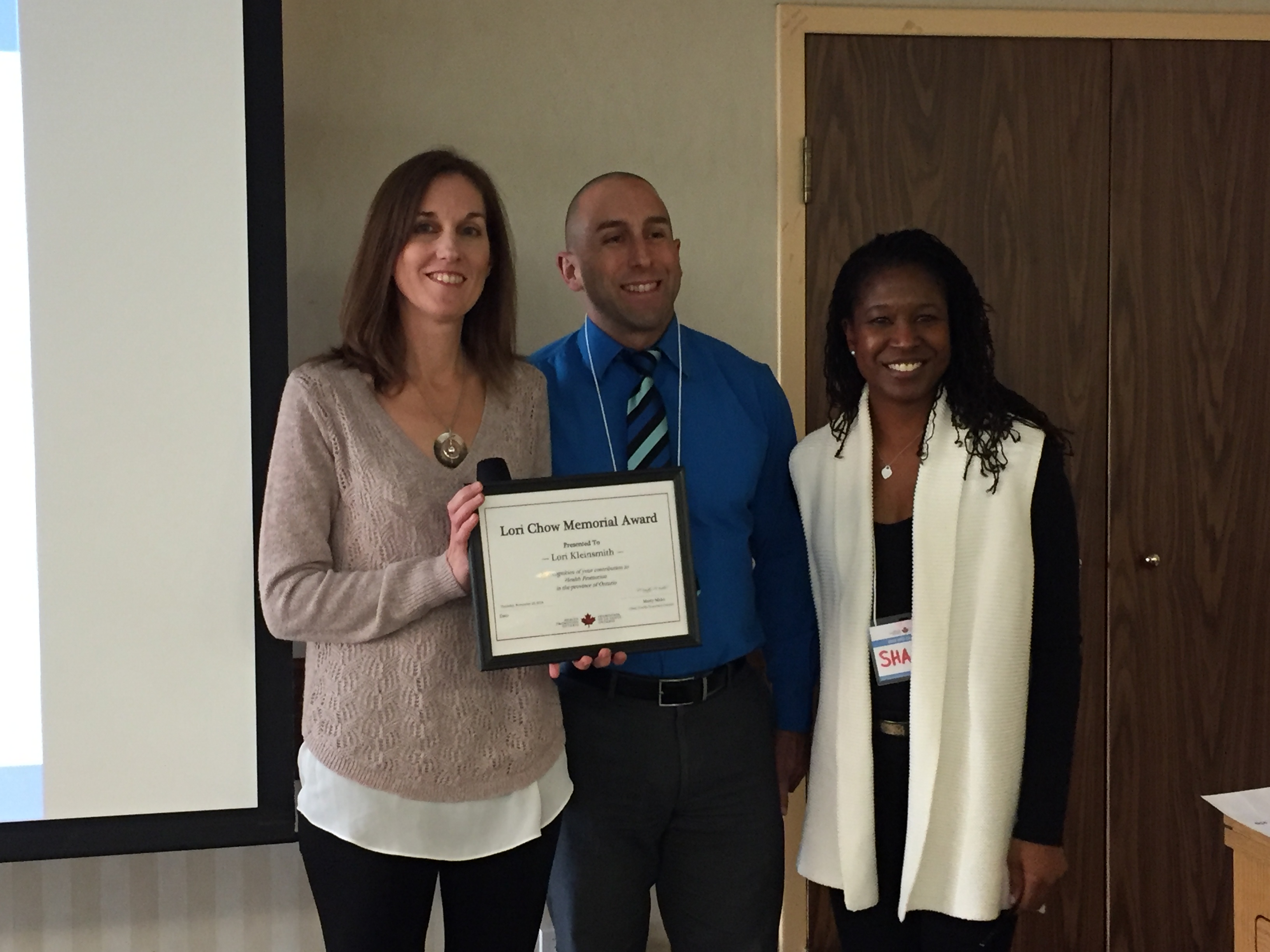
Pictured: Lori Kleinsmith (left) recieves the Lori Chow Memorial Award

Over nearly a decade working as a health promoter at Bridges Community Health Centre in the south of Niagara Region, Lori Kleinsmith has driven herself and others to find ways to impact public policy to support health and wellbeing. Last week, for her advocacy and dedication to her clients and community, Lori was awarded the highest honour for a health promoter in Ontario, the Lori Chow Memorial Award. We had a chance to speak to Lori about the key role health promotion plays in primary health care, and the importance that advocacy plays in allowing her and her colleagues to deliver on their vision of helping clients achieve their best possible health and wellbeing.

What does this award mean to you, particularly to be acknowledged by your peers in health promotion across Ontario?

It’s a great honour and privilege, even just to be put forward for consideration for an award like this. In the world of health promotion, we don’t do a lot of patting ourselves on the back for the work we do. We’re often quite content to work behind the scenes, being connectors, enablers, facilitators. So to be nominated, and then chosen as one of two recipients, it really is an honour.

How long have you been a health promoter?

I began work in this field in 1994 when I graduated from a university degree in health education and a two-year diploma at George Brown College. I originally started out doing health and wellness programming at a large corporate fitness centre, and then that morphed into doing work in substance use and misuse prevention for a number of years. After that, I joined Bridges CHC, and I’ve been there for nine years.

You’ve been involved in advocacy campaigns for public oral health programs and better income security. Why is advocacy such an important part of a health promoter’s role in your opinion?

I base my professional work on the Ottawa Charter for Health Promotion, the groundbreaking document developed in 1986. It was a new field then, and it took me a while to really see the importance of advocacy at first. It moves us health promoters a bit out of our comfort zones, and we can get initially really comfortable doing program delivery, promotion of health awareness and communications on their own. But when you really start to look at what the Ottawa Charter describes as strategies and actions for a health promoter, advocating for healthy public policy encircles all of the work we do.

When you really peel back the layers of what causes sickness and illness in the first place, I see my role as one that is grounded in public policy. In order for change to happen, you have to be involved in politics. That doesn’t mean you have to be partisan in any way. It means you have to be comfortable engaging and interacting with political stakeholders from all parties and all levels of government, as well as other partners in the community, whether you’re talking about affordable housing, food security, dental or any other area that impacts on the social determinants of health.

It’s impossible to work upstream without trying to have an impact on policy, right?

Yes, exactly.

How is health promotion different when it’s embedded in a Community Health Centre setting?

In a CHC, we know as health promoters that we have to be able to touch on all issues. That doesn’t mean we’re complete subject matter experts on every issue and challenge our clients are facing, but we do have to keep abreast of a number of things and recognize where we can have the most impact, or where the greatest need is. So for both myself and my colleague Ashley who works out of Bridges’ other site, we’re working with our municipal councils on housing, including housing planning, and encouraging the adoption of a housing action plan. I work with community and social services to help meet the needs of our clients as much as I work with public health. A lot of our work crosses over the traditional biomedical model of health and health care.

Do you find that working alongside clinicians has an impact on your work? What are some of the benefits of working closely as part of an integrated interprofessional health team?

I do still see clients for one-on-one appointments to support smoking cessation. Being involved like that is a great way to connect with other clinical staff on specific clients’ issues, and to understand their challenges better.

I had a client in a recent group for smoking cessation who expressed having been under a significant amount of stress. He was finding quitting smoking very challenging because all he’d been able to find were precarious work and piecemeal contracts in his field. So this was having a great impact on his physical and mental health. I hear examples and stories from our clinical staff all the time of issues like this that impact people’s health directly, from housing conditions to income security to a lack of health benefits. Knowing these stories gives me direction when I’m doing advocacy on clients’ behalf, and gives me a chance to give voice to their concerns. It makes my work more real, and more credible, I think.

What’s been the most rewarding part of your work? What keeps you motivated to advocate?

I think the most rewarding aspect of working at Bridges CHC is getting to work alongside so many like-minded people. It’s also been rewarding to find interesting opportunities to spur change. I never dreamed I would be involved in a research project with professors from Brock University and United Way staff on precarious employment and its health effects. I really love to see connections being made, and people working together to determine the direction people need to head to see change. It’s never boring, it’s never dull. It can be frustrating, because change happens so slowly, and sometimes we see regression.

How important is social media to health promoters and others trying to promote healthy public policy? (Follow Lori on Twitter @LoriKleinsmith)

I started up fairly early, in 2010, on Twitter. I found out very quickly that by following people who were working in my circle, or at other CHCs and other social service agencies, as well as political leaders and candidates, and news media on health beats, I would have a way to check in every day on key issues. It’s also been a great tool to continue connections with various people I’ve met at conferences, meetings, and other events over the years. There’s so much value in broadening your understanding of social and political issues, and understanding how to position your advocacy work by following things closely on Twitter. It allows you to see multiple sides of an issue, which helps to shape your messaging, your work, and who you might connect with or partner with to do advocacy work.

What does the future hold for health promotion as a role in comprehensive primary health care?

For health promotion, taking our work to the next level will mean finding ways to put an anti-oppression lens on things like housing policy and other issues. I did a webinar for Maytree, for instance, on bringing a human rights-based approach to access to dental care, talking about and asking questions using human rights language about access to health care, and why it doesn’t include dental. I still have a lot to learn in this area, but I want to encourage other health promoters to take up these challenges as they continue to do work in their communities.

Any words of wisdom for younger health promoters just starting out?

Health promotion is such a diverse, flexible, open profession to be in. It allows us to look for opportunities to do something that’s going to be impactful on issues that underpin health. And if we can get people thinking like that about public policy, asking, “How is this going to impact health?” and trying to get people to do things differently, working with partners they’ve never considered working with, testing new ideas – well, that’s how change happens.

Insight from the inside of South Riverdale CHC's TELUS PS Suite EMR implementation

le Mercredi 21 Novembre 2018

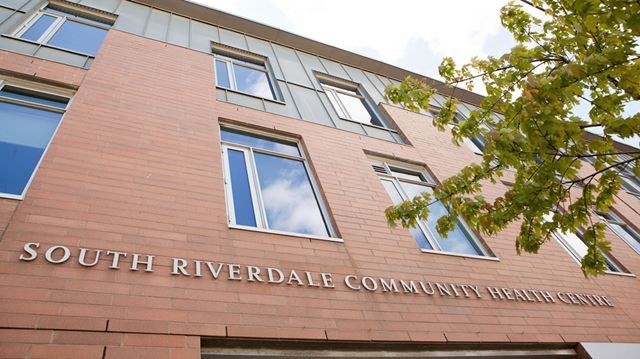
The South Riverdale Community Health Centre (SRCHC) agreed to be the beta testing site for the migration and implementation of Nightingale on Demand (NOD) to TELUS PS Suite Electronic Medical Record (EMR). Kathleen Foley, the centre’s Manager of Quality Improvement and Evaluation along with Lisa Kha the centre’s Data Management Coordinator, Parth Shah, Data Administrator, Hannah Bang, Administrative Support and Rebecca Merritt, Manager, Service Administration & Quality were all very accustomed to leading large change management projects at SRCHC. This team accepted the daunting task ahead and fully understood what it meant to be a beta site. They knew that, as the beta centre, they would face tremendous challenges, but were prepared to meet those challenges head-on. They also knew that any centres going live after them would benefit from lessons learned, processes and procedures developed and workflows documented during their implementation and so were diligent in their efforts.

Nevertheless, the centre was thoroughly tested. Spending more than 7,000 work hours over 18 months from kick off to go live. “The vendor”, said Kathleen, “is working hard to better understand CHCs, the work we do and how we do it.  I think they’re getting there.”

Kathleen went on to emphasize “and it is very important that if you have providers, who’ve used PS Suite elsewhere, reiterate to them that this is not the same. The complexity of our clients and our mandated reporting requirements have put design demands on the system that is different from what they might be accustomed to.” 

Kathleen offered to share two key insights into SRCHC’s implementation and the centre’s experience with the new EMR.

  1. Focus on Project Management – During the transition time having well-defined roles, good team structure and a committed executive sponsor helps immensely. Initially, there was confusion because of the lack of a working project plan, however, the centre understood that verifying the validity, order and timing of tasks would be a beta site requirement.
  2. Focus on Change Management – SRCHC provided tremendous support for staff through super users, regular briefings, and during the transition period, increased administration and appointment times and providing higher levels of individualized support for those people struggling with the new EMR. It’s been three months since they have been live on the new system and most staff have gone back to regular appointment times. Navigation and workflow in the new system can often be challenging and building time into regular team meetings to address questions has been very successful in providing support and building best practices.

The centre faced problematic functionality of the sector required forms and navigation in the PS Suite environment and SRCHC continues to work with the Alliance and the Telus team to address these issues.  

There was also good news. There are significant improvements in communication and document management in the new EMR. Also, sharing in PS Suite is possible and very easy. This means a centre that has developed eForms, encountering supports and other EMR-related documents can share with other centres. For a sector that values collaboration and building communities of practice, this is welcome news. The amazing staff at SRCHC continue to forge ahead with their new EMR.  We would like to express our sincere gratitude to everyone at South Riverdale Community Health Centre for their diligence and hard work in this implementation and wish them the best of luck as they prepare for Accreditation in January 2019.

Spotlight on Healthier Community Builders: Quest CHC celebrates partners

le Mercredi 14 Novembre 2018
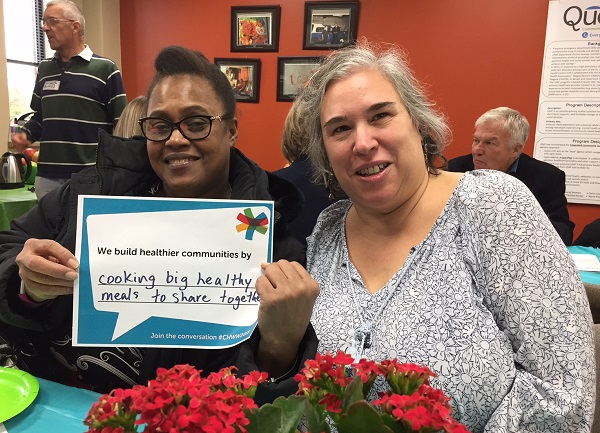
These Quest Community Builders helped prepare lunch!

Healthier Community Builders are people who work in partnership and cooperation with others to create the conditions for everyone to achieve their best possible health and wellbeing. They could be staff or volunteers at an Alliance member centre, or even a board member from the community. Or perhaps they are a partner who works more widely, but whose work intersects with health and wellbeing, such as a coach, community organizer, or local leader. Whatever their background, the work that Healthier Community Builders do is work we ALL rely on every day to make our neighbourhoods, workplaces, recreation facilities, public spaces, health and social services, and community activities come to life. We put the spotlight on these local heroes to bring their work -- and its importance to overall health and wellbeing -- into wider discussions of what it means to build a healthier community. This week, the spotlight is on St. Catharines.

To cap off their Community Health and Wellbeing Week celebrations, staff and volunteers at Quest Community Health Centre in the Queenston Street neighbourhood of St. Catharines held a hearty group lunch and spent some time reflecting on the role of community in the centre's work.

Quest CHC Executive Director Coletta McGrath was on hand, and offered remarks saluting the CHC's 200+ volunteers (many of whom were attending the luncheon), the centre's interdisciplinary staff, and the guidance of the CHC's community-governed board of directors, for making sure that the direction of the centre's services and health care meet local needs. But the tagline of this year's Community Health and Wellbeing Week -- Building Healthier Communities Together was top of mind for Quest, and so the Healthier Community Builder Awards they handed out went to three important external partners, all of which, as McGrath said, are integral to meeting the community's health and wellbeing needs.

"We regularly connect with, and collaborate with our community partners to ensure the availability of individualized, client-services, and to enhance our capacity to do community building. That's what community is about," McGrath said.

Healthier Community Builder awards were given to:

Queenston Community Roundtable (links to Facebook page): Represented by Caleb Ratzlaff and Brandon Agnew, this group has worked with Quest to invigorate an assets-based community development approach to gathering residents, business owners, service providers, faith-based groups and local leaders to generate tangible ideas for activities, events and improvements to enhance the liveability and community offerings in the Queenston Street area. It's a regular table with regular engagements, and Quest has found them to be strong partners in setting goals for the area that are achieveable help change lives.

Niagara Connects: Mary Wiley, Executive Director, accepted the award on behalf of Niagara Connects, which is responsible for the Niagara Report, a critical resource in the region for identifying existing and emerging community needs, and keeping tabs on the many factors that impact the determinants of health. Niagara Connects also facilitates knowledge exchange between service providers, community organizations and others, to facilitate best practices in health and social services and to work towards a more seamless and nimble experience for Niagara residents. They are also the authors and stewards of the Niagara Region's Mental Health and Addictions Charter, and have worked extensively on transportation and lessening the impacts of isolation in the region. "When we talk about evidence to support building a healthier community, it's still really about people at the end of the day," Wiley said.

Niagara Regional Police Services, Chief Bryan MacCulloch. The last award went to an individual -- the local Police Chief, who has 33 years in policing, but who has also spent time on community boards getting to know the local issues from a number of diverse perspectives. McGrath also mentioned his participation in the overdose prevention and education network in Niagara, consistently attending every meeting and offering sensitive and creative contributions to the wider discussions of responses to the crisis. "Chief MacCulloch is about building relationships -- with individuals, and across organizations. And he's also about building a stronger community."

We salute this week's Healthier Community Builders! If you have a Healthier Community Builder in your area you'd like to shine the spotlight on, send us a message at communications@allianceON.org.