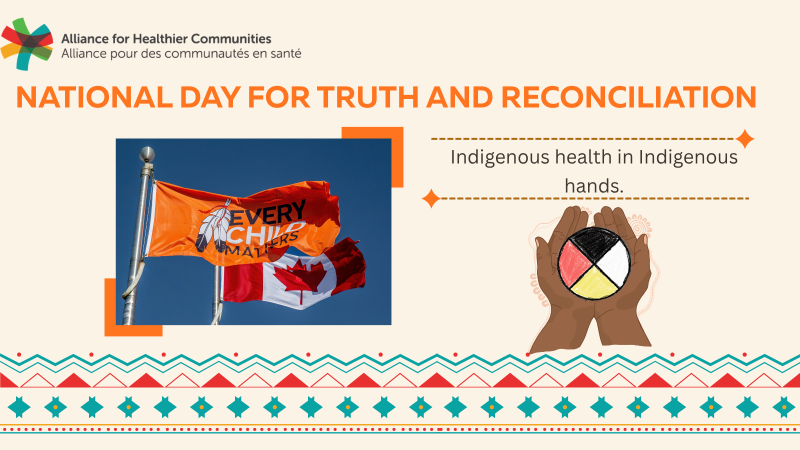
Journée nationale de la vérité et de la réconciliation : Nous honorons la vérité et l’histoire pour tracer la voie vers la réconciliation
Date: 
Wednesday, September 30, 2026

À l’occasion de la Journée nationale de la vérité et de la réconciliation, le 30 septembre, aussi connue sous le nom de Journée du chandail orange, nous rendons hommage aux témoignages et à l’histoire des enfants autochtones, de leurs familles et de leurs communautés qui ont été touchés par les pensionnats pour Autochtones.

La Journée du chandail orange est une initiative communautaire visant à commémorer et à honorer l’histoire de Phyllis Webstad, survivante d’un pensionnat pour Autochtones, et de tous les autres enfants qui ont été arrachés à leur foyer et à leur famille et qui ont survécu aux pensionnats. Nous nous souvenons également des enfants qui n’ont pas survécu aux pratiques coloniales qui se sont perpétuées pendant des générations.

En Ontario, le pensionnat pour Autochtones de l’Institut Mohawk, à Brantford, a été le dernier à fermer ses portes. Il a été le pensionnat pour Autochtones ayant été en activité le plus longtemps et le plus grand de son genre au Canada. Il a fonctionné de 1828 à juin 1970. Il est aujourd’hui un musée et un lieu d’apprentissage transformé par le Woodland Cultural Centre.

Il y avait 18 pensionnats pour Autochtones reconnus par le gouvernement fédéral en Ontario. Partout en Ontario, des communautés autochtones et des communautés issues de la colonisation vivent encore avec les répercussions et les effets de la politique gouvernementale traumatisante visant à assimiler les enfants autochtones.

Dans la Charte pour l’équité en santé de l’Alliance pour des communautés en santé, que nous et nos membres reconnaissons et appuyons, « Nous reconnaissons que les effets de plus de cinq siècles de colonisation - notamment le génocide, la dépossession et l'expulsion des territoires traditionnels, l'assimilation forcée et le désengagement par rapport à l'ascendance, la culture et la langue, les pensionnats indiens et la rafle des années 1960, la Loi sur les Indiens, parmi de nombreuses autres politiques, pratiques et mesures législatives coloniales oppresses - ont entraîné des résultats négatifs disproportionnés en matière de santé pour les Autochtones du Canada. »

Il est essentiel de connaître et de reconnaître l’histoire et les réalités actuelles des peuples autochtones en Ontario afin de participer de façon significative à l’alliance et à la réconciliation. La Commission de vérité et réconciliation du Canada et ses 94 appels à l’action soulignent l’ampleur du travail qui reste à accomplir pour remédier aux préjudices intergénérationnels et aux effets durables des politiques coloniales. Dans le secteur de la santé, nous sommes déterminés à répondre à l’appel à l’action des communautés autochtones en faveur de « la santé des Autochtones entre les mains des Autochtones ».

Dans notre Charte pour l’équité en santé, nous décrivons cette approche ainsi : « Notre travail de promotion de l'équité en santé des Autochtones est ancré dans notre engagement envers la réconciliation, les relations d'alliés chargées de sens et le droit des Autochtones à l'autodétermination, ce qui comprend notre engagement envers la santé des Autochtones entre les mains des Autochtones. Cela commence par la reconnaissance et la réalisation des droits individuels et collectifs des Autochtones. »

À l’Alliance, nous poursuivons notre travail avec Indigenous Primary Health Care Council (IPHCC), et en adhésion conjointe avec des organismes autochtones de soins de santé primaires. Il s’agit d’une des façons dont nous faisons progresser et défendons le principe de la « santé des Autochtones entre les mains des Autochtones ». Cette approche est essentielle à la pérennité, à l'autogouvernance, au bien-être et à la guérison des communautés autochtones.

Pour en savoir plus sur le travail remarquable de l’IPHCC, visitez son site Web.
Truth and Reconciliation Day: We Honour the Truth and History to Reconcile a Path Forward

Date: 
Wednesday, September 30, 2026

On Truth and Reconciliation Day on September 30, also known as Orange Shirt Day, we honour the stories and histories of Indigenous children, their families and communities who were impacted by Indian Residential Schools. 

Orange Shirt Day is a grassroots day to remember and honour the story of Indian Residential School Survivor Phyllis Webstad, and all the other children who were taken from their homes and families and who survived Indian Residential Schools. We also remember those children who did not survive the colonial practices that lasted generations.

In Ontario, the Mohawk Institute Indian Residential School in Brantford was the last to close. It was Canada’s longest running and largest of its kind, and it operated from 1828 to June 1970. It is now a museum and educational site transformed by the Woodland Cultural Centre. 

There were 18 federally recognized Indian Residential Schools in Ontario. Across Ontario, there are communities, indigenous communities and settler communities living with the impacts and effects of the traumatic government policy to assimilate Indigenous children. 

In the Alliance for Healthier Communities’ Health Equity Charter, that we and our members believe in and endorse,  "we recognize that the effects of more than five centuries of colonization, including genocide, dispossession and displacement from traditional lands, forced assimilation and disengagement from ancestry, culture and language, residential schools and the Sixties Scoop, the Indian Act, among many other oppressive colonial policies, practices and legislation, have resulted in disproportionately poor health outcomes for Indigenous people across Canada."

It is critical for us to know and acknowledge the history and the current realities of Indigenous people in Ontario in order to be meaningfully engaged in allyship and reconciliation. The Truth and Reconciliation Commission and the 94 Calls to Action, outline that there is much work to do to address the intergenerational harms and lasting effects of colonial policies. In healthcare, we are committed to answering the call to action from Indigenous communities for "Indigenous health in Indigenous hands."

From our Health Equity Charter, we describe this approach as "our work of advancing Indigenous health equity is rooted in our commitment to reconciliation, meaningful allyship relationships and Indigenous people’s rights to self-determination, which includes our commitment to Indigenous Health in Indigenous Hands. It starts with the recognition and realization of the individual and collective rights of Indigenous people."

As the Alliance, we continue to work with the Indigenous Primary Health Care Council (IPHCC) and in joint membership with Indigenous Primary Health Care Organizations. This is just one way we are advancing and advocating for “Indigenous Health in Indigenous Hands”. This is critical to sustainability, self governance, wellbeing, and healing. 

For more information on the incredible work of IPHCC, visit their website.


Implementing Social Prescribing in Partnership with Large Health Care Institutions

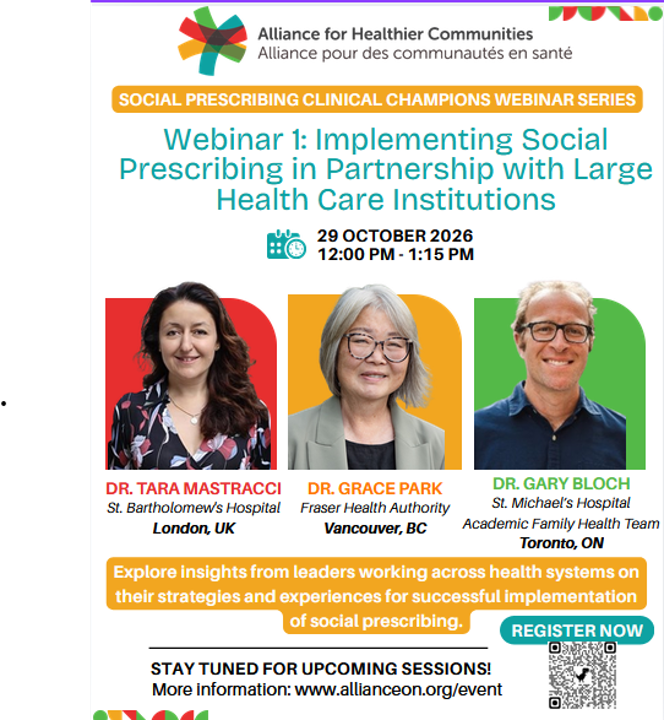
Event poster with details and speakers' headshots.
Click image to enlarge

This event is presented by the Alliance for Healthier Communities as part of our "Social Prescribing Clinical Champions" Webinar Series

Save the date! Registration opens soon for Implementing Social Prescribing in Partnership with Large Health Care Institutions, the first webinar in the Social Prescribing Clinical Champions webinar series. 

Join Dr. Tara M Mastracci, MD FRCSC (St. Bartholomew's Hospital, London, UK) as she presents on implementation successes with social prescribing in a large hospital. Dr. Mastracci will be joined by Dr. Grace Park who will share implementation experiences from Fraser Health Authority and Dr. Gary Bloch, who will discuss the experience at St. Michael’s Hospital Academic Family Health Team.

This is the first webinar in a four-part series, Social Prescribing Clinical Champions. Watch this space for details about the rest of the series - coming soon.

#Intended audience

  • Clinical and non-clinical staff working in a variety of health settings

  • Healthcare leaders and implementers

  • Healthcare professionals

Details
Thursday, October 29, 2026 - 12:00
12:00-1:15 pm
Cost: 
Free
Internal/External: 
Event Type: 
Location
Online via Zoom

ECHO Liver - Advanced HCV

This learning series is presented by ECHO@UHN

Diagnose & manage your Hepatitis C patients through interactive online medical education. Each session includes a didactic lecture by a content expert & real patient cases (anonymized) presented by participants.

# Program learning objectives:

  • Develop a deeper understanding of HCV pathophysiology, diagnosis, and treatment.
  • Identify practical strategies to identify and manage HCV in real-world clinical settings.
  • Create confidence to initiate treatment and follow patients through cure.

# Series Schedule

All sessions run on Thursdays from 1:00PM - 2:30PM

  • November 12 | HCV Simplified: Rapid treatment starts and minimum work up
  • November 19 | Complicated Cases: HCV treatment in advanced liver disease, and population specific consideration
  • November 26 | Treatment Interruption, Treatment Failure, Re-infection and Re-Treatment

Show Formatting options

Details
Thursday, November 12, 2026 - 13:00
Thursday, November 19, 2026 - 13:00
Thursday, November 26, 2026 - 13:00
Thursdays in November - 1:00-2:30 pm
Cost: 
Free
Internal/External: 
Event Type: 
Location
Online event

PHO Rounds: Celebrating 40 years of the Ottawa Charter | Part Two: Moving Health Promotion Upstream

This event is presented by Public Health Ontario.  In 1986, the Ottawa Charter for Health Promotion was adopted, fundamentally changing how health is viewed and promoted. This is the first part of a four-part series which will celebrate 40 years of the Charter by exploring the origins of health promotion and how it’s practiced in Ontario today.

# Session Details: Part Two - Moving Health Promotion Upstream

We often use a stream analogy to describe levels of public health action, where working upstream means addressing the structural and social determinants of health.

In the second session in this four-part series, join three dynamic speakers to hear how their organizations work upstream:

  • Liben Gibremikael, Executive Director of TAIBU Community Health Centre will introduce us to the Cliff Analogy, created by Dr. Camara Jones, and outline how that approach drives all work at TAIBU;
  • Tara Wincott will share Niagara Region’s approach to selecting mid-and-upstream initiatives; and
  • Tawnia Healy from the North Bay Perry Sound Health Unit will discuss early adversity and building resilience as an upstream approach.

# Intended audience:

Health promoters working in a variety of settings, public health physicians and public health professionals with interest in health promotion, healthcare professionals interested in public health and health.

# By the end of this session, participants will be able to:

  • Describe the Cliff Analogy and the concepts of upstream, midstream and downstream.
  • Differentiate between upstream, midstream and downstream health promotion approaches.
  • Reflect on where your current work is positioned and identify opportunities to move further upstream.

# Register for other sessions in this series

  • Part One: Health Promotion in Practice, Tuesday, September 29, 2026
  • Part Three: Setting Community Priorities, Tuesday November 10, 2026. Registration opening soon; watch for it here.
  • Part Four: Details coming soon. Hosted in partnership with Health Promotion Ontario, Thursday November 19, 2026. Registration opening soon:; watch for it here.
Details
Thursday, October 15, 2026 - 10:00
10:00-11:15 am
Cost: 
Free
Internal/External: 
Event Type: 
Location
Online event

PHO Rounds: Celebrating 40 years of the Ottawa Charter | Part One: Health Promotion in Practice

This event is presented by Public Health Ontario. 

In 1986, the Ottawa Charter for Health Promotion was adopted, fundamentally changing how health is viewed and promoted. This is the first part of a four-part series which will celebrate 40 years of the Charter by exploring the origins of health promotion and how it’s practiced in Ontario today.

# Session Details: Part One - Health Promotion in Practice

This first session in this four-part series will feature Andrea Bodkin from Public Health Ontario who will provide an overview of health promotion and the Charter. We’ll then explore two case studies:

  • Stephanie Ross, Program Manager will provide an overview of how health promotion is structured at the Simcoe Muskoka District Health Unit,
  • Brittany McBeath will introduce us to culturally grounded Indigenous health promotion, what it looks like and how it is implemented.

# Intended audience:

Health promoters working in a variety of settings, public health physicians and public health professionals with interest in health promotion, healthcare professionals interested in public health and health.

# By the end of this session, participants will be able to:

  • Describe the Ottawa Charter for Health Promotion, including its strengths and weaknesses.
  • Compare the Ottawa Charter to two examples of health promotion implementation.
  • Explain five interconnected cultural domains and four core cultural knowledge translation pocesses for Indigenous health promotion.

# Register for other sessions in this series

  • Part Two: Moving Health Promotion Upstream, Thursday October 15, 2026
  • Part Three: Setting Community Priorities, Tuesday November 10, 2026. Registration opening soon; watch for it here Part Four: Details coming soon. Hosted in partnership with Health Promotion Ontario, Thursday November 19, 2026. Registration opening soon; watch for it here.   
Details
Tuesday, September 29, 2026 - 10:00
10:00-11:15 am
Cost: 
Free
Internal/External: 
Event Type: 
Location
Online event

Journée des Franco-Ontariennes et Franco-Ontariens 2026 : Des principes que nous défendons aux services que nous offrons

Date: 
Friday, September 25, 2026

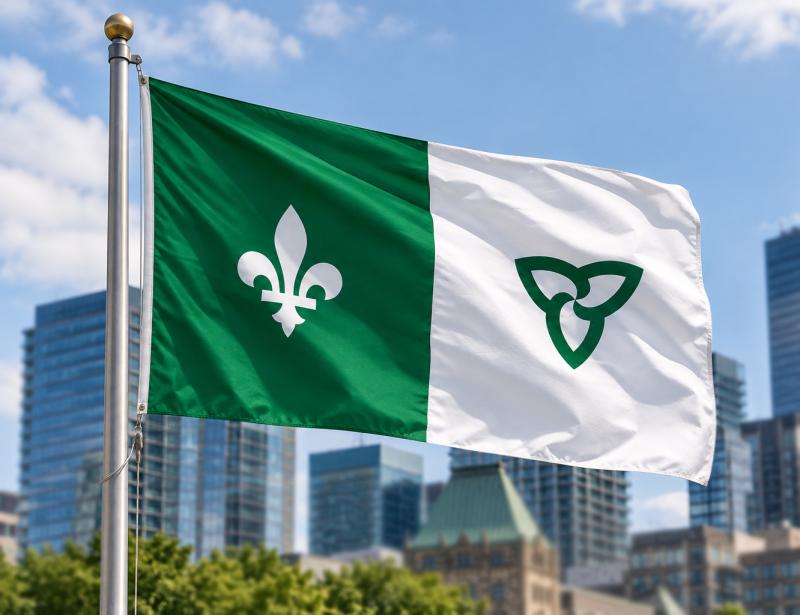
Alors que les Franco-Ontariennes et les Franco-Ontariens hissent aujourd’hui le drapeau vert et blanc partout dans la province, l’Alliance pour des communautés en santé célèbre les plus de 744 000 francophones¹ qui contribuent à façonner les collectivités de l’Ontario et réitère son appel en faveur d’un système de santé qui leur offre des services dans leur propre langue.

En août, le français s’est retrouvé au cœur du débat national lorsque le Canada a décidé de suspendre les négociations commerciales avec les États-Unis après que les négociateurs américains eurent demandé des concessions concernant les mesures de protection de la langue française, notamment les exigences en matière d’étiquetage bilingue, le financement de la culture francophone et les règles encadrant les médias en français en ligne. Le premier ministre Mark Carney a décrit ces mesures comme des droits fondamentaux plutôt que comme des coûts commerciaux, et les Canadiennes et les Canadiens ont fait preuve d’une solidarité immédiate et sincère.

Cette solidarité est la bienvenue. Elle est aussi un test. Défendre le français comme principe à la table des négociations est une chose. Offrir des services en français au quotidien à une personne qui tente de décrire une douleur à la poitrine à un professionnel de la santé qui ne parle pas sa langue en est une autre. En Ontario, c’est ce deuxième test qui détermine les résultats en matière de santé.

Nous constatons des signes encourageants indiquant que cette reconnaissance gagne du terrain. Le 25 septembre, la municipalité de Shuniah, près de Thunder Bay, hissera pour la première fois le drapeau franco-ontarien. L’Association française des municipalités de l’Ontario (AFMO) a salué cette décision, sa présidente, Michelle Boileau, qualifiant la levée du drapeau de symbole de fierté, de reconnaissance et d’appartenance². Nous nous joignons à l’AFMO pour féliciter Shuniah et encourager toutes les municipalités de l’Ontario à emboîter le pas. Le Nord-Ouest de l’Ontario est également une région où les services de santé en français sont parmi les plus difficiles à trouver. Nous espérons que le drapeau hissé à Shuniah marquera le début d’un engagement plus large.

Le 8 septembre, le Centre de planification des services de santé en français (CPSSF) a lancé son premier processus de planification stratégique sous le thème « Notre voix, notre santé »³, afin d’établir les priorités de son Plan stratégique 2028-2031. Des consultations sont actuellement en cours partout dans la province : à Toronto, Hawkesbury, Ottawa, Windsor, Sudbury, Thunder Bay et Barrie, ainsi que dans le cadre de séances virtuelles et d’un sondage en ligne, avec l’appui d’un comité consultatif de 34 membres représentant les six régions de Santé Ontario. La directrice générale, Natalie Aubin, a indiqué que les soins primaires se dégagent déjà comme une priorité.

« Il y a un an, nous avons accueilli favorablement la création du CPSSF. Aujourd’hui, nous le voyons faire exactement ce que nous espérions : demander aux francophones ce dont ils ont besoin, région par région », affirme Sarah Hobbs, directrice générale de l’Alliance. « Nous encourageons nos membres, les patients, les familles et les fournisseurs de soins francophones partout en Ontario à participer à ces consultations. C’est maintenant que les priorités sont établies. »

Mais une stratégie n’est aussi solide que les changements qu’elle permet d’apporter, et certaines lacunes doivent encore être comblées en Ontario. La première concerne les données. La direction du CPSSF a reconnu que les données nécessaires pour évaluer l’accès réel aux services de santé en français demeurent insuffisantes, que les indicateurs de rendement linguistique ne sont pas encore systématiquement intégrés dans tous les secteurs de la santé et que les pratiques actuelles en sont encore à leurs débuts⁴. Cela fait écho à ce que l’Alliance affirme depuis longtemps : de meilleures données sont une condition préalable à une meilleure planification. Nous ne pouvons pas combler une lacune que nous ne pouvons pas voir.

Une autre lacune importante concerne le calendrier. Le plan stratégique du CPSSF sera publié à l’automne 2027, pour une mise en œuvre à compter de 2028. Le Plan d’action pour les soins primaires de l’Ontario vise à rattacher chaque personne de la province à un médecin de famille ou à une équipe de soins primaires d’ici 2029. L’appel de propositions 2026-2027 prévoit plus de 250 millions de dollars pour la création et l’expansion d’équipes, et le budget de 2026 ajoute 325 millions de dollars supplémentaires⁵. Les décisions qui détermineront si les francophones auront accès à des soins primaires sont prises dès maintenant, soit un cycle complet de planification avant l’arrivée de la stratégie francophone.

Fait encourageant, les membres de l’Alliance et les partenaires francophones partout en Ontario répondent déjà à l’appel de la province visant à accroître l’offre de soins primaires, en créant de nouvelles capacités concrètes pour les francophones. Le 23 septembre, lors d’un pique-nique communautaire organisé à Mississauga dans le cadre de la Journée des franco-ontariennes et franco-ontariens, le gouvernement de l’Ontario a annoncé un financement annuel de 2 119 600 $ pour une nouvelle clinique de soins primaires du Centre francophone du Grand Toronto (CFGT), l’une des 124 nouvelles équipes de soins primaires ou équipes dont les services seront élargis grâce à l’appel de propositions 2026-2027 de la province⁶. Une fois pleinement opérationnelle, la clinique pourra desservir jusqu’à 4 800 patients francophones grâce à une équipe interprofessionnelle composée de médecins, d’infirmières praticiennes et d’infirmiers praticiens, d’infirmières et d’infirmiers autorisés, de thérapeutes et de diététistes. Son ouverture est prévue au début de 2027.

« Les francophones partout en Ontario méritent d’avoir accès à des services de grande qualité qui répondent à leurs besoins et tiennent compte de leurs réalités, notamment à des soins de santé en français », a déclaré l’honorable Natalia Kusendova-Bashta, ministre des Soins de longue durée et ministre des Affaires francophones, lors de l’annonce. « En tant qu’infirmière, je sais à quel point il est important de comprendre et d’être compris. Recevoir des soins en français permet aux patients de poser des questions et de mieux comprendre l’information qui leur est transmise. »

« Partout en Ontario, les membres de l’Alliance et les partenaires francophones démontrent qu’il est à la fois possible et essentiel d’élargir l’accès aux soins primaires en français. À titre d’exemple, l’annonce de la nouvelle clinique du CFGT à Mississauga témoigne de cet engagement commun à faire en sorte que les francophones puissent recevoir des soins complets et interdisciplinaires dans la langue dans laquelle ils sont le mieux à même d’exprimer leurs besoins et de participer pleinement à leurs soins. Nous devons continuer à miser sur cet élan, région par région, afin que des soins en français soient disponibles partout où les communautés francophones vivent et grandissent », ajoute Estelle Duchon, directrice générale du Centre francophone du Grand Toronto et coprésidente du Comité consultatif francophone de l’Alliance.

Au-delà des soins de santé, les États généraux de l’AFO⁷ ont mis en garde contre un risque de déclin graduel de la francophonie en Ontario et fixé l’objectif de faire passer la proportion de francophones à six pour cent de la population de la province d’ici 2050. Un plan d’action communautaire doit être dévoilé lors du Congrès de l’AFO le mois prochain⁸. Les communautés qui ne peuvent pas obtenir des soins en français ne restent pas et ne peuvent pas se développer. La santé est une composante essentielle de cette vision.

L’Alliance continuera de travailler avec le CPSSF, l’AFO, nos membres francophones, ainsi qu’avec chaque partenaire et allié qui partage cet objectif, jusqu’à ce que chaque francophone en Ontario puisse avoir accès à des soins primaires dans sa propre langue, où qu’il vive.

Tout comme les Canadiennes et les Canadiens se sont mobilisés pour défendre nos droits linguistiques sur la scène internationale, nous sommes convaincus que l’Ontario saura faire preuve de la même détermination en protégeant le droit de chaque francophone d’être compris par son propre clinicien.


[1] - Dénombre les francophones selon la définition inclusive de francophone de l’Ontario, ainsi que les personnes qui parlent français à la maison, conformément à la définition de l’Assemblée de la francophonie de l’Ontario (AFO).

[2] -   AFMO, 25 août, 2026. 

[7] - Une initiative collective d’envergure lancée en mai 2025 par l’Assemblée de la francophonie de l’Ontario (AFO) pour façonner l’avenir des communautés franco-ontariennes à l’horizon 2050.


Franco-Ontarian Day 2026: From Principles We Defend to Practices We Deliver

Date: 
Friday, September 25, 2026

As Franco-Ontarians raise the green and white flag across the province today, the Alliance for Healthier Communities celebrates the more than 744,000 Francophones1 who shape Ontario's communities and renews its call for a health system that serves them in their own language.

In August, French became a national conversation as Canada moved to suspend trade negotiations with the United States after American negotiators sought concessions on protections for the French language, including bilingual labelling requirements, funding for Francophone culture, and rules governing French-language media online. Prime Minister Mark Carney described these as fundamental rights rather than trade costs, and Canadians responded with a solidarity that was immediate and heartfelt.

That solidarity is welcome. It is also a test. Defending French as a principle at a negotiating table is one thing. Delivering it as a service, on a daily basis, to a patient trying to describe chest pain to a clinician who does not speak their language, is another. In Ontario, that second test is the one that determines health outcomes.

We are seeing encouraging signs that recognition is growing. On September 25, the municipality of Shuniah, near Thunder Bay, will raise the Franco-Ontarian flag for the first time. The Association française des municipalités de l'Ontario welcomed the decision, with President Michelle Boileau calling the flag-raising a symbol of pride, recognition and belonging2. We join AFMO in congratulating Shuniah and in encouraging every Ontario municipality to follow. Northwestern Ontario is also a region where French-language health services are among the hardest to find. We hope the flag over Shuniah marks the beginning of a broader commitment.

On September 8, the Centre de planification des services de santé en français (CPSSF) launched its first strategic planning process under the theme "Our voice, our health,"3 to set the priorities of its 2028-2031 Strategic Plan. Consultations are underway right now across the province: Toronto, Hawkesbury, Ottawa, Windsor, Sudbury, Thunder Bay and Barrie, along with virtual sessions and an online survey, supported by a 34-member advisory committee representing all six Ontario Health regions. CEO Natalie Aubin has indicated that primary care is already emerging as a priority.

"A year ago, we welcomed the creation of the CPSSF. Today we are seeing it do exactly what we hoped it would do: ask Francophones what they need, region by region," says Sarah Hobbs, CEO of the Alliance. "We encourage our members, Francophone patients, families and providers across Ontario to take part in these consultations. This is the moment when the priorities get set."

But a strategy is only as strong as what it can move, and there are still some gaps that Ontario needs to close. The first is data. CPSSF's leadership has been candid that the data needed to evaluate real access to French-language health services remains insufficient, that linguistic performance indicators are not yet systematically embedded across health sectors, and that current practice remains at an early stage4. This echoes what the Alliance has long said: better data is a precondition for better planning. We cannot close a gap we cannot see.

Another important gap is timing. The CPSSF's strategic plan will be published in fall 2027 for implementation beginning in 2028. Ontario's Primary Care Action Plan aims to connect everyone in the province to a family doctor or a primary care team by 2029, with the 2026-27 call for proposals investing over $250 million in new and expanded teams and the 2026 Budget adding $325 million more5. The decisions that will determine whether Francophones are attached are being made right now, a full planning cycle before the Francophone strategy arrives.

Encouragingly, Alliance members and Francophone partners across Ontario are already answering the province's call to expand primary care with real new capacity for Francophones. On September 23, at a Franco-Ontarian Day community picnic in Mississauga, the Ontario government announced $2,119,600 in annual funding for a new Centre francophone du Grand Toronto (CFGT) primary care clinic, one of the 124 new and expanded primary care teams funded through the province's 2026-27 call for proposals6. At full capacity, the clinic will serve up to 4,800 Francophone patients through an interprofessional team of physicians, nurse practitioners, registered nurses, therapists and dietitians, with an opening planned for early 2027. 

"Francophones everywhere in Ontario deserve to have access to high-quality services that respond to their needs and reflect their realities, including health care in French." said the Honourable Natalia Kusendova-Bashta, Minister of Long-Term Care and Minister of Francophone Affairs, at the announcement. "As a nurse, I know how important it is to understand and be understood. Receiving care in French allows patients to ask questions and better understand the information they are given." 

"Across Ontario, Alliance members and Francophone partners are demonstrating that expanding access to primary care in French is both possible and essential. As an exemple, the announcement of CFGT’s new Mississauga clinic reflects this shared commitment to ensuring that Francophones will be able to receive comprehensive, interdisciplinary care in the language in which they are best able to express their needs and participate fully in their health. We must continue building on this momentum, region by region, so that care in French is available wherever Francophone communities live and grow." adds Estelle Duchon, CEO, Centre francophone du Grand Toronto, and Co-Chair of the Alliance’s Francophone Advisory Committee.

Beyond health care, AFO's États généraux7 warned of a risk of gradual decline for the Francophonie in Ontario and set a target of reaching six per cent of the province's population by 2050, with a community action plan to be unveiled at AFO's Conference next month8. Communities that cannot get care in French do not stay, and do not grow. Health is a very important component of this vision.

The Alliance will continue to work with the CPSSF, AFO, our Francophone members, and every partner and ally committed to this goal, until every Francophone in Ontario can access primary care in their own language, wherever they live.

Just as Canadians stood up to defend our language rights on the world stage, we are confident Ontario will show that same resolve by protecting every Francophone's right to be understood by their own clinician. 


[1]- Counts francophones as defined by Ontario's Inclusive Definition of Francophone, as well as people who speak French at home, according to the Assemblée de la francophonie de l'Ontario (AFO)’s definition.

[2] -  AFMO, August 25, 2026. 

[7] - A major collective initiative launched in May 2025 by the Assemblée de la francophonie de l'Ontario (AFO) to shape the future of Franco-Ontarian communities through 2050.


If we value patient and carer perspectives, why aren’t organisations taking them to heart?

This webinar is presented by the International Foundation for Integrated Care (IFIC) and the IFIC Actioning Person-Centred Care Special Interest Group series. 

This webinar will explore the challenges of putting person-centred care into practice when patient and carer perspectives are not always heard, believed or acted on.

Through an interactive panel, speakers will examine issues of trust, credibility and power dynamics within health and care, drawing on lived and living experience alongside practical strategies for change.

Hosted by IFIC and the Actioning Person Centred Care Special Interest Group (APCC-SIG), the webinar is co-designed with patient, carer and community partners, researchers and health and care professionals. It is free to attend and aims to support dialogue, reflection and shared learning on creating systems that listen and act on lived experience.

# Facilitator

Emily Cordeaux | Postdoctoral Fellow, University of Toronto

# Speakers

BC Pomeroy | Lead, Medical Assistance in Dying (MAiD) Programme, Provincial Health Services Authority

Karen Walford | Consultant, People-Centred Care, Trillium Health Partners

Sandra Holdsworth | Patient Partner, Canadian Donation and Transplant Research Program

Details
Thursday, October 8, 2026 - 12:00
12:00-1:00 pm
Cost: 
Free
Internal/External: 
Event Type: 
Location
Online event

Sickle Cell Disease Learning Session - October Webinar

This webinar is presented by the Ontario Health Sickle Cell Community of Practice

Health care teams and community members who provide care to people with sickle cell disease (SCD) are invited to join this learning session webinar. This session will bring together health care professionals from across Ontario to explore practical approaches, data resources, and tools that support high-quality sickle cell disease care.

This session will focus on the Sickle Cell Disease e-report, Evidence2Practice, and introduce a Sickle Cell Disease catchment area tool. 

Primary care and specialist physicians can receive continuing medical education credits for attending the webinar

Sinthu Srikanthan, Social Worker: Sharing a social work perspective on anti-racist practice for sickle cell disease

George Wang, Lead, Data & Analytics, Ontario Health: Providing an overview of the Sickle Cell Disease eReport and recent updates that support data-informed quality improvement across Ontario

Jessica Ostrega, Senior Specialist, Quality Improvement, Ontario Health: Sharing information about Evidence2Practice and overview of the Sickle Cell Disease Catchment Area Look-Up Tool

Details
Wednesday, October 21, 2026 - 12:00
12:00-1:00 pm
Cost: 
Free
Internal/External: 
Event Type: 
Location