Toronto Community Health Centre focuses on sense of belonging to improve newcomer health

Date: 
le Mardi 22 Septembre 2015

Immigrants come to Canada for a better life but in many cases their health gets worse. According to a 2011 Toronto Public Health report, when they arrive in Canada most newcomers enjoy better health than Canadian-born residents but over time, newcomers lose this advantage as their health declines.  Sometimes the reasons for this loss are obvious: inability to pay for healthy food or adequate housing.  However the report also points to other factors:  the fact that many newcomers feel marginalized and not part of the communities where they have settled.  All too often, they face discrimination. This harms their mental health and prevents them from accessing the health and social services.  Language barriers add to feelings of isolation. In many cases, newcomers have lost family and social support networks that helped them through tough times back in their home countries. 

To create more caring connected communities that support newcomer health, in 2013 South Riverdale Community Health Centres launched a three-year program called the Sustaining Health Advantage Initiative (SHAI), in three high needs but underserved Toronto neighbourhoods of Thorncliffe Park, Pape-Cosburn and Blake-Jones. 

This program is a peer-led initiative, funded by the Trillium Foundation. Chinese, South Asian, Caribbean, African, Southeast Asian, West Asian, and Filipino newcomers make a large proportion of the population in these areas. “We strive to enhance community vitality and peoples’ sense of belonging. That means creating active, inclusive communities with networks and relationships that help people thrive and enjoy better health,” says program manager Andrew Omurangi. 

Omurangi says in all three neighbourhoods, newcomer health is an issue because people feel excluded and isolated.  Promoting trust is critical and so the project is working with community members to make sure they feel connected in the best possible way.  All efforts are designed to promote good health while at the same time fostering community vitality and a sense of belonging.  Initiatives include: workshops on how to ride a bike, as well as access to free bikes, group educational and adventure walks through the neighbourhoods, learning sessions on how to read food labels and use household cleaning items.  Participants get together for social occasions and share information about what they are learning about their new country. 

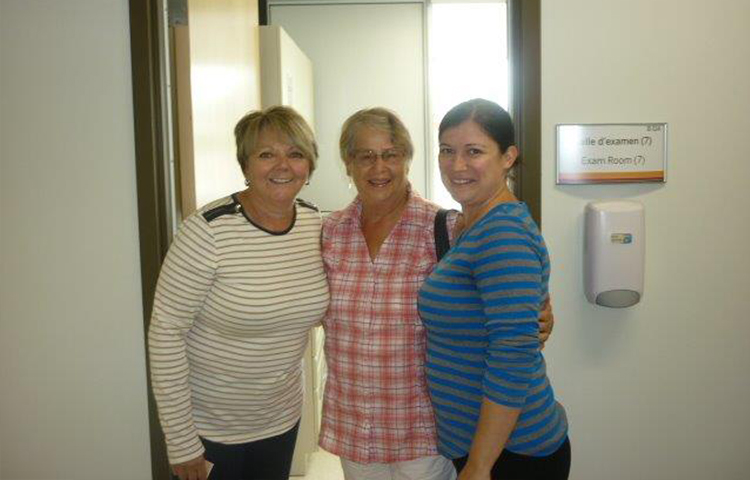
“I am happier because I know my neighbours better,” says Parveen Akhtar, who arrived in Toronto from Pakistan three years ago and participates in a wide range of SHAI activities. “And my self-esteem is also much improved.” 

Parveen is taking full advantage of the program’s many different components that help her navigate her new life in Canada in the healthiest way possible. “I learned how to ride a bicycle. I buy food wisely and pay attention to food labels.  I also learned how to access all the services at South Riverdale CHC like the social worker, nurses, doctors, eye-check-up for people with diabetes and postpartum support services that my friends are involved in.”

Because of its success, South Riverdale CHC intends to run SHAI for many more years and plans to use the Canadian Index of Wellbeing to guide and evaluate its efforts.  The index is a comprehensive measurement framework designed to measure progress on quality of life domains, including community vitality.

 “Community vitality and sense of belonging play a huge role influencing people’s health. That’s why our Community Health Centre applies a concerted and rigorous approach to evaluate and improve our efforts making sure newcomers feel connected and accepted in their new country,”  says Omurangi.

South Riverdale is one of Ontario’s 75 Community Health Centres.  Building community vitality and people’s sense of belonging is a core principle of the comprehensive, holistic model. For this reason, Community Health Centres deliver medical services in combination with health promotion and community developments activities.

La semaine de la santé et du bien-être communautaire met l’accent sur les liens entre la vitalité communautaire et une bonne santé

Date: 
le Mardi 22 Septembre 2015

Du 19 au 25 octobre, 113 centres membres de l’ACSO partout dans la province célébreront la Semaine de la santé communautaire. 

Cette année, des événements spéciaux feront ressortir les liens entre la vitalité communautaire, le sentiment d’appartenance et la santé de la population. Des centaines d’activités sont prévues dans toute la province afin de démontrer comment des collectivités tissées serrées et bienveillantes améliorent la santé des gens. Dans le cadre des préparatifs de la semaine de la santé et du bien-être communautaire, l’ACSO publie une série d’histoires qui illustrent la manière dont ses membres créent des communautés résilientes plus dynamiques où tout le monde compte et éprouve un sentiment d’appartenance.

La guérison traditionnelle autochtone dans le DME

Date: 
le Mercredi 24 Juin 2015

Au Canada, le dossier médical électronique (DME) n’avait jamais, jusqu’ici, reflété les programmes de guérison traditionnelle autochtones. Grâce au rôle de chef de file exercé par un groupe de travail présidé par Anishnawbe Health Toronto, 73 codes visant à refléter les pratiques de guérison traditionnelles ont été élaborés et sont maintenant accessibles à travers l’instance de Nightingale on Demand (NOD) de l’ACSO. 

À la suite de ce travail, les communautés autochtones de l’Ontario peuvent maintenant commencer à raconter leurs propres concernant les effets des pratiques de guérison traditionnelles sur l’état de santé des peuples autochtones dans une perspective holistique.

Aboriginal Traditional Healing in the EMR

Date: 
le Mercredi 24 Juin 2015

In Canada, Aboriginal Traditional Healing Programs have never been captured in an Electronic Medical Record (EMR), that is, until now. Thanks to the leadership of a working group chaired by Anishnawbe Health Toronto, 73 codes that aim to capture traditional healing practices were developed and are now available through AOHC’s instance of Nightingale on Demand (NOD). 

As a result of this work, Aboriginal communities in Ontario can now begin to tell their own stories of how traditional healing practices impact Aboriginal peoples’ health outcomes from a wholistic perspective. The work is also groundbreaking because it means recognition of traditional practices as healing.

If you have any questions or comments, please contact: emr@aohc.org 

Needed: A Tommy Douglas for Dental Care

Date: 
le Jeudi 14 Mai 2015

by Anjum Sultana & Jacquie Maund

Canada has a universal health care system, but not when it comes to our teeth and gums.  At the April 17th  oral health forum organized by the Association of Ontario Health Centres and the Ontario Oral Health Alliance participants learned that over 6 million people in Canada don’t see a dentist because they can’t afford it.  

The annual forum brought together 100 people from public and private dentistry, as well as academics, community health providers and community members to hear from a panel of health and community spokespeople who shared their knowledge and ideas on how to address this health equity challenge.

Dr Paul Allison, Dean of Dentistry at McGill University, spoke about a recent study by the Canadian Academy of Health Sciences  found vulnerable people have the greatest difficulty accessing oral health care services.  This includes low income children and adults, working people without dental insurance, the elderly, Aboriginal people, immigrants, people with disabilities and people living in rural and remote regions.  We also learned that there’s a growing number of middle income people who are finding they can’t afford dental services. And Dr Allison predicted a tsunami of people losing dental coverage as they retire – so it’s a seniors issue too.   His research found that the private model of dentistry is clearly not working for the 25% of people who face the greatest barriers to access.

Health care provider Laura Hanson described how lack of access affects our overall health and wellbeing with studies showing links between poor oral health care and diabetes, cardiovascular disease, pneumonia, and Alzheimer’s.

Focusing on Ontario, Lisa Taylor from the College of Dental Hygienists of Ontario reported that 2-3 million people don’t have access to oral health care and at only 1.3%, our province has the lowest level of government funding for dental expenditures in Canada. The College is calling for oral health care to be better integrated into overall health system planning. The LHINs should include planning for oral health services in their regions with support for Community Health Centres, Aboriginal Health Access Centres and other primary care providers to include oral health services to vulnerable people.

Panelist Steve Barnes from the Wellesley Institute noted that we shouldn’t assume that dental coverage will be provided by employers. Almost half (45%) of all people earning less than $30,000/year in Ontario don’t have dental coverage.  His report, Low Wages, No Benefits, calls for expansion of public dental programs to include more people with low incomes. 

It was a lively forum with lots of energy and commitment to advocate for more equitable access to oral health care in Ontario. It was also a stark reminder of why access is so important. Mike Creek, from Working for Change, described how he had to stick a sterilized needle in his mouth abscess when he couldn’t afford a dentist and became isolated after his front teeth broke - he only went out at night to avoid being seen.

So what steps can we take so that our health system ensures people in need have access to the oral health care they require to be healthy?  Dr Hazel Stewart, Director of Oral Health Services at the City of Toronto, called for oral health stakeholders to identify public policy solutions that are affordable and sustainable.  We need new models of accessible publicly funded oral health care such as mobile dental buses that visit remote communities, dental professionals to visit long term care homes, and more dental clinics at Community Health Centres in low income neighbourhoods. We need to work with people in the community who can be peer educators to focus on prevention of dental disease. And services don’t all have to be delivered by dentists – dental therapists, dental hygienists and other health professionals have important roles to play.

TAKE ACTION: Add your voice to the current campaign of the Ontario Oral Health Alliance calling for faster action on expanded public programs http://e-activist.com/ea-action/action?ea.client.id=1734&ea.campaign.id=34232&ea.tracking.id=OOHA

LEARN MORE:  Attend the workshops at the June 2-3 #AOHC2015 conference which give updates on work underway to address barriers to health care.

A9- Improving Access to Oral Health Care for Vulnerable People.

A12– Increasing Access to Primary Care for Seasonal Agricultural Workers

B11– Precarious Work is Bad for Our Health: Support discussion and action on decent jobs and wages in Ontario

D2- Addressing Mental Health & Addictions Issues: the case for supportive housing

D8- Preparing for the federal election: update on pharmacare and other national asks

Anjum Sultana is the 2015 Policy & Communications Summer Intern for AOHC, and a  Masters of Public Health Candidate at the Dalla Lana School of Public Health at the University of Toronto.  Jacquie Maund is Policy and Government Relations Lead at AOHC

Increasing Access to Primary Care for Seasonal Agricultural Workers at #AOHC2015

Date: 
le Mercredi 6 Mai 2015

In a previous issue of Voices, we featured Grand River Community Health Centre’s migrant worker clinics. Grand River CHC and Quest CHC were both funded by the Hamilton Niagara Haldimand Brant Local Health Integration Network (HNHB LHIN) for two year pilot projects.

The Shift the Conversation conference will highlight these two case studies through a workshop presentation (description below).

Register now and learn more>>

A12 - Increasing Access to Primary Care for Seasonal Agricultural Workers: Lessons Learned from 2 CHC Case Studies

Is your CHC, CFHT or NPC interested in exploring how to provide health care to seasonal agricultural workers in your area? Learn from the successful experiences of two CHCs who have received funding from their respective LHINs to serve this population: Grand River CHC who is running part time summer clinics in Simcoe in partnership with community organizations, and Quest CHC who has been able expand the services that they had already been providing for four years, in collaboration with community partners, through their Migrant Agricultural Workers’ Program.

Presented by: Tricia Gutierrez, Primary Care Assistant, Simcoe Clinic, Grand River Community Health Centre, Stefanie Ralph, Director, Primary Care and Community Health,Grand River Community Health Centre and Coletta McGrath, Executive Director, Quest Community Health Centre

Theme: Breaking Down Barriers

Audience: Front line/program staff|Senior management|Policy makers|Program management|Board members

We will now look at how Quest Community Health Centre has used this funding to expand the clinic services they had already been providing to migrant agricultural workers (MAWs) in their region, and to increase health promotion and community capacity building initiatives relevant to this population.

Resource Development Canada data suggests that more than 2600 MAWs come to the Niagara Region annually. Many of these workers come year after year, some returning for over 30 years. Although these workers are eligible to receive Canadian health care benefits and workers’ compensation; language related barriers, lack of transportation, fear of repatriation, and long workdays act as barriers to them accessing primary health care services.  

In 2010, the Niagara Migrant Worker Interest Group (NMWIG) approached Quest CHC about this identified gap in services, highlighting the need for access to healthcare. Quest CHC started providing primary care health services to MAWs out of a local church in Virgil. These clinics have been running for the past 4 years during the working season. Running these clinics has provided Quest CHC with the knowledge and expertise with respect to understanding the ethno-cultural backgrounds of those who work in Niagara and in providing culturally sensitive and appropriate primary care services.

With the new funding from the HNHB LHIN in 2014, Quest CHC has been able to expand the Migrant Agricultural Workers’ Program (MAWP) to include:

  • Primary health care clinics through the working season (providing services to 120 individuals with 222 visits)
  • A full time Community Health Worker to focus on outreach, clinical coordination and follow up and community capacity building
  • Health promotion initiatives (13 health events serving 525 attendees)
  • Community capacity building activities / community education and awareness sessions (provided and participated in 76 events with 308 attendees)

Quest CHC works closely with various community partners including NMWIG (includes organizations such as Niagara North Legal Clinic, Occupational Health Clinics of Ontario, Positive Living Niagara, among others) McMaster University, and Brock University in providing primary healthcare and in developing health promotion initiatives centered on topics relevant to MAWs.

Quest collaborates with these community partners on events such as:

  • health fairs
  • healthy eating workshops
  • mental health initiatives
  • community dinners
  • and other social events

In 2014, Quest CHC’s clinics took place every other Sundays during the season from 3pm to 6pm (after MAW work hours) in Virgil where the Niagara-on-the-Lake Family Health Team generously allowed the use of their clinic space.  Their model involves an interdisciplinary team consisting of primary health care providers (Physician, Nurse Practitioner, Registered Nurse, Registered Practical Nurse, Registered Dietitian, Community Health Worker), community pharmacist as well as volunteer interpreters, medical and nursing students. Common health complaints seen in the MAWP include hypertension, diabetes, sleep habits, insomnia, musculoskeletal injuries, skin, eye, throat and respiratory issues, sexual health and reproductive issues, mental and emotional health, and poor nutrition.

Through the funding in 2014, a Community Health Worker was also hired to focus on community capacity building, coordination of healthcare services, outreach, community engagement, and the creation of health promotion initiatives including engaging employers in increasing access to available health services.

“Having an interdisciplinary team, congruent with the community health centre model, serving this population, ensures that Migrant Agricultural Workers receive high quality care that is both holistic and thorough. For example, if a worker comes in with uncontrolled diabetes and a wound to their foot, they are able to be assessed by a doctor or an NP, a wound care nurse to clean and dress their wound and provide health education, a dietician to go over their diet, and finally a plan collaboratively developed by the team with the client. And if they are provided with a requisition form for diagnostics or a specialist, the Community Health Worker can follow up with them and coordinate setting up an appointment, navigating the system and providing transportation. In this way, Quest’s work doesn’t stop with interdisciplinary care at the clinic, but extends to outreach and client care coordination as well,” said Coletta McGrath, the Executive Director at Quest.   

 “Due to the low literacy levels of the workers, creating culturally sensitive, literacy appropriate resources and workshops have been a priority. For example, the sexual health workshop that was delivered to the workers in collaboration with Positive Living Niagara in 2014 was designed around using a theater approach. This model of health promotion, adapted from a resource developed in the United States by Student Action with Farmworkers, delivered health education through a skit with music and dance. The healthy eating workshop was formatted in a way where we cooked with the workers while delivering health teaching. The dietician from Quest CHC provided health teaching afterwards as well. They were both very well received by the workers,” said Babitha Shanmuganandapala, Quest Community Health Worker.

Another priority of the MAWP was to foster relationships with the employers of the MAWs to help identify and address challenges experienced by employers and collaborate with them in increasing healthcare accessibility for MAWs. Quest CHC in collaboration with volunteers and community partners focused on building rapport and educating workers/employers about the availability of health care services and about the MAWP. Quest also attends various forums and conferences geared toward employers and other key agricultural organizations to learn about key issues that employers face that may indirectly impact the health of MAWs, and to promote MAWP and other services in the community.  

After just 4 years of the MAWP health services availability, Quest CHC and their community partners have seen a huge impact on the overall health and wellbeing of the MAW population at both a systems and client level. They hope to keep building on these successes and the momentum in the community.

“Quest and its community partners are passionate about working with Migrant Agricultural Workers and are always exploring ideas about how to increase access to healthcare services,” said Babitha.  “The workers are generous and always so grateful for the services we provide. Even during the off season we still get calls from Mexico and Jamaica from workers saying thank you because their wound is better, or they’ve successfully recovered from surgery, or they’re finally pain free after 7 years. And that speaks volumes. ”