We need Ontario's provincial leaders to support communities to slow COVID-19 spread
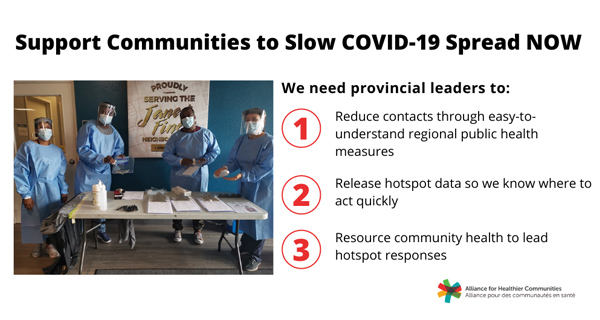
We're asking everyone to join our call to the Ontario government and public health leaders: Community models work to control outbreaks. Black Creek Community Health Centre, Rexdale Community Health Centre and others have led a community-based response. We need Ontario's leaders to invest more in community now to slow COVID-19.
We need Ontario's leaders to:
1. Reduce contacts – clear regional public health measures to limit spread are needed now.
We need to act now to contain COVID-19 and prevent further harm before the second wave spirals out of control. Provincial government and public health leaders must act now to put in place population-wide protections such as limits on public gatherings, limits on businesses, appropriate messaging on social circles, mandating use of masks, and physical distancing measures.
2. Release neighbourhood hotspot data now – we can’t target messages, interventions, supports, and testing if we don’t know where to act.
Ontario needs to be more transparent with COVID-19 data and helping the public to understand what’s really going on in our province, but also in their individual communities. We need to know who COVID-19 is impacting and how it is spreading in our communities. Without this information, our healthcare and public health systems cannot intervene quickly in the right places. The province must transparently report on how COVID-19 is impacting our communities now so that we can target community-led interventions to slow the spread.
3. Resource communities now – community health centres and providers are the experts, and ensure that BIPOC and marginalized communities they serve are represented at decision making tables
We need funding now to take control of this spiralling situation where we live. A one-size-fits-all approach isn’t working in Ontario. Some communities (and areas within communities) are harder hit and the people who live in them face more barriers in accessing care. Ontario needs solutions that are responsive to what is happening on the ground. We need provincial leaders to work with community-led organizations on the ground to roll out testing strategies in hot spots. Fund community-led and mobile testing now to reach communities that are being left behind. We also need the province to ensure that the right people are sitting at decision making tables and ensure the voices of the most impacted aren’t left behind.
Take Action: Support Communities to Slow COVID-19 Spread NOW
Contact your local MPP today and join our call to the Ontario government and public health leaders: Community models work to control outbreaks. Black Creek Community Health Centre, Rexdale Community Health Centre and others have led a community-based response. We need Ontario's leaders to invest more in community now to slow COVID-19.
A template letter is provided below. Use the “Find my MPP” function on the Legislative Assembly of Ontario website to find your MPP’s contact information.
Dear MPP <insert name of your local representative here>
I am writing to you today because our community urgently needs your help. With the risk rising every day that COVID-19 cases will spiral out of control, thousands of people’s lives and families are in danger. Marginalized communities, many with high numbers of racialized people, people living on low-incomes, and people who work front-facing jobs and take public transit, are at far higher risk of COVID-19 impacts than others, and need more than blame-and-shame messages to protect themselves. They need community-led interventions, and they need your support to ensure those interventions happen.
I’m calling on you to hold Ontario government leaders accountable. Ontario urgently needs a strategy for slowing the spread of COVID-19 in marginalized neighbourhoods and keeping people safe. That means I need you to call for support of community models for testing and infection/outbreak control. Community-led comprehensive primary health care organizations, such as Black Creek Community Health Centre and Rexdale Community Health Centre, have already demonstrated this approach successfully.
I need you to raise your voice and demand action from the Ontario government NOW on: Reducing contacts, Releasing neighbourhood data, Resourcing communities:
1. Reduce contacts and opportunities for transmission -- Ontario needs clear regional public health measures to limit spread are needed now.
We need urgent action from government and Ontario Public Health to contain COVID-19 and prevent further harm before the second wave spirals out of control. Provincial government and public health leaders must act now to put in place population-wide protections such as limits on public gatherings, limits on businesses, appropriate and consistent messaging on social circles and gatherings, mandating use of masks, and physical distancing measures.
2. Release neighbourhood hotspot data now – We can’t target messages, interventions, supports, and testing if we don’t know where to act.
Ontario needs to be more transparent with COVID-19 data and helping the public to understand what’s really going on in our province, but also in people’s individual communities. We need to know who COVID-19 is impacting and how it is spreading in our communities. Without this detailed, transparent information, our healthcare and public health systems cannot intervene quickly in the right places. The province must transparently report on how COVID-19 is impacting our communities now so that we can target community-led interventions.
3. Resource communities now – community health centres and providers are the experts. We need funding now to take control of this spiralling situation where we live, and we need to ensure that BIPOC and marginalized communities they serve are represented at decision making tables
A one-size-fits-all approach isn’t working in Ontario. Some communities (and areas within communities) are harder hit and the people who live in them face more barriers to accessing care. Ontario needs solutions that are responsive to what is happening on the ground. We need provincial leaders to work with community-led organizations to roll out testing strategies in hot spots. Fund community-led and mobile testing now to reach communities being left behind. We also need the province to ensure that the right people are sitting at decision making tables and ensure the voices of the most impacted aren’t left behind.
Thank you for your urgent help, leadership and being a true voice for this community.
<Your name>