
What is health equity? What is the work that enables and promotes it? Why is this work so vital? During Community Health and Wellbeing Week 2017, AOHC members are demonstrating the ways that they put Health Equity at the Centre. As part of those efforts, we're going to bring you a stellar lineup of Health Equity Heroes all of this week (and beyond). Get to know the heroes among you, and the ones in neighbouring communities, and let's all celebrate and support this important work that helps everyone achieve their best possible health and wellbeing. Follow this space to read about more heroes, and check out the hashtags #CHWW2017 and #HealthEquityHeroes on social media to learn about even more.
What’s your name, how long have you worked at the centre, and what role(s) do you fill there?
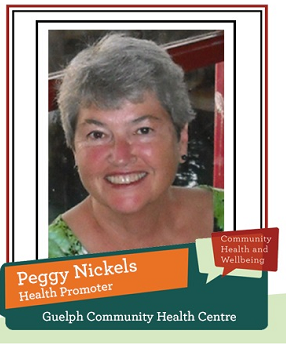
My name is Peggy Nickels. I’ve worked as a Health Promoter at Guelph Community Health Centre since July 2010.
What does health equity mean to you, and how do make a health equity approach part of your work?
Health equity is about ensuring that everyone has access to the supports and resources they need to meet their potential for health and wellbeing. It’s different from equality in that it’s not about people getting equal access, since different people need different things to be well and have different starting points in their lives. It also means that we need to listen to what people tell us they need, and work with them to overcome barriers, such as limited income, education, or language, to enable them to meet their needs. For me, it also includes valuing each person for who they are, recognizing and building on their unique capacities, and respecting their right to make their own choices.
Why is taking a health equity approach so important to your work?
It’s important that people be able to speak for themselves when working for changes that affect them and their communities. They have strong ideas and important lived experiences to share but limited opportunities to put them forward. They may also need encouragement to speak publicly and help with preparing their stories. When I see them stand up in front of a group of politicians and agency reps for the first time and clearly speak truth to power, I feel privileged to be part of this work.
In what ways is your centre able to support your health equity approach?
My CHC is a community leader in equity work, and is well-represented by our executive director and others at tables related to equity issues. My supervisor supports my advocacy work and takes issues forward through the appropriate channels. Requests don’t get bogged down in extra bureaucracy and resources are found for unplanned advocacy expenses. Our Anti-Oppression Working Group continuously challenges our organization to reflect on and change practices to be more inclusive.