
January 30, 2026
Hon. Peter Bethlenfalvy Minister of Finance of Ontario
Re: Pre-Budget Submission – Strengthening Primary Health Care and Expanding Attachment
Dear Minister Bethlenfalvy,
Ontario has set a commendable and necessary goal: ensuring every Ontarian is attached to a primary care team by 2029. The Alliance for Healthier Communities represents 118 community-governed primary health care organizations that serve people and communities facing the greatest barriers to care. Every day we see and measure how team-based primary care strengthens population health, reduces emergency department pressures, and helps people stay well, in their own communities.
We appreciate your government’s focus on expanding primary care and the steps taken to grow team-based models across the province. As sincere partners in this work, we want to highlight for Budget 2026 two practical, high-impact approaches that community clinicians are using successfully to increase attachment and improve efficiency: the Neighbourhood Health Home and Link Workers.
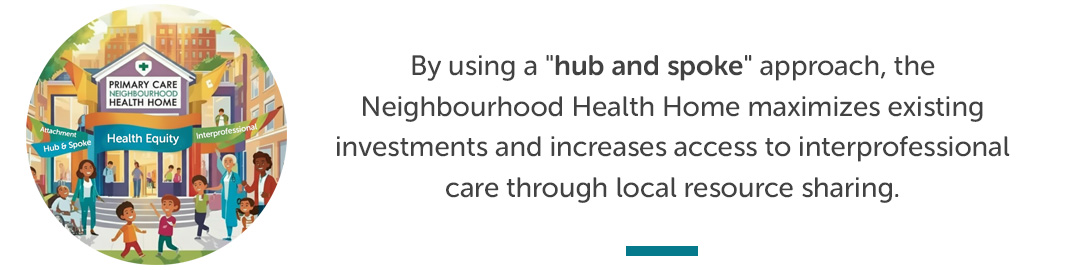
The Neighbourhood Health Home builds capacity by pooling and sharing resources among local primary care partners. It uses a “hub and spoke” approach: an established team-based organization acts as the hub that provides ongoing primary care, social supports, and health promotion, while connecting patients to community programs and services. This neighbourhood-level collaboration helps maximize existing investments, increases access to interprofessional care, and allows more people to be attached to a primary care team. Overall, working this way improves patient and provider outcomes and experiences while being more efficient with taxpayer dollars.
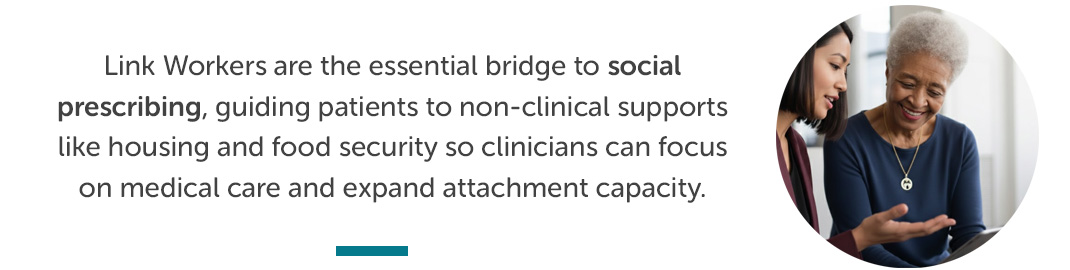
Link Workers are a critical component of this coordinated approach. Filling the Link Worker role allows physicians, nurse practitioners, and their teams to focus on medical care while ensuring their patients get support for the social and practical issues affecting their health. When clinicians identify a patient who would benefit from non-clinical supports, the Link Worker guides them to the appropriate resources — whether that involves accessing benefits, joining seniors’ exercise programs, finding housing supports, or connecting with local peer groups, often across partner organizations within the Neighbourhood Health Home. Ensuring access to Link Workers through primary care teams reduces repeat primary care visits, decreases emergency department use, and creates the capacity needed to attach more patients. This approach is already working in many parts of Ontario and shows strong promise for expansion and scalability.
At the same time, Ontario’s primary care workforce continues to face significant pressures. Recruitment and retention challenges, rising operational costs, and long delays in capital modernization make it difficult for teams to maintain services and expand attachment. We also know that to succeed in mental health and addictions care, we need investments in supportive housing.
We believe that with targeted investments, Ontario can build on recent progress and strengthen the system in a way that benefits patients, communities, and the broader health system.
To support this work, we respectfully ask the Government of Ontario to consider the following priorities for Budget 2026:
- Support the growth of the Neighbourhood Health Home approach through the IPCT expansion (no further investment required) and expand Link Worker roles across primary care teams, including embedding link workers as a mandatory part of IPCT expansion to increase capacity and attachment.
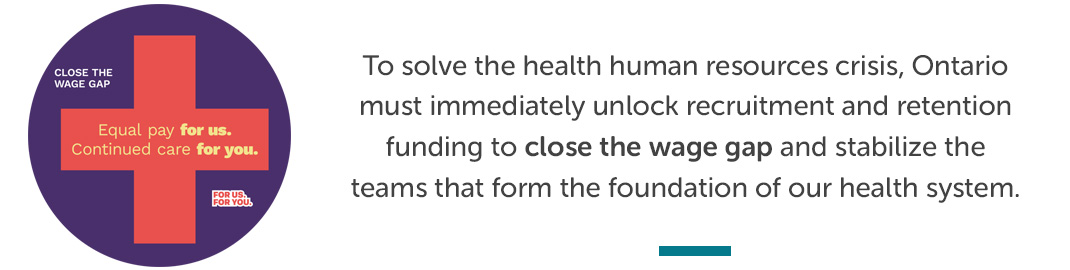
- Expedite recruitment and retention funding by unlocking Years 2 and 3 immediately so teams can stabilize staffing and close long-standing wage gaps; this includes $430.9 million over five years for the primary care sector, with $164.5 million needed for Alliance members.
- Invest in digital tools that improve attachment and efficiency, including interoperable systems, online appointment booking, and innovations such as AI-enabled scribing.
- Modernize and accelerate the capital approval process for community-based primary care organizations to help expand local capacity and improve access.
- Continue stabilization and operational funding, including a 5% base budget increase ($33.7 million) for community-governed primary health care organizations.
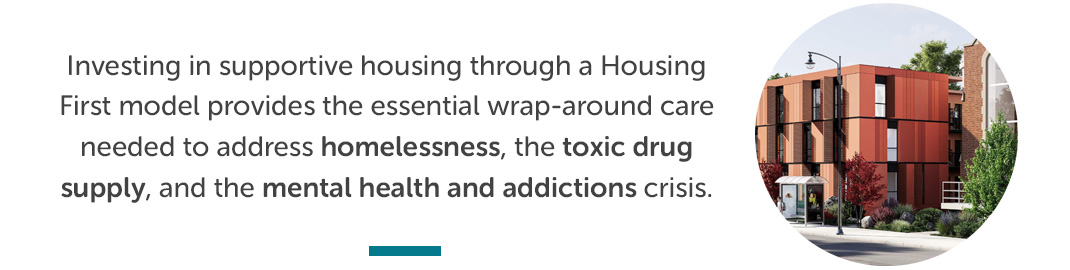
- Investments in supportive housing ($60 million over two years) to create 5,000 new supportive housing units, as part of the continuum of care for mental health and addictions to support the work of HART Hubs and to help address homelessness and the toxic drug supply across Ontario.
With the right supports, we can increase patient attachment, and ensure Ontarians receive the right care, in the right place, close to home.
Thank you for your consideration of this Budget 2026 submission, and for your continued leadership in strengthening primary care in Ontario. We would welcome the opportunity to discuss these recommendations and to continue working together toward our shared goals.
Sincerely,
Sarah Hobbs CEO, Alliance for Healthier Communities
Cc: Hon. Doug Ford, Premier of Ontario Hon. Sylvia Jones, Deputy Premier and Minister of Health Matthew Anderson, CEO, Ontario Health
# Invest in Health Human Resources and Operations for Comprehensive Primary Health Care: a strong foundation for an integrated health system
Alliance members are losing primary health care staff to other sectors and parts of the health care system. When Ontarians cannot access primary health care in their community, it causes strain on other parts of the health care system, such as emergency and acute care.
We believe investments in adequately funding comprehensive primary health care are critical to the foundation of an integrated and sustainable health system. A fully staffed primary health care system helps take pressure off emergency rooms and hospitals while ensuring efficient use of healthcare funding overall.
The people and communities in Ontario who face the greatest barriers to health care rely on Alliance for Healthier Communities members to provide primary health care, mental health, community services, and supports. It is essential for our entire health system that people who face barriers can access the supports they need in the community.
We thank the government for their initial investments to address recruitment and retention in primary care in Ontario. However, without further investments, there is a real risk to achieving the goal of 100% attachment for all Ontarians by 2029. Ontario must address the human resource crisis in primary care by properly funding recruitment and retention for health care professionals. Community health care organizations also need a solid base of funding for operations. With sufficient funding, Alliance members can attach more people in Ontario to primary health care, starting right now.
Summary
# 1. Invest in Health Human Resources for inter-professional primary health care teams |
|
| Budget Request—Close the Wage Gap to meet Primary Care Attachment Goals |
$430.9 million over five years |
|
Ontario needs to unlock Year 2 and 3 recruitment and retention dollars (the remainder of the $142 million already announced) in 2026/27 to ensure we can meet attachment goals. Ontario needs to invest $430.9 million over five years, including an annual adjustment of 2.90%, in the primary care sector in Ontario to close the significant wage gap. Of this ask, Alliance members require a Government of Ontario investment of $164.5 million to reach the 2023 recommended salaries to ensure recruitment and retention can keep up with the Government’s goal of 100% attachment. This funding will ensure a fully staffed primary health care system that can support people and communities and ensure the health system is not overwhelmed.
|
|
# 2. Invest in community primary health care organizations through base funding increases to sustain health for communities in Ontario. |
|
| Budget Request—Base funding: |
$33.7 million |
| Ontario needs to invest in a base budget increase of 5% or $33.7 million for community-governed comprehensive primary health care organizations. Members have only seen a 6% increase over 27 years. This investment will maintain and improve service delivery, keep the lights on, and meet the growing needs of clients and communities as they grow and age. | |
# 3. Invest in Link Workers to connect people to equitable, culturally safe primary care and community supports. |
|
| Budget Request—Link Workers: |
$9.7 million |
|
Link Workers connect people in Ontario to non-clinical programs and services that support their health and wellbeing. Link Workers relieve administrative burden for doctors, nurse practitioners, and interprofessional health providers, as they connect clients with community-based programs such as food security supports, physical activity, arts and culture, and social connection. Ontario needs to invest $9.7 million so that primary health care teams in Ontario can implement Link Workers. Link Worker programs operate in diverse communities that serve people who are Francophone, Black, Indigenous, and seniors, among others. In the Alliance’s Rx: Community Social Prescribing Pilot, 42% of providers reported that they observed a decrease in the number of repeat visits among their clients who participated in a Link Worker program. According to a recent survey, 59% of family doctors stated that Link Workers can help reduce their workload. Ensuring Link Workers across Ontario will enable primary care clinicians to increase attachment for people without a primary care provider.
|
|
# 4. Invest in supportive housing ($60 million over two years) to create 5,000 new supportive housing units as part of the continuum of care for mental health and addictions across Ontario. |
|
|
Budget Request—Supportive Housing: |
$60 million |
| Supportive housing is an essential component of recovery from mental illness and can support people to recover from and avoid severe mental health issues. Simply put, supportive housing integrated with the continuum of primary health care supports and mental health treatment is a massively important part of preventative health care, with the potential to reduce strain on emergency departments, acute care, and primary care. Ensuring the success of HART Hubs and other mental health services requires a wraparound approach, a Housing First model that is proven to save lives and public health care and social services dollars, while truly helping to address the underlying barriers people face to mental health and wellbeing. | |
|
Total Investment: $534.3 million |
|
# Conclusion
Evidence provided by the Institute for Clinical Evaluative Sciences (ICES) found that, even though most Alliance members serve people with more socially and medically complex needs, they do a significantly better job than other primary care models at keeping these people out of hospital emergency rooms.
We call on the Government to invest $430.9 million over five years to address the HHR crisis impacting the primary care sector; a 5% increase or $33.7 million in base budget funding for community-governed comprehensive primary health care organizations; $9.7 million to fund Link Workers for equitable, culturally safe inter-professional team-based care; and $60 million for critically needed supportive housing to ensure a full continuum of care is available for mental health and addictions care across Ontario. These essential investments will improve population health for everyone living in Ontario, to ensure Ontarians have access to the right care, at the right time, close to home. Working together, we can ensure primary care works for everyone as the foundation of our health system.