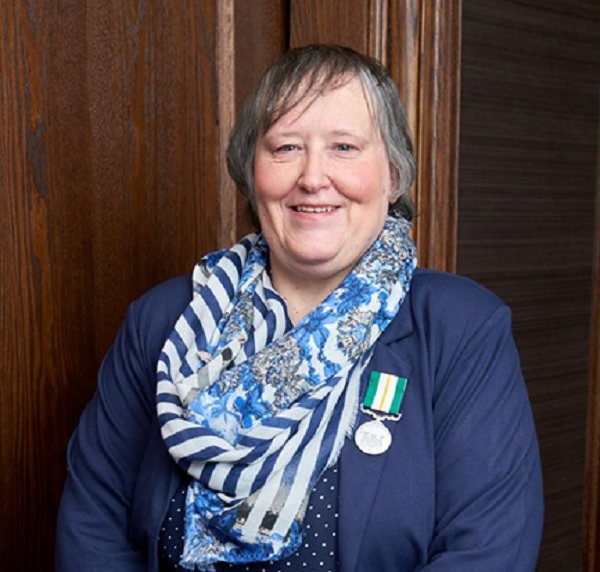
Spotlight on Healthier Community Builders: Lori Kleinsmith receives top honours for health promotion in Ontario
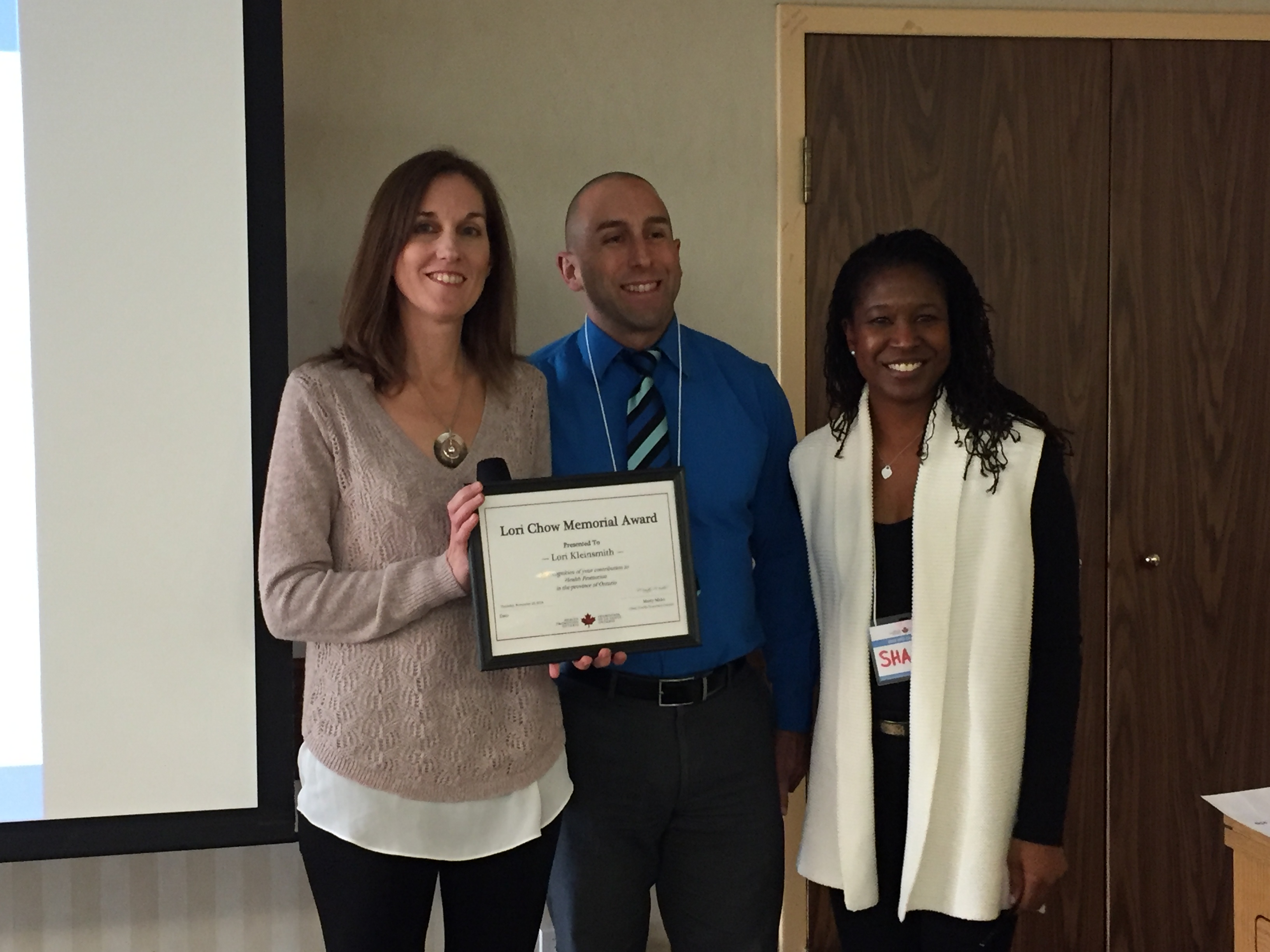
Thursday, November 29, 2018

Pictured: Lori Kleinsmith (left) recieves the Lori Chow Memorial Award

Over nearly a decade working as a health promoter at Bridges Community Health Centre in the south of Niagara Region, Lori Kleinsmith has driven herself and others to find ways to impact public policy to support health and wellbeing. Last week, for her advocacy and dedication to her clients and community, Lori was awarded the highest honour for a health promoter in Ontario, the Lori Chow Memorial Award. We had a chance to speak to Lori about the key role health promotion plays in primary health care, and the importance that advocacy plays in allowing her and her colleagues to deliver on their vision of helping clients achieve their best possible health and wellbeing.

What does this award mean to you, particularly to be acknowledged by your peers in health promotion across Ontario?

It’s a great honour and privilege, even just to be put forward for consideration for an award like this. In the world of health promotion, we don’t do a lot of patting ourselves on the back for the work we do. We’re often quite content to work behind the scenes, being connectors, enablers, facilitators. So to be nominated, and then chosen as one of two recipients, it really is an honour.

How long have you been a health promoter?

I began work in this field in 1994 when I graduated from a university degree in health education and a two-year diploma at George Brown College. I originally started out doing health and wellness programming at a large corporate fitness centre, and then that morphed into doing work in substance use and misuse prevention for a number of years. After that, I joined Bridges CHC, and I’ve been there for nine years.

You’ve been involved in advocacy campaigns for public oral health programs and better income security. Why is advocacy such an important part of a health promoter’s role in your opinion?

I base my professional work on the Ottawa Charter for Health Promotion, the groundbreaking document developed in 1986. It was a new field then, and it took me a while to really see the importance of advocacy at first. It moves us health promoters a bit out of our comfort zones, and we can get initially really comfortable doing program delivery, promotion of health awareness and communications on their own. But when you really start to look at what the Ottawa Charter describes as strategies and actions for a health promoter, advocating for healthy public policy encircles all of the work we do.

When you really peel back the layers of what causes sickness and illness in the first place, I see my role as one that is grounded in public policy. In order for change to happen, you have to be involved in politics. That doesn’t mean you have to be partisan in any way. It means you have to be comfortable engaging and interacting with political stakeholders from all parties and all levels of government, as well as other partners in the community, whether you’re talking about affordable housing, food security, dental or any other area that impacts on the social determinants of health.

It’s impossible to work upstream without trying to have an impact on policy, right?

Yes, exactly.

How is health promotion different when it’s embedded in a Community Health Centre setting?

In a CHC, we know as health promoters that we have to be able to touch on all issues. That doesn’t mean we’re complete subject matter experts on every issue and challenge our clients are facing, but we do have to keep abreast of a number of things and recognize where we can have the most impact, or where the greatest need is. So for both myself and my colleague Ashley who works out of Bridges’ other site, we’re working with our municipal councils on housing, including housing planning, and encouraging the adoption of a housing action plan. I work with community and social services to help meet the needs of our clients as much as I work with public health. A lot of our work crosses over the traditional biomedical model of health and health care.

Do you find that working alongside clinicians has an impact on your work? What are some of the benefits of working closely as part of an integrated interprofessional health team?

I do still see clients for one-on-one appointments to support smoking cessation. Being involved like that is a great way to connect with other clinical staff on specific clients’ issues, and to understand their challenges better.

I had a client in a recent group for smoking cessation who expressed having been under a significant amount of stress. He was finding quitting smoking very challenging because all he’d been able to find were precarious work and piecemeal contracts in his field. So this was having a great impact on his physical and mental health. I hear examples and stories from our clinical staff all the time of issues like this that impact people’s health directly, from housing conditions to income security to a lack of health benefits. Knowing these stories gives me direction when I’m doing advocacy on clients’ behalf, and gives me a chance to give voice to their concerns. It makes my work more real, and more credible, I think.

What’s been the most rewarding part of your work? What keeps you motivated to advocate?

I think the most rewarding aspect of working at Bridges CHC is getting to work alongside so many like-minded people. It’s also been rewarding to find interesting opportunities to spur change. I never dreamed I would be involved in a research project with professors from Brock University and United Way staff on precarious employment and its health effects. I really love to see connections being made, and people working together to determine the direction people need to head to see change. It’s never boring, it’s never dull. It can be frustrating, because change happens so slowly, and sometimes we see regression.

How important is social media to health promoters and others trying to promote healthy public policy? (Follow Lori on Twitter @LoriKleinsmith)

I started up fairly early, in 2010, on Twitter. I found out very quickly that by following people who were working in my circle, or at other CHCs and other social service agencies, as well as political leaders and candidates, and news media on health beats, I would have a way to check in every day on key issues. It’s also been a great tool to continue connections with various people I’ve met at conferences, meetings, and other events over the years. There’s so much value in broadening your understanding of social and political issues, and understanding how to position your advocacy work by following things closely on Twitter. It allows you to see multiple sides of an issue, which helps to shape your messaging, your work, and who you might connect with or partner with to do advocacy work.

What does the future hold for health promotion as a role in comprehensive primary health care?

For health promotion, taking our work to the next level will mean finding ways to put an anti-oppression lens on things like housing policy and other issues. I did a webinar for Maytree, for instance, on bringing a human rights-based approach to access to dental care, talking about and asking questions using human rights language about access to health care, and why it doesn’t include dental. I still have a lot to learn in this area, but I want to encourage other health promoters to take up these challenges as they continue to do work in their communities.

Any words of wisdom for younger health promoters just starting out?

Health promotion is such a diverse, flexible, open profession to be in. It allows us to look for opportunities to do something that’s going to be impactful on issues that underpin health. And if we can get people thinking like that about public policy, asking, “How is this going to impact health?” and trying to get people to do things differently, working with partners they’ve never considered working with, testing new ideas – well, that’s how change happens.
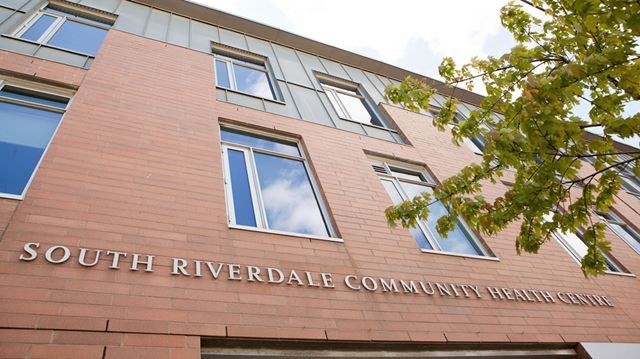
Insight from the inside of South Riverdale CHC's TELUS PS Suite EMR implementation

Wednesday, November 21, 2018

The South Riverdale Community Health Centre (SRCHC) agreed to be the beta testing site for the migration and implementation of Nightingale on Demand (NOD) to TELUS PS Suite Electronic Medical Record (EMR). Kathleen Foley, the centre’s Manager of Quality Improvement and Evaluation along with Lisa Kha the centre’s Data Management Coordinator, Parth Shah, Data Administrator, Hannah Bang, Administrative Support and Rebecca Merritt, Manager, Service Administration & Quality were all very accustomed to leading large change management projects at SRCHC. This team accepted the daunting task ahead and fully understood what it meant to be a beta site. They knew that, as the beta centre, they would face tremendous challenges, but were prepared to meet those challenges head-on. They also knew that any centres going live after them would benefit from lessons learned, processes and procedures developed and workflows documented during their implementation and so were diligent in their efforts.

Nevertheless, the centre was thoroughly tested. Spending more than 7,000 work hours over 18 months from kick off to go live. “The vendor”, said Kathleen, “is working hard to better understand CHCs, the work we do and how we do it.  I think they’re getting there.”

Kathleen went on to emphasize “and it is very important that if you have providers, who’ve used PS Suite elsewhere, reiterate to them that this is not the same. The complexity of our clients and our mandated reporting requirements have put design demands on the system that is different from what they might be accustomed to.” 

Kathleen offered to share two key insights into SRCHC’s implementation and the centre’s experience with the new EMR.

  1. Focus on Project Management – During the transition time having well-defined roles, good team structure and a committed executive sponsor helps immensely. Initially, there was confusion because of the lack of a working project plan, however, the centre understood that verifying the validity, order and timing of tasks would be a beta site requirement.
  2. Focus on Change Management – SRCHC provided tremendous support for staff through super users, regular briefings, and during the transition period, increased administration and appointment times and providing higher levels of individualized support for those people struggling with the new EMR. It’s been three months since they have been live on the new system and most staff have gone back to regular appointment times. Navigation and workflow in the new system can often be challenging and building time into regular team meetings to address questions has been very successful in providing support and building best practices.

The centre faced problematic functionality of the sector required forms and navigation in the PS Suite environment and SRCHC continues to work with the Alliance and the Telus team to address these issues.  

There was also good news. There are significant improvements in communication and document management in the new EMR. Also, sharing in PS Suite is possible and very easy. This means a centre that has developed eForms, encountering supports and other EMR-related documents can share with other centres. For a sector that values collaboration and building communities of practice, this is welcome news. The amazing staff at SRCHC continue to forge ahead with their new EMR.  We would like to express our sincere gratitude to everyone at South Riverdale Community Health Centre for their diligence and hard work in this implementation and wish them the best of luck as they prepare for Accreditation in January 2019.

Spotlight on Healthier Community Builders: Quest CHC celebrates partners

Wednesday, November 14, 2018
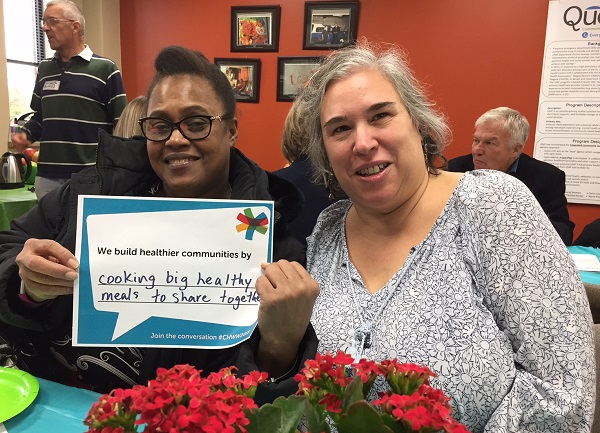
These Quest Community Builders helped prepare lunch!

Healthier Community Builders are people who work in partnership and cooperation with others to create the conditions for everyone to achieve their best possible health and wellbeing. They could be staff or volunteers at an Alliance member centre, or even a board member from the community. Or perhaps they are a partner who works more widely, but whose work intersects with health and wellbeing, such as a coach, community organizer, or local leader. Whatever their background, the work that Healthier Community Builders do is work we ALL rely on every day to make our neighbourhoods, workplaces, recreation facilities, public spaces, health and social services, and community activities come to life. We put the spotlight on these local heroes to bring their work -- and its importance to overall health and wellbeing -- into wider discussions of what it means to build a healthier community. This week, the spotlight is on St. Catharines.

To cap off their Community Health and Wellbeing Week celebrations, staff and volunteers at Quest Community Health Centre in the Queenston Street neighbourhood of St. Catharines held a hearty group lunch and spent some time reflecting on the role of community in the centre's work.

Quest CHC Executive Director Coletta McGrath was on hand, and offered remarks saluting the CHC's 200+ volunteers (many of whom were attending the luncheon), the centre's interdisciplinary staff, and the guidance of the CHC's community-governed board of directors, for making sure that the direction of the centre's services and health care meet local needs. But the tagline of this year's Community Health and Wellbeing Week -- Building Healthier Communities Together was top of mind for Quest, and so the Healthier Community Builder Awards they handed out went to three important external partners, all of which, as McGrath said, are integral to meeting the community's health and wellbeing needs.

"We regularly connect with, and collaborate with our community partners to ensure the availability of individualized, client-services, and to enhance our capacity to do community building. That's what community is about," McGrath said.

Healthier Community Builder awards were given to:

Queenston Community Roundtable (links to Facebook page): Represented by Caleb Ratzlaff and Brandon Agnew, this group has worked with Quest to invigorate an assets-based community development approach to gathering residents, business owners, service providers, faith-based groups and local leaders to generate tangible ideas for activities, events and improvements to enhance the liveability and community offerings in the Queenston Street area. It's a regular table with regular engagements, and Quest has found them to be strong partners in setting goals for the area that are achieveable help change lives.

Niagara Connects: Mary Wiley, Executive Director, accepted the award on behalf of Niagara Connects, which is responsible for the Niagara Report, a critical resource in the region for identifying existing and emerging community needs, and keeping tabs on the many factors that impact the determinants of health. Niagara Connects also facilitates knowledge exchange between service providers, community organizations and others, to facilitate best practices in health and social services and to work towards a more seamless and nimble experience for Niagara residents. They are also the authors and stewards of the Niagara Region's Mental Health and Addictions Charter, and have worked extensively on transportation and lessening the impacts of isolation in the region. "When we talk about evidence to support building a healthier community, it's still really about people at the end of the day," Wiley said.

Niagara Regional Police Services, Chief Bryan MacCulloch. The last award went to an individual -- the local Police Chief, who has 33 years in policing, but who has also spent time on community boards getting to know the local issues from a number of diverse perspectives. McGrath also mentioned his participation in the overdose prevention and education network in Niagara, consistently attending every meeting and offering sensitive and creative contributions to the wider discussions of responses to the crisis. "Chief MacCulloch is about building relationships -- with individuals, and across organizations. And he's also about building a stronger community."

We salute this week's Healthier Community Builders! If you have a Healthier Community Builder in your area you'd like to shine the spotlight on, send us a message at communications@allianceON.org.


Open Letter to Minister Elliott Re: Supervised Injection/Overdose Prevention Announcement

Date: 
Monday, October 22, 2018

October 22, 2018                                          

Re: Supervised Injection/Overdose Prevention Announcement

Dear Minister Elliott,

We welcome the Ontario government’s decision today to continue to fund and support supervised consumption and overdose prevention services for people who use drugs. We are further encouraged that you have committed to ensuring that existing services will continue without interruption while a new model is introduced, and that the three sites placed on pause in August will be able to open.

We know that these vital services save lives, build trust, help connect people to services and make communities safer. We look forward to working with you on the planned new model for Consumption and Treatment Services, which will continue to include overdose prevention and harm reduction services, along with a focus on connecting people to primary care, treatment, and social services, including housing and employment supports.

We’re pleased to see the government’s initial commitment to 21 Consumption and Treatment Service locations in the province. Currently, there are 16 supervised consumption/overdose prevention services operating in Ontario and three more ready to open. At least four other communities hard hit by the overdose crisis have been waiting for months to submit applications to offer life-saving harm reduction services in their communities.

Ontario remains gripped in a public health crisis with an average of three people dying every day from drug overdoses. There is a poisoned drug supply that is not going away. The latest data show 287 opioid deaths for just the first three months of this year in Ontario.

We urge you, Minister, to ensure that every community in Ontario fighting the overdose crisis has access to nimble, evidence-based care that saves lives and connects people to health and social services. We look forward to working with you to implement new Consumption and Treatment Services wherever there is a need and ensuring that we can continue to save lives.

Yours sincerely,

  • Mark Aston, Executive Director, Fred Victor Centre, Toronto
  • Mike Bell, Chief Executive Officer, Kingston Community Health Centres
  • Denise Brooks, Executive Director, Hamilton Urban Core Community Health Centre 
  • Naini Cloutier, Executive Director, Somerset West Community Health Centre, Ottawa 
  • Gerry Croteau, Executive Director, Gilbert Centre, Barrie
  • Raechelle Devereaux,  Executive Director, Guelph Community Health Centre
  • Kim Dolan, Executive Director, PARN, Peterborough
  • Paulos Gebreyesus, Executive Director, Regent Park Community Health Centre, Toronto 
  • David B. Gibson, Executive Director, Sandy Hill Community Health Centre, Ottawa
  • Shaun Hopkins, Manager, The Works, Toronto Public Health  
  • Juanita Lawson, Chief Executive Officer, NorWest Community Health Centres
  • Wendy Muckle, Executive Director, Ottawa Inner City Health, Inc. 
  • Nilda Patey, Executive Director, Peel HIV/AIDS Network
  • Kapri Rabin, Executive Director, Street Health, Toronto
  • Brian Lester, Executive Director, London Regional HIV/AIDS Connection
  • Lynne Raskin, Chief Executive Officer, South Riverdale Community Health Centre, Toronto
  • Angela Robertson, Executive Director, Parkdale Queen West Community Health Centre
  • Bill Sinclair, Executive Director, St. Stephen's Community House, Toronto
  • Rita Taillefer, Executive Director, Windsor Essex Community Health Centre
  • Glen Walker, Executive Director, Positive Living Niagara

Social Prescribing in CHCs

Monday, June 4, 2018

#Prescription: Community - Social Prescribing in CHCs

Update - visit the Rx Community: Social Prescribing webpage for more information

Social prescribing is a new spin on an old idea - that people are healthier when they are connected with social resources and supports in their communities.

In the United Kingdom, social prescribing has taken off by providing a structured way to address the determinants of health and wellbeing for people accessing primary care. Social prescribing looks different in different communities, but often involves a social prescription from a primary care clinician (instead of, or as a complement to, a medical or pharmaceutical prescription), a supportive navigator who can connect and be with the client throughout, and a suite of health promotion and community development supports drawn from the assets of both the centre and the community.

The results are promising: more efficient use of clinicians’ time, better support for socially isolated people and those facing complex determinants of health, and a sense of community that acts as the “glue” linking the diverse components of comprehensive primary health care.

Rx: Community is an 18-month pilot project linking UK experts in social prescribing (from Health Education England, Altogether Better, the National Health Service and the Social Prescribing Network) with 10 Community Health Centres Across Ontario. They are: Belleville & Quinte West CHC, CSC Témiskaming, South Georgian Bay CHC, NorWest CHC, Hamilton Urban Core CHC, Rexdale CHC, Guelph CHC, Stonegate CHC, Centretown CHC, and Country Roads CHC.

The project aims to bring sustainable service innovation to the front lines of primary health care through directed mentorship, evidence-informed implementation, local adaptation and partnership, and built-in evaluation. The work is powered by the Community Development Stream of the Ministry of Health and Long-Term Care’s new Health and Wellbeing Grant.

For more information please contact Kate Mulligan at kate.mulligan@allianceON.org

Community Matters: Celebrating 30 years of excellence at Country Roads CHC

Thursday, May 17, 2018

[The Rideau Lakes community celebrates 30 years of Country Roads CHC. Anna Greenhorn, pictured at right, was one of the community members who was instrumental in getting the CHC off the ground in the 1980s.]

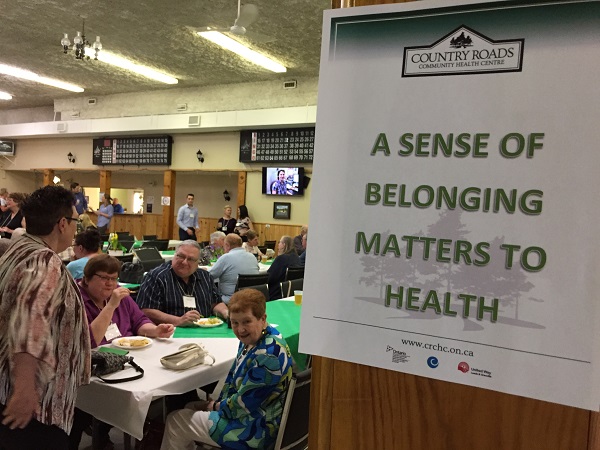
On May 9, Country Roads Community Health Centre celebrated 30 years of exceptional primary health care in rural Southeastern Ontario. The occasion was marked with live music (with Executive Director Marty Crapper throwing down some mean bass alongside local musician Melanie Weber), a shared meal, and some poignant reflections by community members and leaders. People shared stories of helping to steward the CHC from humble roots – half a day a week in a single room – into the hub of community-governed comprehensive primary health care that it is today.

Anna Greenhorn, a lifelong resident and tireless volunteer in the Rideau Lakes area, and a founding member of Country Roads CHC’s Board of Directors, gave a passionate speech about the work it took at the community level to lay the foundation for what Country Roads would become. Greenhorn, who was the first woman elected to municipal council in the area in the 1980s, wasn’t shy about telling us what it took to get the CHC off the ground, and to help it grow into an organization that truly meets the needs of people facing barriers to their best possible health and wellbeing.

“If you’re going to succeed in a community, the community members have to have their seat at the decision-making table,” Greenhorn said. “The community knows what it needs.”

Greenhorn, who’s now in her late eighties, talked about what it meant to her when she was recovering from illness to be able to walk into the centre and be greeted by people who knew her, and who she knew really cared about her. “It makes all the difference in the world when you’re trying to get well. It’s because of Community Health Centres that people can stay living at home.”

Country Roads CHC – which opened in 1988 and was, at the time, the 16th Community Health Centre to open its doors in the province – now offers primary care and community health services and programs at locations in Portland, and Westport, Ont. Serving over 4,000 people, the interprofessional team delivers primary care and so much more: seniors exercise programs, mindfulness and stress-reduction drop-ins, chronic pain management, mental health supports, walking programs, teen health clinics, parenting education and support groups, and a dental health program. As they say on their website, Country Roads truly is “one stop shopping for family and community health.”

It’s the continuity of the community’s sense of ownership and pride in its health centre that shines the brightest, though. Greenhorn stressed the importance of community members being given a role in their own health as a key to Country Roads’ success, and she cited the volunteer programs as a key element of that success. “The top thing that keeps people well is working in the community, having a shared sense of purpose.”

When current Country Roads CHC Board Chair Peter Hannah took the stage to offer a toast to the 30th anniversary milestone, he struck a similar note, raising his glass to the volunteers who help support the centre staff in offering truly wraparound care. “This is for you, and the next 30 years.”

[Clinton Cowan, AOHC Board member, left, presents a certificate to mark the 30th anniversary to current Country Roads CHC Board Chair Peter Hannah.]

[Country Roads CHC Executive Director Marty Crapper and local musician Melanie Weber threw down some rockabilly to help mark 30 years of excellence in rural community health.]

Health Equity Heroes: Pierrette Vezina cherishes her role with Wabano volunteers and the sweet success of an Indigenous-run social enterprise

Wednesday, March 28, 2018

Pierrette Vezina, volunteer coordinator at Wabano Centre for Aboriginal Health in Ottawa, has played many roles over the years. One of the things she’s most proud of is helping to create a meaningful place for other people at Wabano, to help them get better connected to each other, themselves, and the programs and services around them. After she received the Ontario Medal for Good Citizenship in January, we spoke to Vezina, who is Métis, about building a program to increase the number of active volunteers from 14 to more than 400, growing one of Wabano’s volunteer programs into a chocolate-based social enterprise that helps bring in money for other programs, and what the work means for people’s health and wellbeing.

Can you tell us a bit about how you got started at Wabano?

I had to retire because of medical reasons, but I was looking for something to do, as a therapy really. And Wabano called to me. At first, I was working with the seniors program they had started here with the Elders. I worked for them for about three or four years and I loved it. I had practised as a Therapeutic Recreologist and Music Therapist in my career, and so I was able to bring some of my skills here to help them. Then I heard they were looking for someone to fill the role of volunteer coordinator. So I said, “You know, I could help you out with that a couple of days a week.”

It’s now been four years that I’ve been the volunteer coordinator. For me, that role has meant a lot. I have chronic pain, but when I’m here at Wabano, I don’t feel it. Being here helps me feel better. So Wabano has done a lot for me, too.

We can’t hide the fact we have a real sweet tooth. Can you tell us more about the Wabano Fine Chocolates social enterprise and what it means to have a volunteer program evolve like this?

I’m a trained chocolatier, and I was trying to find creative ways to show the volunteers that we appreciate them, so I made chocolates, and it started out as a gift. Then I thought, well, maybe this could become something bigger. But it grew very slowly. I taught people how to make chocolate, and we started by producing prizes for programs, or as little gifts.

Now we are actually getting contracts because people really love our chocolates. We worked hard to develop our flavours. It’s a totally Indigenous program, so we have chocolates that tell stories of our culture, and we have chocolates with teachings. People really liked that.  The program is youth-oriented, and includes volunteers facing barriers. Also all the money made goes back into supporting programming.

Can you explain your approach to volunteerism, and how it might differ from other organizations?

Volunteerism is such a big word, but in our culture, the tradition is helping, and being a helper. So if a neighbour needed fish, you’d go and help them catch fish, you know.   That’s what living in a community is all about. And that’s what is so great about Wabano: we do everything in a community.

I spend some time with incoming volunteers to get to know them and what they’re passionate about. Then I try to find the perfect job for them where they’re going to be happy and where they can use their talents, and we can nourish those talents. Sometimes I even create a role so someone can learn while they can give back to Wabano.

Can you give us an example?

Graphic artist. I had a young person who is a talented artist, so we had her create a few cartoons for educational purposes, and some wrapper designs for the chocolate program, and things for the Wabano galas. It was something she really loved to do, and gave her a chance to use her artistic ability to address design needs at Wabano.

What do you think of the connection between social interaction and health, especially for seniors?

What seniors are really missing is people talking to them. A lot of times with seniors, the main issue is loneliness: they’re isolated, and it’s important to engage them. Especially with Indigenous seniors, a lot of people have had trauma, from residential schools and other things, they’re dealing with mental health issues, they’re living under the poverty line, but one of the things they need the most is a place of belonging, and that’s where Wabano comes in.

We welcome people who’ve faced intergenerational trauma, and people who’ve had trouble with the law, and we try to help them get their lives back, to change their story, and give them a chance to accomplish things. We also have people with physical and mental disabilities, and they have so much to offer, they just need a safe place to do that.

So, the Wabano environment is what helps to nurture rich volunteer opportunities for community members?

It’s the people here, and the vision of our Executive Director [Allison Fisher], and our Board, for this to be a place of belonging, for this to be a place where people feel safe. It’s about the people and the community. One of the big reasons I’ve been here 10 years is because I believe in what they do, and I’ve seen Wabano make a difference in people’s lives.

--To learn about volunteer opportunities and more, visit Wabano’s website or email Pierrette Vezina at volunteer@wabano.com. And we hear that she knows where to find the Wabano Fine Chocolates, too, in case you're looking to place an order.