Statement on Truth and Reconciliation Day 2022
On Truth and Reconciliation Day 2022, we continue the call for Indigenous health in Indigenous hands.
Date: 
Friday, September 30, 2022

In the Globe and Mail earlier this month, in an essay calling for a public inquiry into the tragic events in Saskatchewan, “the intergenerational effects of residential schools, neglect and childhood exposure to family fragmentation and domestic violence” were noted as contributing factors. This was followed by yet another call that Canada, its institutions, leaders and citizens, “confront colonialism” and “what more than a century of racist dehumanization can create over the years.”

As we pause together to mark Truth and Reconciliation Day, let’s make no mistake: Canada’s refusal to decolonize, the inaction of leaders and governments, continued denials and erasures of the truth, and failures to do the work of reconciliation before making speeches about it – all of these lead to the same familiar and unacceptable results. Intergenerational trauma, fractured families, the ongoing effects of anti-Indigenous racism and systemic barriers to Indigenous wellbeing all continue to be felt this year, as in previous years, and remain complex problems that will not address themselves.

While much hope and attention were paid to the Papal visit and words of apology Pope Francis offered for the Catholic Church’s leading role in the creation and maintenance of residential schools as sites of genocide and trauma, one of the telling results of this public relations effort was to highlight the still growing need for resources to support survivors of Canada’s colonial oppression and their families. And it’s not just crisis lines where Canada’s governments and health system leaders need to get serious about taking action.

For the Alliance and our members -- comprehensive primary health care organizations, including Indigenous-led centres and teams or Indigenous Primary Health Care Organizations across this province – the focus of Truth and Reconciliation Day is firmly on the actions needed to support decolonization of health systems, to create safer spaces and services for Indigenous people and communities, and the ways we can change our collective story that create the conditions for reconciliation.

Supporting the conditions for health and wellbeing for all Indigenous people and communities requires deeper understanding and better practices by everyone who works in the health and social systems of Ontario. It’s why we want to highlight the Indigenous Primary Health Care Council’s (IPHCC) ongoing efforts to increase cultural competency and address anti-Indigenous racism in health care and social services.

The Anishinaabe Mino’Ayaawin – People in Good Health is IPHCC’s approach to Indigenous Cultural Safety. The first course, Foundations of ICS, is for individuals working in the health care system to learn the importance of adopting culturally safe and appropriate practices when serving Indigenous clients and patients. The IPHCC is also working with health organizations on ongoing curriculum development and focused trainings, customized sessions, toolkits, and local organizational change initiatives. Alliance members have collectively supported the IPHCC’s programs and calls to action. It’s time for people in the wider health and social systems and government to connect the dots here between action on Indigenous cultural safety and changing the story on intergenerational trauma and racism.

For the Alliance and its members, Truth and Reconciliation is an opportunity to highlight, champion and call for more action to place Indigenous health into Indigenous hands. It’s also a chance to look inside of our organizations, at what we can be doing to contribute to safer spaces, services and Indigenous self-determination and governance in health care. That means more health care services governed, planned and delivered by Indigenous health leaders and organizations. It means meaningful opportunities and places at tables to contribute to wider system reform for health equity. It means re-shaping day to day services and practices. It means ensuring Indigenous ways of knowing and being are at the heart of Indigenous health and wellbeing systems – through finding meaningful ways to work together towards a truly Two-Eyed Seeing approach to health care in Ontario. This is work we must all engage in, together, to move towards truth and reconciliation.

Another key component of addressing colonialism’s impacts on Indigenous health is access to traditional healers. As the Southwest Ontario Aboriginal Health Access Centre (SOAHAC) notes on its website, “access to traditional healing services is an essential part of wholistic health care and a vital component of healing the ongoing effects of colonization.” Yet recognition and resourcing of traditional healers in Ontario’s health system continues to lag, and access to healers remains precarious or impossible for so many Indigenous people who could benefit from it. As Alliance members gathered in June at our AGM, we passed a resolution calling on the federal and provincial governments to fully recognize and resource traditional healers as an important health service provider in Indigenous-led primary health care delivery. We echo that call here again, as an action that is a concrete step towards addressing colonialism’s violent legacy and ongoing impacts on Indigenous people and communities.

Addressing colonialism and its violent impacts on Indigenous people, families and communities is work that must be generational, visionary, and approach complex systemic problems with creative, Indigenous- led solutions that are well resourced and supported across Canada’s governments and systems. That’s how we can move forward together.


Health care reform: It is not just about healthcare.

Alliance members: Join us for this special Lunch 'n' Learn Webinar featuring Russ Ford, a health system researcher with a long history of leadership in Ontario's Community Health Services.Russ will present preliminary findings from his PhD research into health system reform. He'll share some observations about the OHT initiative and his insights into what reforms he thinks are really needed. In particular, he'll speak about why OHTs need to make meaningful commitments to advancing health equity, and how CHCs can play a role in making that happen.Russ will be joined by Dr. Jennifer Rayner, Director of Research and Evaluation at the Alliance, and Sarah Hobbs, Alliance CEO.

#Keynote Presenter

Russ Ford is speaking to reporters at a press conference. He is wearing a purple dress shirt and a light brown jacket. Russ Ford was the Executive Director of Stonegate CHC for 10 years and LAMP CHC for 17 years. He is currently pursuing a PhD in social work at McMaster, focusing his research on health system reform.
Details
Wednesday, November 16, 2022 - 12:00
12-1pm
Cost: 
Free
Internal/External: 
Event Type: 
Location
Webinar
ca

L’approvisionnement plus sécuritaire au Québec

Joignez-vous à la communauté de pratique nationale sur l'approvisionnement plus sécuritaire, jeudi 29 septembre 2022 à 12h00 HAE pour une table ronde sur l’approvisionnement plus sécuritaire au Québec. La discussion portera sur les succès, les défis et les obstacles des programmes et des initiatives d'approvisionnement plus sécuritaire au Québec. Les panélistes comprennent des prescripteurs·trices, des personnes qui consomment des drogues, des travailleurs·euses de la réduction des méfaits et des militant·e·s.

#Notre modératrice et nos panélistes:

  • Alexandra de Kiewit, Travailleuse de la réduction des méfaits et militante, Le Dispensaire, ACPUD - modératrice
  • Dre Marie-Ève Goyer, Médecin, Équipe de soutien clinique et organisationnel en dépendance et itinérance - panéliste
  • Marie-Christine Grégoire, Travailleuse sociale et coordonnatrice professionnelle, Services bas seuil Relais - panéliste
  • Jérôme Benedetti, Consultant expert, Équipe de soutien clinique et organisationnel en dépendance et itinérance - panéliste
  • Isabelle Fortier, Représentante du Québec, Moms Stop the Harm - panéliste
  • Simon Vermette, Travailleur de la réduction des méfaits et intervenant en toxicomanie, La Coopérative de solidarité SABSA et L’Interzone - panéliste

# La table ronde discutera certaines des questions suivantes:

  • À quoi ressemble l'approvisionnement des substances non réglementées au Québec?
  • Comment fonctionne l'approvisionnement plus sécuritaire au Québec?
  • Quelles sont les réussites des programmes et des initiatives d'approvisionnement plus sécuritaire au Québec?
  • Quels sont les défis et les obstacles à l'expansion des programmes d'approvisionnement plus sécuritaire au Québec?
  • Comment un plus grand nombre de personnes qui consomment des drogues peuvent-elles s'impliquer de façon significative dans les programmes d'approvisionnement plus sécuritaire au Québec?
  • Comment pouvons-nous multiplier les programmes d'approvisionnement plus sécuritaire au Québec?

Une séance de questions et réponses animée par la modératrice suivra la discussion. Les participant·e·s sont invité·e·s à poser leurs questions dans la boîte de clavardage.

Ce webinaire sera un événement public. Le panel se déroulera en français, avec une traduction orale simultanée en anglais et un sous-titrage codé disponible.

Details
Thursday, September 29, 2022 - 12:00
12:00 pm
Event Type: 
Location
Webinaire
ca

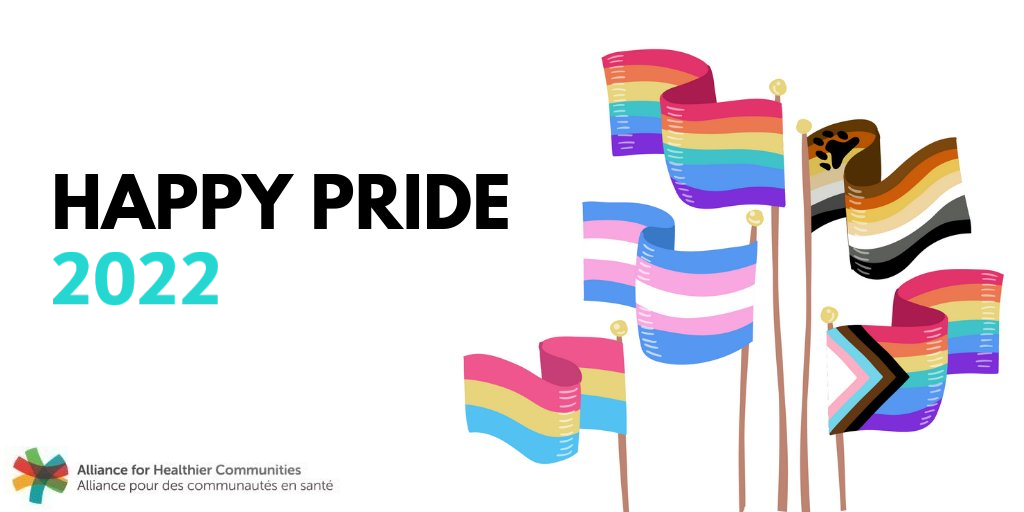
Happy Pride 2022 and a Call to Action for Two Spirit and Trans Rights and Services

Friday, June 24, 2022

Happy Pride. Before all else, we wish everyone who is or will be celebrating in the days and weeks ahead a happy, safe, joyful, inspiring and mindful Pride. To all the 2SLGBTQ+ communities who are gathering, demonstrating, marching, parading and partying together, we stand and celebrate with you. With all Alliance members who continue to help lead the way creating safe spaces and health and social services for 2SLGBTQ+ people of all ages, we stand in solidarity with you -- against violence, against oppression, against exclusion, against hate and discrimination in all its forms.

Last year at this time, we noted in our Pride statement that concern was rising among 2SLGBTQ+ communities and allies about violence and the increased risks people face, even in spaces that had been considered safe from homophobia and transphobia. This year, we join others, including the Green Party Leader Amita Kuttner, who is Canada's first transgender federal party leader, in demanding action to protect 2SLGBTQ+ people, and in particular, to create protections for transgender folks. The changes we need must be, as the Mental Health Commission of Canada says, about a “right to dignity” and inclusion, as much as protections from violence.

Transphobia and trans hate continues to get a place in media coverage as a “side of the issue”; transphobia continues to be acceptable fodder for celebrity comedians’ attention-starved rants, continues to dominate decisions on policies of exclusion and discrimination, and continues to make trans people feel unsafe throughout our societies, including in spaces of education and health and wellbeing. This is unacceptable.

To foster more understanding, both of transgender, Indigenous and intersectional experiences, as well as the supports that matter the most, especially for youth, we invited Teddy Syrette to speak at our conference.

Teddy Syrette (Ozhawa Anung Kwe/Yellow Star Woman) is a 2-Spirit Anishnabe from Rankin Reserve of Batchewana First Nation of the Anishnabek. Teddy has a background in social justice for First Nation and 2Spirit and LGBTQ+ people and communities. Their background also includes community theatre and bingo. Teddy has a diploma in Social Service Work – Indigenous Specialization from Sault College, and Teddy uses they/them as their pronouns. As a brown, First Nation queer person, there were many barriers and challenges that Teddy faced growing up on Rankin Reserve and Sault Ste. Marie, Ontario. These acts of discrimination and bullying led Teddy to a path of self-destruction and isolation. However, they did manage to find support in a high school guidance counsellor, an LGBT+ youth group of Algoma and affirming family and friends.

In their talk, Teddy talks about the need for more helpers, and more safe spaces, and more opportunities for young 2SLGBTQ+ people to connect, particularly for those also facing marginalization and exclusion due to racism, geographic isolation, family abuse and violence, homelessness and low incomes. You can follow Teddy via Instagram.

The Alliance and our members, Ontario and Canada need to do better. It’s why in 2021-22, the Alliance and its staff committed to full completion of the Rainbow Health Ontario LGBT2SQ Foundations Training. It’s why the Alliance and its members are committed to the Indigenous Primary Health Care Council’s Indigenous Cultural Safety Training as well, in addition to advocating for the training for all of Ontario’s public service. It’s only with collective action that we can achieve solidarity for health equity.

What’s possible when community health organizations work together for action on health equity for trans and other 2SLGBTQ+ communities? Quite simply a transformed health system based on principles of inclusion, safety, respect and trust that can truly support the needs of 2SLGBTQ+ people.

Here’s an example from the 2022 Transformative Change Award recipients that the Alliance and our sector are particularly proud of this year, the Southwestern Ontario Youth Gender Diversity Clinic delivered via Chatham-Kent Community Health Centres and Windsor-Essex Community Health Centre in partnership with local pediatrician Dr. Ian Johnston.

Congratulations and Happy Pride to everyone who’s working every day to improve and expand access to safe, inclusive health and social services for 2SLGBTQ+ communities. You are literally saving lives and helping people thrive with every encounter!


Énoncé de politique sur le définancement de la police

Date: 
Thursday, May 5, 2022

Pour mettre fin à la violence policière et aux meurtres des personnes noires, autochtones et racialisées aux mains des services policiers, nous devons en réduire le financement et investir dans les services communautaires. Le présent énoncé explique le raisonnement de l’Alliance pour des communautés en santé et des 110 organisations de soins de santé qui en sont membres pour en arriver à cette position, les raisons pour lesquelles nous devons revendiquer pour des changements structurels aux pratiques policières au Canada, et ce que nous devons faire pour la suite des choses en ce sens.  

Les expériences quant aux services policiers au Canada ne sont pas uniformes; les interactions des gens avec les services policiers sont profondément influencées par leur race et des facteurs sociaux et économiques. En Ontario, les personnes noires et autochtones sont victimes dans une mesure disproportionnée de préjudices et de violence de la part des services policiers. Cette réalité est mise en évidence par le nombre croissant de vies perdues et blessées; parmi les victimes, nommons Regis Korchinski-Paquet, D’Andre Campbell, Rodney Levi, Randy Cochrane, Chantel Moore, Sammy Yatim, Greg Ritchie, Dafonte Miller, Chadd Facey, et Orlando Brown. Et bien qu’il y ait eu une plus grande sensibilisation à cette réalité au cours des dernières années au Canada, la violence policière porte toujours préjudice aux populations racialisées, les structures de surveillance faillissent encore à la tâche, et les budgets des services policiers ne cessent d’augmenter.   

Les personnes autochtones sont presque 10 fois plus susceptibles d’être tuées par les services policiers que celles de race blanche. Bien qu’elles comptent pour 5 % de la population canadienne, les personnes autochtones représentent un pourcentage disproportionné de la population carcérale au pays, soit près de 30 %[1]. De plus, une étude axée sur la ville de Toronto a révélé que les Noirs sont 20 % plus susceptibles d’être abattus par les services de l’ordre que les personnes de race blanche.[2] 

[1] Morin B. The indigenous people killed by Canada's police. Al Jazeera. https://www.aljazeera.com/features/2021/3/24/the-indigenous-people-killed-by-canadas-police. Publié le 25 mars 2021. Repéré le 29 novembre 2021.

[2] Cecco L. Black Toronto residents 20 times more likely to be shot dead by police, study says. The Guardian. https://www.theguardian.com/world/2018/dec/10/toronto-black-residents-more-likely-shot-dead-ontario-human-rights-commission-report. Publié le 10 décembre 2018. Repéré le 29 novembre 2021. 

Policy Statement on Defunding the Police

Date: 
Thursday, May 5, 2022

To end police violence and killing of Black, Indigenous and other racialized people in Canada, we must defund the police and resource communities. The following statement traces how the Alliance for Healthier Communities and the 110 community-governed primary health care organizations that make up the Alliance arrived at this position, why, and what our next steps are to advocate for structural changes to policing in Canada. 

Experiences with policing in Canada are not uniform; the experiences people have when interacting with police forces are deeply influenced by race, social and economic factors. In Ontario, Indigenous and Black people experience disproportionate harm and violence through policing. This is a fact evident in the growing number of lives lost and lives harmed through police violence -- including but not limited to Regis Korchinski- Paquet, D’Andre Campbell, Rodney Levi, Randy Cochrane, Chantel Moore, Sammy Yatim, Greg Ritchie, Dafonte Miller, Chadd Facey, and Orlando Brown. Even as awareness has risen in the last several years in Canada, police violence continues to harm racialized populations, oversight structures continue to fail, and police budgets continue to grow.

We know Indigenous people are nearly 10 times more likely to be killed by police than white people. While making up five per cent of Canada’s population, Indigenous people account for a massively disproportionate number of the national prisoner count at nearly 30 per cent[1]. Similarly, a study focused on Toronto found that Black people are cited as being 20 per cent more likely to be shot and killed by police than white people in the city[2]

These statistics are stark. Ending police violence, saving lives and changing these statistics will require changing the structures that embed systemic racism, discrimination and violence against racialized people into Canada’s methods and institutions of policing. Supporting communities, systemically combatting racism, and addressing root causes of discrimination – social, economic and otherwise – must play larger roles than they do now in community safety and wellbeing.

The Alliance for Healthier Communities will advocate for defunding the police and investing resources into community-run initiatives and Black and Indigenous-led community programs. The Alliance for Healthier Communities and the Alliance’s members, which provide comprehensive primary health care, hold collective commitments to address structural and systemic factors that contribute to the oppression of Indigenous and Black people, as expressed in our Health Equity Charter. We seek the most effective and equitable solutions to police violence from a community perspective. 

We advocate for all levels of government to reduce funding for police budgets, and call for the reallocation of these funds to community-run programs that communities themselves design, lead and manage. As our first point of action, we champion reductions to municipal budgets for police services -- especially in advance of the Ontario provincial election in June, and municipal elections in October.

We recognize some Alliance members are already embarking on community programs to support safe crisis responses such as the Community Crisis Support Service pilot co-led by TAIBU Community Health Centre (CHC), and supported by Black Creek CHC and Regent Park CHC. These programs will help support health equity for Black, Indigenous and other and marginalized communities in Canada by interrupting the structures, policies and procedures that lead to police violence. The Alliance commits to advocate for more innovative and community-led safe crisis response programs across Ontario with funding reallocated from police services budgets.

At the Alliance, work is underway to address health inequities and barriers to wellbeing through commitments to tackling Anti-Black Racism. This will include training for Alliance members’ staff, and a commitment to address how a lack of decent work, access to healthy food, and adequate and safe housing impact the health of Black people, among other systemic determinants of health. To bring this work together and connect it overall to Black health, the Alliance is dedicating resources to work with the Black Health Committee to implement the Black Health Strategy to address the impacts of racism and discrimination on the health of Black communities. The Alliance provides education to members on the issue of police violence and its impact on Black, Indigenous and marginalized populations. We also commit to sharing information regarding the impact of policing on marginalized communities through policy statements and social media posts. Lastly, we commit to working with our partners in the health and social services sectors to advance alternatives to policing wherever possible, and to supporting defunding police advocacy.

[1] Morin B. The indigenous people killed by Canada's police. Al Jazeera. https://www.aljazeera.com/features/2021/3/24/the-indigenous-people-kille.... Published March 25, 2021. Accessed November 29, 2021.

[2] Cecco L. Black Toronto residents 20 times more likely to be shot dead by police, study says. The Guardian. https://www.theguardian.com/world/2018/dec/10/toronto-black-residents-mo.... Published December 10, 2018. Accessed November 29, 2021.