Community Health Physician – Oakwood-Vaughan Site

Posting Date: 
Wednesday, October 28, 2026

#Summary 

  • Community Health Physician – Oakwood-Vaughan Site
  • Part-time, Permanent Position – 21 hours per week Mondays, Wednesdays and Fridays
  • Salaried - $198,274 per annum plus benefits for 21 hours per week
  • Filling of Vacancy

#About the organization 

Unison Health and Community Services is a non-profit, community-based organization that serves neighbourhoods in Northwest Toronto. Operating out of six locations, Unison offers core services that include primary health care, counselling, health promotion, Early Years programs, legal services, harm reduction programs, housing assistance, adult protective services, Pathways to Education™ and a Diabetes Education Program. Unison’s mission is working together to deliver accessible and high-quality health and community services that are integrated, respond to needs, build on strengths and inspire change.

We are working from an inclusive, sex positive, harm reduction, anti-racist, pro-choice, anti-oppression, and participatory framework in addressing the issue of access to health care for our mandated priority populations encompassing all the determinants of health. Unison Health and Community Services is committed to working from an inclusive, pro-choice, sex positive, harm reduction, anti-racist, anti-oppression and participatory framework. 

#About the position 

Oakwood-Vaughan (OV) is the newest of six Unison sites.  The OV site offers youth specific mental health, addictions and sexual health care in addition to Primary Care services.

Unison is seeking a Community Health Physician for the Oakwood-Vaughan site. Reporting to the Clinical and Allied Health Site Manager for Jane-Trethewey and Oakwood-Vaughan sites, the Community Health Physician will be responsible for providing primary care to clients and their families within a multi-disciplinary, collaborative care model that emphasizes health promotion and client education.  They will also provide walk-in care to youth in areas of sexual and reproductive health, mental health and addictions. The Community Health Physician will have strong clinical and interpersonal skills to complement our team. 

#Qualifications

  •  License to practice medicine and membership in good standing with the College of Physicians and Surgeons of Ontario

  • Availability to work one evening per week
  • Demonstrated experience in community-based primary care settings
  • Demonstrated knowledge of and sensitivity to the impact of social, economic, environmental and cultural issues on health
  • Ability to work as part of an interdisciplinary team of clinical and program staff
  • Ability to do venipuncture or willingness to learn 
  • Demonstrated experience in community-based primary care settings that focus on youth 
  • Ability to manage all aspects of reproductive health including insertion and removal of IUDs
  • Prescribe relevant medications and provide follow up care to clients requesting medical abortions 
  • Interest in or ability to initiate and provide hormone therapy to trans clients 
  • Maintain professional development related to youth, sexuality, and related specific job responsibility issues
  • Demonstrated commitment to equity goals and principals, to sexual and reproductive rights, to being youth positive, 2SLGBTQI+, positive, sex positive, and to being inclusive of diverse sexual and gender identities
  • Commitment to pro-choice philosophy 
  • Experience serving Unison’s priority populations (seniors with complex needs, people with mental health and addictions, 2SLGBTQI+, and youth facing barriers) 
  • Commitment to working from a harm reduction, community development perspective
  • Ability to speak a second language an asset.
Application Deadline: 
Monday, November 30, 2026
How to apply: 

Interested candidates are asked to email a résumé with covering letter by Monday, November 30, 2026, at 4:00 pm to:

Hiring Committee – OV Physician 

Unison Health and Community Services

Toronto ON M6A 2N4

hirings@unisonhcs.org

Please cite UN_2026_066 in the subject line of the email. 


We welcome applications from people who are reflective of the diverse communities we serve, including those who might need accommodation. Where needed, accommodations for applicants with disabilities will be provided, on request, to support their participation in all aspects of the recruitment process.

Unison does not use Artificial Intelligence (AI) for screening, assessing, or the selection of applicants. Please note that due to the volume of applications, only those applicants selected for interviews will be contacted.
Introducing the Rapid Action Learning Intensive for Access and Attachment (RALI-AA): A Framework for Advancing Equitable Intake, Attachment, and Access to Primary Care

This webinar is presented by the Alliance for Healthier Communities

# What is this Lunch & Learn about? 

Intake is the front door to primary care access, yet timely and equitable attachment to primary care remains a systemic barrier across communities in Ontario.  

Join us for a Lunch & Learn to learn more about our Rapid Action & Learning Intensive for Access and Attachment (RALI-AA), a self-directed and coach-supported framework for implementing equitable intake process improvements for increased attachment and access to primary care. Developed to spread and scale the successful change ideas discovered in our most recently completed Learning Collaborative, RALI-AA offers a structured, seven-step quality improvement approach for enhancing intake processes, integrating complexity assessment and triage while improving workflows. 

# During this webinar, participants will:   

  • Learn about the purpose and seven-step quality improvement approach of RALI-AA and how to sign up for the upcoming scheduled learning and sharing sessions 
  • Get a sneak peek at the supporting resources including the how-to guide + workbook, QI tools, EMR + OceanMD forms, and other curated external resources, to name a few 
  • Understand the “tight” and “loose” elements of RALI-AA and how teams can adapt the seven steps to their organization’s unique needs, priorities, and local context  
  • Ask questions and discuss how RALI-AA can support intake improvement priorities within their organizations 

# About RALI

The Rapid Action Learning Intensive (RALI) is a self-directed learning tool we've developed to spread and scale the successful change ideas discovered in our learning collaboratives. It is a hybrid learning model: self-paced and self-directed, but supported with individualized coaching as well as optional learning and sharing sessions. Participating teams get access to a step-by-step workbook, curated external resources, and the dedicated support of an Alliance Quality Improvement Coach, as well as the option to join scheduled learning sessions (or access recorded sessions) when available. The workbooks and QI coaching are available in both English and French. Learning sessions are conducted in English. Other resources are provided in the language(s) available. 


Details
Tuesday, December 8, 2026 - 12:00
12:00 - 1:00 pm
Cost: 
Free
Internal/External: 
Event Type: 
Location
Online via Zoom

Physician Locum - Primary Health Care

Posting Date: 
Friday, October 23, 2026

#Summary 

  • Position Title: Physician
  • Classification: Physician
  • Job Type: Locum (Part-Time or Casual) - December 2026 to January 2028, with flexibility to cover all or part of this period.
  • Department: Integrated Health Services
  • Location: 55 Eccles Street
  • Reporting to: Director, Integrated Health Services
  • Compensation: $182.40/hr plus a comprehensive compensation package that includes time-off entitlements, health benefits, life insurance, and participation in the HOOPP pension plan.

#About the organization 

We are Somerset West Community Health Centre (SWCHC), a non-profit, community-governed organization that serves over 18,000 clients annually. Established in 1978, SWCHC provides a wide range of health care services such as primary health care, health promotion, community development, mental health, and harm reduction. We are deeply connected to the communities we serve and committed to removing barriers to accessing services for people who experience vulnerabilities because of their age, income, ability, sexual orientation or gender identity, and language or culture.

SWCHC strives to ensure that our team reflects the communities we serve. We work within an anti-racist, anti-oppressive framework that acknowledges the existence and impacts of systemic racism and seeks to ensure that systems are fair and equitable for everyone.

#About the position 

What the Program Entails

The Primary Health Care Program provides comprehensive, team-based primary care services to a diverse patient population. Working within the Community Health Centre model, providers collaborate across disciplines to deliver integrated, person-centred care that addresses both clinical needs and the social determinants of health. Services emphasize health promotion, disease prevention, continuity of care, health equity, and improved access for individuals who experience barriers to care.

What You’ll Do

Reporting to the Director of Integrated Health Services, the Physician is a key member of the interdisciplinary team, delivering comprehensive primary health care services within a rostered practice. The Physician delivers culturally responsive care both independently and in collaboration with an interprofessional team, with a strong commitment to culturally safe, equitable, and client-centred care.

The Physician provides comprehensive primary health care, including health promotion, counselling, disease prevention, diagnosis, treatment, and referrals to specialists or diagnostic testing. Providing clinical services requires the Physician to manage a diverse range of health conditions while addressing the complex needs of the populations served.

The Physician plays an active role in the development, implementation, monitoring, and evaluation of programs and services, ensuring accessible and high-quality care for individuals with diverse health, social, cultural, and economic needs. Functioning both autonomously and collaboratively, the Physician contributes to advancing program goals and enhancing health outcomes within the community.

Your Day-to-Day at a Glance

As a Physician of the centre, your responsibilities are: 

  • Provide comprehensive primary care to patients across the lifespan.
  • Assess, diagnose, and manage acute and chronic health conditions.
  • Order and interpret investigations and develop evidence-informed care plans.
  • Prescribe medications and initiate referrals to specialists and community resources.
  • Provide patient education and support informed decision-making.
  • Conduct clinical procedures within scope of practice.
  • Support continuity of care through appropriate follow-up and home visits as required.
  • Collaborate with physicians, nurse practitioners, nurses, allied health professionals, and community partners.
  • Provide care using health equity, anti-oppressive, trauma-informed, and culturally responsive approaches.
  • Participate in learner education and supervision where appropriate.
  • Integrate health promotion, disease prevention, and screening into clinical practice.
  • Maintain accurate and timely documentation within the electronic medical record.
  • Support organizational initiatives, policy development, and strategic priorities.
  • Contribute to community partnerships and advocacy efforts that advance health equity and population health.

#Qualifications

 What We’re Looking For 

❖  Life and Work Experience

  • Experience providing comprehensive primary care services within a community-based or interdisciplinary care setting.
  • Experience working with culturally diverse, underserved, and marginalized populations.
  • Understanding of the Community Health Centre model of care.
  • Experience in mental health, harm reduction, and/or addiction medicine considered an asset.
  • Strong clinical assessment, diagnosis, treatment, and referral skills.
  • Knowledge of health equity principles, trauma-informed care, and the social determinants of health.
  • Experience using electronic medical records and maintaining accurate clinical documentation.
  • Strong organizational, problem-solving, communication, and relationship-building skills.
  • Ability to work collaboratively within an interdisciplinary team environment.
  • Availability to provide services one evening per week until 8:00 p.m., as required.

❖  Your Education Path

  • Medical degree from a recognized university.
  • Family Physician licensed in good standing with the College of Physicians and Surgeons of Ontario and certified by the College of Family Physicians of Canada.
  • Valid OHIP billing number.
  • Current CMPA coverage.
  • Current CPR/BLS certification.

❖  Required Language

  • Fluency in English required. 
  • Working knowledge of French an asset.

What You Bring to the Table

  • Commitment to health equity, anti-oppressive practice, trauma-informed care, and culturally responsive, client-centred care.
  • Strong interpersonal skills and ability to build effective relationships with clients, families, colleagues, and community partners.
  • Excellent written and verbal communication skills.
  • Ability to work autonomously while collaborating effectively within an interdisciplinary team.
  • Strong critical thinking, problem-solving, and decision-making skills.
  • Effective organizational and time-management skills, with the ability to manage multiple and competing demands.
  • Adaptability and responsiveness to the diverse needs of clients and the communities served.
Application Deadline: 
Tuesday, December 1, 2026
How to apply: 

Apply to: https://swchc.bamboohr.com/careers/797    


Somerset West Community Health Centre is an equal opportunity employer who values the diversity of individuals in our programs and services.

This posting is for a currently vacant position that we intend to fill through this recruitment process. 

We welcome and encourage applications from members of Indigenous, Black and racialized communities, Two-Spirit, nonbinary, LGBTQ+ people; people with disabilities; and members of other equity seeking groups. Applicants are encouraged to share accessibility needs in the application process, and every attempt will be made to accommodate them.

We sincerely appreciate your interest in working with us. Due to high volume of applicants, we can neither confirm receipt of nor respond to inquiries regarding your application. Only candidates selected for an interview will be contacted.

Une nouvelle étude met en évidence les conditions de réussite du rattachement des patients aux soins primaires

Date: 
Friday, October 23, 2026

Est-ce que vous recherchez un médecin ou un infirmier praticien? Les centres de santé communautaire de l’Ontario sont particulièrement bien outillés pour vous aider à en trouver un et à maintenir ce lien.


Au moment où l’Ontario s’efforce d’élargir l’accès régulier aux soins primaires, une nouvelle étude menée par des chercheurs ontariens met en lumière les facteurs propices à un rattachement pérenne. Les données révèlent que cette démarche ne se limite pas au simple jumelage avec un prestataire de soins. Il s’inscrit plutôt dans une démarche continue tributaire de la préparation des patients, de la capacité des prestataires, de l’accès aux services, de l’équité et des ressources du système de santé.

Parue cet automne dans la revue Healthcare, l’étude « An Equity-driven Analysis of the Implications of Attachment and Attachment Readiness within Primary Care Healthcare Systems in Canada » a été pilotée par l’Alliance pour des communautés en santé et Access Alliance Multicultural Health and Community Services, avec la collaboration de chercheurs de l’Université Western et de l’Université de Toronto.

L’équipe de recherche fait valoir que la prestation de soins en équipe, les services d’aide à la navigation pour la clientèle, les approches de sensibilisation adaptées à la culture et une procédure d’accueil mieux structurée constituent d’importants leviers pour accroître le niveau de préparation. Elle préconise en outre d’intégrer des mesures favorisant la préparation au sein des mécanismes de rattachement, ainsi que d’alléger la charge administrative liée à l’inscription de nouveaux patients dans les cliniques.

« Cette étude valide l’approche de longue date de nos membres, laquelle s’articule autour d’un cadre axé sur l’équité en santé et le Modèle de santé et de bien-être », a déclaré Sarah Hobbs, directrice générale de l’Alliance pour des communautés en santé. « La réussite ne devrait pas se mesurer uniquement au nombre de personnes rattachées. Nous devons également nous demander si nous établissons des relations équitables et durables, garantissant à la population un accès concret aux soins primaires. »

Plus de deux millions de personnes en Ontario n’ont pas accès à un médecin de famille ou à un membre du personnel infirmier praticien. L’objectif de la province consiste à toutes les rattacher aux soins primaires d’ici 2029. Toutefois, limiter les investissements au simple jumelage ne suffit pas pour améliorer notre santé collective : le rattachement constitue une démarche continue, et non une simple intervention ponctuelle. Pour assurer une réussite pérenne, l’Ontario doit miser sur la « préparation au rattachement », ce qui exige des investissements en matière d’équité en santé.

Depuis le déploiement du plan provincial en 2024, les membres de l’Alliance pour des communautés en santé ont formulé des propositions porteuses visant à rattacher plus de 500 000 personnes aux soins primaires. Celles-ci misent sur la préparation au rattachement : les patients sont préparés, les prestataires de soins disposent de la capacité nécessaire pour les prendre en charge, et le système environnant consolide ce lien.

« Le modèle des centres de santé communautaire offre à la province une solution clé en main pour délaisser la simple comptabilisation des jumelages au profit de l’établissement de relations durables », a souligné Cliff Ledwos, directeur général d’Access Alliance. « Lorsque les patients sont prêts à recevoir des soins primaires, le système doit l’être tout autant. Les retards et la complexité inutile peuvent créer des obstacles supplémentaires, particulièrement pour les personnes déjà défavorisées par des iniquités en matière d’accès aux soins. »

La préparation au rattachement amène à concevoir les patients, les prestataires de soins et le système de santé comme un écosystème global nécessitant du soutien. L’équipe de recherche souligne l’importance de freiner l’érosion du niveau de préparation, un phénomène qui survient lorsque les patients sont lassés par les longs délais d’attente, le désarroi, l’incompréhension et la frustration. Ce risque, particulièrement élevé pour les personnes nouvellement arrivées et d’autres populations en quête d’équité, se traduit par un recours accru aux urgences, ce qui alourdit les coûts pour le système tout en nuisant à l’état de santé des personnes concernées.

« Nous avons constaté que les fournisseurs de soins primaires à gouvernance communautaire mettent déjà en œuvre la solution préconisée pour assurer un rattachement pérenne, ainsi que les stratégies permettant de prévenir cette érosion du niveau de préparation », a déclaré Jen Rayner, Ph. D., directrice des politiques et de la défense des intérêts à l’Alliance pour des communautés en santé.


L’accès aux soins primaires sous l’angle de l’équité

L’étude souligne des incidences particulières pour les personnes nouvellement arrivées, les personnes réfugiées et d’autres populations en quête d’équité. Elle conclut principalement que le rattachement doit être envisagé conjointement avec l’équité et l’accès, plutôt que comme un simple résultat administratif isolé. [mdpi.com]

« Dans cette étude, nous faisons valoir que les systèmes de santé peuvent consolider le rattachement en uniformisant la procédure d’accueil, en tenant compte de la vulnérabilité et des déterminants sociaux de la santé lors de l’établissement des priorités, et en dotant les prestataires de soins des ressources et des moyens nécessaires pour établir des relations durables avec une patientèle aux besoins complexes », a ajouté Mme Rayner.

Dans l’ensemble de l’Ontario, les centres de santé communautaire offrent des soins adaptés sur les plans culturel et linguistique, un accompagnement administratif, ainsi que l’expertise d’équipes interprofessionnelles. Le personnel instaure un climat de confiance permettant aux nouveaux patients de recevoir les soins appropriés, au moment opportun et de manière adéquate, ce qui prévient l’érosion du niveau de préparation.


Pour de plus amples renseignements, veuillez communiquer avec :

Khalid El Mouloudi

Alliance pour des communautés en santé

416 236 6761

khalid.elmouloudi@allianceon.org


New research highlights what it takes to make connecting patients to Primary Care work

Date: 
Friday, October 23, 2026

Need a doctor or nurse practitioner? Ontario’s community health centres are uniquely equipped to help you get, and stay, attached to one


As Ontario aims to connect more people to regular primary care, a new study by Ontario researchers highlights factors that can help support successful and sustainable attachment. The research suggests that attachment is more than the point at which a patient is connected to a provider. It is an ongoing process shaped by patient readiness, provider capacity, access, equity and health-system supports.

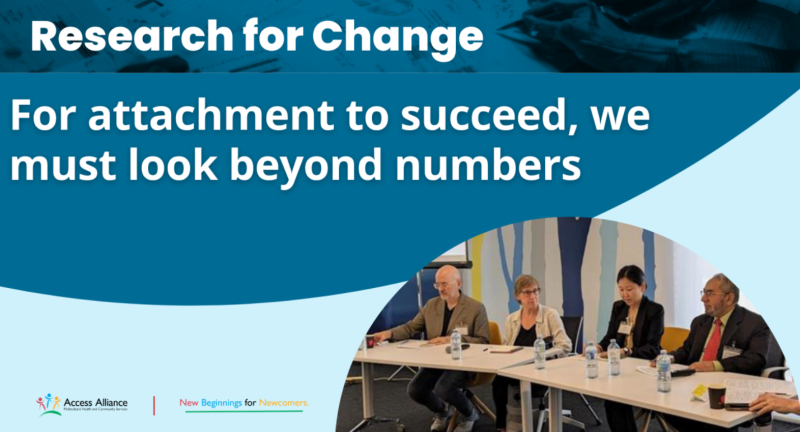
Published this fall in Healthcare, the study - An Equity-driven Analysis of the Implications of Attachment and Attachment Readiness within Primary Care Healthcare Systems in Canada - was led by the Alliance for Healthier Communities and Access Alliance Multicultural Health and Community Services, with researchers from Western University and University of Toronto.

The researchers point to team-based care, patient navigation, culturally responsive outreach and more structured onboarding as important ways to improve readiness. They also recommend incorporating readiness measures into attachment systems and reducing the administrative burden involved in bringing new patients into practices. 

“This research confirms what our members have been doing all along using a health equity informed framework and the model for health and wellbeing,” said Sarah Hobbs, CEO, Alliance for Healthier Communities.  “Success shouldn’t be measured only by how many people are attached. We also need to ask whether we are creating equitable, sustainable relationships that give people meaningful access to primary care.”

Over two million Ontarians don’t have a family doctor or nurse practitioner. The province’s goal is to connect them all to primary care by 2029. But, simply investing in connections isn't enough to improve our collective health, because attachment is a process, not a single event. Ontario needs “attachment readiness” - including investments in health equity - for long-term success.

Since the provincial plan launched in 2024, members of the Alliance for Healthier Communities have built successful proposals to attach more than 500,000 people to primary care. These focus on attachment readiness: patients are prepared, providers have the capacity to take them on, and the surrounding system supports the connection.  

“The community health centre model provides a ready-to-mix recipe for the province to shift thinking from counting matches to building relationships,”,” said Cliff Ledwos, Access Alliance Executive Director. ”When patients are ready for primary care, the system needs to be ready too. Delays and unnecessary complexity can create additional barriers, particularly for people already experiencing inequities in access to care”

Attachment readiness means seeing patients, providers, and the healthcare system as an entire ecosystem that needs support. Researchers identified the need to address readiness decay, which happens when patients are worn down by long waits, confusion, and frustration. The risk is highest for newcomers and other equity-deserving populations, and leads to more people landing in emergency departments, at greater cost to both the system and their health. 

“What we found was that community-led primary health care providers already use the recipe recommended for long term attachment and ways to avoid readiness decay,” said Jen Rayner, PhD, Director of Policy and Advocacy, Alliance for Healthier Communities. 


An equity lens on primary care access

The research emphasizes particular implications for newcomers, refugees and other equity-deserving populations. Its central conclusion is that attachment should be understood alongside equity and access, rather than as an isolated administrative outcome. [mdpi.com]

“In this study, we  argue that health systems can strengthen attachment by standardizing onboarding, considering vulnerability and social determinants of health in prioritization, and supporting providers with the resources and capacity required to establish longitudinal relationships with patients who have complex needs,” added Rayner.

Across Ontario, community health centres provide culturally responsive, language-accessible care, administrative support and interprofessional teams. Staff build trust, new clients get the right care, at the right time, in the right way, so readiness can’t decay. 


For more information, please contact:

Marie-Lauren Gregoire

Alliance for Healthier Communities

647-205-8854

marielauren.gregoire@allianceon.org


Heather Corbin

Access Alliance Multicultural Health and Community Services 

hcorbin@accessalliance.ca 


Quality Improvement and Client Experience Specialist

Posting Date: 
Thursday, October 22, 2026

#Summary 

  • POSITION: Quality Improvement and Client Experience Specialist
  • $75,234 - $86,686 CAD per year
  • VACANCY STATUS: Please note that this posting is for a new Full-Time, Permanent position
  • DEPARTMENT: Organizational Effectiveness and Professional Practice
  • LOCATION: In-Person Across all WellFort and Partner Locations
  • APPLICATION DOCUMENTS REQUIRED: Resume and Cover letter
  • APPLICATION DEADLINE: November 16, 2026

#About the organization 

WellFort Community Health Services is a non-profit, values-based organization committed to providing inclusive, accessible, and sustainable health care services to diverse communities across Peel Region. Through a comprehensive range of primary care, health promotion, chronic disease management, and community development initiatives, WellFort works collaboratively with clients, families, and community partners to improve health outcomes and strengthen community capacity.

#About the position 

SUMMARY OF POSITION

This position supports the mission, vision and values of WellFort Community Health Services by leading the development, implementation, monitoring and evaluation of the organization's Quality Improvement and Client Experience programs.

The Quality Improvement and Client Experience Specialist provides subject matter expertise, consultation, coaching, facilitation and project leadership to support organizational excellence, continuous quality improvement, service innovation, client partnership and organizational learning. Working collaboratively with leaders, teams, clients, families and community partners, the Specialist advances evidence-informed improvement initiatives that strengthen organizational performance, improve client experience and foster meaningful engagement in service planning, delivery and evaluation.

The Specialist is responsible for leading the development, implementation and ongoing evaluation of WellFort's Client Experience Framework and Client and Family Engagement Strategy, ensuring client and family voices are integrated into organizational priorities, quality improvement initiatives, service delivery and decision-making.

The role requires the ability to exercise sound judgment, professionalism and discretion while handling confidential organizational, quality, risk, client experience and performance-related information.

ACCOUNTABILITY

The Quality Improvement and Client Experience Specialist is accountable for advancing WellFort's quality improvement and client experience programs. The incumbent supports a culture of continuous improvement, accountability, person-centred care, client partnership, organizational learning and service excellence across the organization.

MAJOR DUTIES AND RESPONSIBILITIES 

Quality Improvement

  • Lead, support and coach programs and teams in identifying priorities, establishing performance objectives and developing quality improvement plans utilizing facilitation, stakeholder engagement, research, environmental scanning, process mapping, data analysis, gap analysis and evidence-informed best practices.
  • Guide, lead, implement and monitor quality improvement projects and initiatives across the organization.
  • Track project status, risks, outcomes and performance indicators and provide regular updates and recommendations to leadership and committees.
  • Act as an organizational subject matter expert and resource in quality improvement and process improvement methodologies.
  • Support the sustainability and operationalization of improvement initiatives across programs and services.
  • Facilitate quality improvement activities using recognized methodologies such as Plan-Do-Study-Act (PDSA), Lean principles, root cause analysis, process mapping, implementation science and change management approaches.
  • Coordinate organizational quality improvement planning activities and support the development, implementation, monitoring and reporting of the organization's annual Quality Improvement Plan (QIP).
  • Develop and provide tools, templates, resources and training to strengthen quality improvement and project management capacity among leaders and interprofessional teams.
  • Coordinate and deliver education, mentoring and coaching related to quality improvement methodologies, performance measurement and evaluation.
  • Consult with leaders and teams to identify opportunities for improvement and implement sustainable solutions.
  • Support organizational accreditation activities, including quality standards monitoring, evidence collection, self-assessment activities and continuous improvement efforts related to accreditation requirements.
  • Develop performance measures, dashboards, scorecards and evaluation frameworks to monitor outcomes and organizational performance on quality initiatives.
  • Analyze trends from client feedback, complaints, incidents, performance metrics, and other quality indicators to identify and implement improvement opportunities and support organizational learning.
  • Collaborate with organizational leaders to monitor, evaluate and report on quality indicators, outcomes and organizational performance.

Client Experience and Engagement

  • Lead the development, implementation, evaluation and continuous improvement of WellFort's Client Experience Framework and Client and Family Engagement Strategy.
  • Ensure alignment of client experience and engagement initiatives with organizational priorities, strategic objectives, accreditation requirements and leading practices.
  • Design, implement and evaluate client experience measurement initiatives to assess quality of care, access, communication, cultural safety and overall service experience.
  • Develop and monitor indicators and evaluation measures to assess the effectiveness of the Client Experience Framework and Client and Family Engagement Strategy.
  • Design and administer client, family and caregiver feedback mechanisms including surveys, and other engagement strategies.
  • Analyze client feedback and experience data to identify trends, opportunities and recommendations for improvement.
  • Integrate client experience findings into quality improvement planning, service redesign and organizational decision-making.
  • Establish, support and coordinate meaningful client and family engagement structures, such as Client and Family Advisory Councils, advisory groups, co-design initiatives and community engagement forums.
  • Develop recruitment, onboarding, orientation and support processes for client and family advisors.
  • Create organizational standards, resources, tools and processes to support consistent client and family engagement practices across programs and services.
  • Provide leadership in embedding client partnership principles within organizational planning, program design, policy development, quality improvement and evaluation activities.
  • Support leaders and teams in engaging clients and families as partners in service development and organizational decision-making.
  • Develop dashboards, reports, presentations and evaluation tools to communicate client experience outcomes, engagement activities, trends and recommendations to leadership and committees.
  • Promote awareness and understanding of client experience, person-centred care and client partnership principles throughout the organization.
  • Monitor emerging evidence, sector trends and leading practices related to client experience and engagement and recommend opportunities for organizational improvement.
  • Collaborate with service providers and leadership to strengthen community voice and support meaningful engagement initiatives.

Collaboration and Continuous Improvement

  • Provide expert advice, consultation and support to leadership and staff regarding quality improvement, client experience measurement and client engagement strategies.
  • Facilitate organizational planning and improvement initiatives that support strategic priorities and quality outcomes.
  • Participate in committees, working groups and organizational initiatives that advance quality, safety, person-centred care and client partnership.
  • Contribute to organizational planning, policy development and strategic initiatives related to quality improvement, client experience and organizational performance.
  • Maintain current knowledge of quality improvement methodologies, client experience practices, healthcare trends and emerging evidence.
  • Foster collaborative relationships that support organizational priorities and continuous improvement.
  • Promote a culture of quality, accountability, learning and service excellence throughout the organization.
  • Maintain confidential organizational records, reports, quality data, client feedback, committee materials and other sensitive information in accordance with organizational policies, privacy requirements and approved access protocols.
  • Exercise sound judgment, discretion and professionalism when handling information related to quality improvement initiatives, client feedback, organizational performance, strategic priorities and other sensitive matters.
  • Support the preparation and distribution of confidential reports, presentations, dashboards and governance materials while ensuring appropriate handling, storage and disclosure of information.

#Qualifications

MINIMUM QUALIFICATIONS AND SKILLS

Experience

  • Minimum five (5) years of progressive experience leading quality improvement, client experience, organizational effectiveness, healthcare transformation or performance measurement initiatives within a healthcare environment.
  • Demonstrated experience leading complex quality improvement projects from planning through implementation, evaluation and sustainability.
  • Experience developing organizational quality improvement plans, performance measures, dashboards and reporting frameworks.
  • Experience facilitating planning, stakeholder engagement and improvement planning processes with interdisciplinary teams.
  • Experience providing coaching, education and consultation to leaders and teams regarding quality improvement methodologies and change initiatives.
  • Experience designing, implementing and evaluating client experience measurement programs, including surveys, focus groups, interviews and other feedback mechanisms.
  • Experience establishing and supporting client and family engagement structures such as Client and Family Advisory Councils, co-design initiatives, working groups or community engagement forums.
  • Experience collecting, analyzing, interpreting and presenting quantitative and qualitative data to support organizational decision-making and improvement.
  • Experience preparing reports and recommendations for senior leadership and quality committees.
  • Experience supporting accreditation standards, quality improvement planning requirements and continuous quality improvement processes is considered an asset.

Knowledge

  • Advanced knowledge of quality improvement methodologies, implementation science, change management and performance measurement frameworks.

  • Knowledge of client experience measurement practices, client partnership principles and engagement frameworks.

  • Knowledge of healthcare quality and safety indicators, evaluation methodologies and continuous improvement practices.

  • Knowledge of survey design, client-reported experience measures, qualitative research methods and evaluation techniques.

  • Understanding of health equity, anti-racism, cultural safety and inclusion principles and their application to quality improvement and client engagement.

  • Knowledge of the community health sector, primary care and the social determinants of health.

  • Familiarity with accreditation standards and quality improvement requirements.

Skills

Quality Improvement and Evaluation

  • Strong facilitation skills with the ability to lead improvement planning, process improvement and stakeholder engagement activities.
  • Demonstrated expertise in quality improvement methodologies, process mapping, root cause analysis, PDSA cycles and change management approaches.
  • Strong analytical and critical thinking skills with the ability to interpret complex information and identify actionable recommendations.
  • Experience developing performance indicators, scorecards, dashboards and evaluation frameworks.
  • Ability to translate data and evidence into practical improvement strategies and recommendations.

Client Experience and Engagement

  • Demonstrated ability to build meaningful partnerships with clients, families, community members and staff.
  • Experience developing and supporting Client and Family Advisory Councils and other engagement structures.
  • Strong understanding of person-centred care, client partnership and co-design principles.
  • Ability to facilitate discussions with diverse groups and foster inclusive participation and engagement.

Leadership and Communication

  • Exceptional interpersonal, coaching and consultation skills.
  • Demonstrated ability to exercise sound judgment, discretion and diplomacy when working with confidential, sensitive or privileged information.

·        High level of integrity, professionalism and accountability in managing organizational information and stakeholder relationships.

  • Strong written communication skills, including report writing, briefing notes, presentations and reporting.
  • Excellent verbal communication and facilitation skills with the ability to engage audiences at all levels of the organization.
  • Ability to influence, build consensus and support change across teams and programs.
  • Demonstrated ability to manage multiple projects, priorities and competing deadlines in a dynamic environment.

Technical Skills

  • Advanced proficiency in Microsoft Office applications
  • Experience using survey platforms, reporting systems and data visualization tools.
  • Strong data analysis, reporting and presentation capabilities.
  • Bilingual language skills in one of the languages commonly spoken in Peel Region are considered an asset.

Education and Certifications:

  • Bachelor’s degree in health administration, Social Work, Public Health, Health Sciences, Nursing, Organizational Development, Health Policy, Quality Improvement or a related field.
  • Master's degree in a relevant health, quality, organizational development or leadership discipline is considered an asset.
  • Certification in Quality Improvement (CPHQ), Lean, Six Sigma, Change Management, Project Management (PMP) or a related discipline is considered an asset.
  • Training in client engagement, facilitation, co-design, participatory approaches or experience-based design methodologies is considered an asset.
  • Equivalent combinations of education and experience may be considered.
  • Current valid Class G Driver's Licence, reliable transportation, and ability to travel between WellFort sites and community locations, as required.


WORKING CONDITIONS

  • Lifting, carrying, handling of small objects and packages not normally exceeding 1-10 lbs., e.g., files, information brochures, small office equipment/tools. 
  • Sitting for long durations, e.g., meeting with people, driving, working at desk. 
  • Walking and standing for short durations. 
  • This role has access to confidential organizational, quality improvement, performance measurement, client experience, governance and strategic information. The incumbent is expected to maintain a high level of confidentiality, discretion and information security and to exercise sound judgment in the collection, use, analysis, reporting and communication of sensitive information.
Application Deadline: 
Wednesday, December 16, 2026
How to apply: 

Click here to apply 


Requests for accommodation due to disability can be made at any stage in the recruitment process. 

The successful candidate will demonstrate a willingness to participate in WellFort’s commitment to becoming an inclusive, barrier-free health centre and an ability to work in an interdisciplinary team. We encourage applications from individuals who can identify with the diverse communities we serve and invite these candidates to voluntarily share their relevant identities as part of their application. 

We thank all applicants in advance for their interest; however, only those selected for an interview will be contacted. No agencies.  

VACCINATION REQUIREMENT 

As a condition of employment, new WellFort staff must be fully compliant with our Vaccination Policy unless they have received an exemption from vaccination under the Ontario Human Rights Code. Proof of vaccination status will be required before the first day of work or, proof of religious or medical exemption, if or where applicable. 

As part of WellFort’s hiring process, we use artificial intelligence (AI) tools to assist in screening and evaluating applications. All final hiring decisions are made by our human recruitment team. 

When Someone Living with Dementia Goes Missing: Real Stories, Real Planning

This webinar is presented by Medicalert

Canadian research into missing-person cases offers important lessons about conversations, planning and supporting safety while respecting independence.

MedicAlert Canada’s data, alongside other Canadian data sources are helping build a national picture of what happens when someone living with dementia goes missing. That evidence is shaping smarter systems, better-informed responders, and safer outcomes for families across the country.

This webinar is tailored for people living with dementia, care partners, family and friends. A related webinar tailored for health care professionals will take place from 12:00-1:00 the same day.

# What you'll explore

  • What Canadian missing-person cases tell us about what can happen before, during and after someone goes missing.
  • How stories developed through the research can help people living with dementia, families and care partners start important conversations.
  • Practical ways to think about planning, safety and risk while respecting independence and choice.

# Presenters

# Guest Speakers

Dr. Antonio Miguel Cruz | University of Alberta and University of Waterloo

Dr. Christine Daum | University of Waterloo

Dr. Lili Liu | University of Waterloo

# Host

Stefanie Tan | Medicalert Canada and National Institute on Ageing


Details
Thursday, October 29, 2026 - 11:30
1:30-2:30
Cost: 
Free
Internal/External: 
Event Type: 
Location

When Someone Living with Dementia Goes Missing: What can Canadian cases teach us about person-centred practice?

This webinar is presented by Medicalert.

Explore findings and case scenarios from Canadian research into missing-person cases involving people living with dementia, and consider how the evidence can inform conversations, education and organizational practice.

MedicAlert Canada’s data, alongside other Canadian data sources are helping build a national picture of what happens when someone living with dementia goes missing. That evidence is shaping smarter systems, better-informed responders, and safer outcomes for families across the country.

This webinar is tailored for health care professionals. A related webinar tailored for people living with dementia, care partners, family and friends will take place from 1:30-2:30 the same day.

# Presenters

# Guest Speakers

Dr. Antonio Miguel Cruz | University of Alberta and University of Waterloo

Dr. Christine Daum | University of Waterloo

Dr. Lili Liu | University of Waterloo

# Host

Stefanie Tan | Medicalert Canada and National Institute on Ageing


Details
Thursday, October 29, 2026 - 12:00
12:00-1:00 pm
Cost: 
Free
Internal/External: 
Event Type: 
Location
Online via Zoom

Lunch & Learn: 2SLGBTQIA+ Refugee Health in Ontario

This event is presented by the Alliance for Healthier Communities 

Come join us for the upcoming Lunch & Learn from the Alliance’s 2SLGBTQIA+ Advisory Committee. This month we are bringing together a panel of three thought-provoking speakers with a plethora of experience working with 2SLGBTQIA+ refugee communities. This is an opportunity to learn more about the unique challenges and gaps that 2SLGBTQIA+ newcomers and refugees currently face in the healthcare system.

During this session, you will hear about the barriers facing transgender refugee communities, a deep dive into an anti-oppressive practice toolkit, and a practical case study about supporting 2SLGBTQIA+ refugees from an Alliance member perspective. There will also be an opportunity for attendees to ask questions after the panel discussion.

Speakers: 
  • Kusha Dadui, Community Partnership Coordinator, St Clares Multifaith Housing
  • Nika Smith, Coordinator, Settlement Support and Outreach (Black Communities), The 519
  • Sinda Garziz, LGBTQIA+ Newcomer Health Promoter, Centretown Community Health Centre 
Details
Wednesday, October 28, 2026 - 11:30
11:30AM - 1:00PM
Cost: 
Free
Internal/External: 
Event Type: 
Location

CAG2026 | Crossing Currents: Navigating Aging through Collaboration and Coordinated Action

This in-person conference is presented by the Canadian Association on Gerontology (CAG)

CAG2026 is the 55th Annual Scientific and Educational Meeting of the Canadian Association on Gerontology, Canada’s premier association of those who work, research or have an interest in the field of aging.  

# Keynotes

Navigating New Directions in Aging Research: Insights from Peer Support, Lived Experience, and Cross-Sector Collaboration Michael Kalu, PhD | Faculty of Health, York University:  How Human–Animal Connections Enhance Quality of Life in Older Adults Marie-Jose Enders-Slegers | Open Universiteit, Vakgroep Klinische Psychologie, dep. Antrozoologie

From the South Pacific to Canada: As the world ages, the climate changes Jennifer Baumbusch, PhD | UBC School of Nursing Jean Mitchell, PhD | Sociology and Anthropology, UNESCO Chair in Island Studies and Sustainability, University of Prince Edward Island

# Concurrent Sessions and Special Events.

Concurrent sessions include oral presentations, symposia, poster presentations, and workshops. Special events include a student poster competition, exhibit hall, and an East Coast Ceilidh networking event. See the full program here. 

# Registration Fees and Discounts

The basic registration fee for a non-CAG member is $535. Combinable discounts are available for early-bird registration (available until September 18), CAG members, older adults (65+), and students. Special rates for small non-profit organizations and care partners are also available. See the schedule of fees here.

# Call for Late-Breaking Abstracts


Details
Thursday, October 15, 2026 - 09:00
October 15-17
Cost: 
$85-535
Internal/External: 
Event Type: 
Location
Delta Hotels Prince Edward
18 Queen Street
Charlottetown, PE C1A 4A1