Propositions de l'Alliance de l'Alliance pour les consultations prébudgétaires en vue du prochain budget fédéral

Date: 
Wednesday, August 27, 2025

Depuis des années, nos membres sont en première ligne de la crise dévastatrice des drogues toxiques, une situation aggravée par un manque fulgurant de logements abordables et de soutien.

Nous reconnaissons les efforts actuels du gouvernement fédéral pour s'attaquer à certains de ces défis par le biais de programmes ciblés, tels que l'Initiative pour la création rapide de logements (ICRL) et le Fonds d'urgence pour le traitement (FUT), ainsi que l'engagement du premier ministre Mark Carney de faire du logement abordable une priorité. Le premier ministre Carney a été élu sur une plateforme qui comprend la promesse d'établir l'initiative Maisons Canada (MC) pour construire des logements abordables à grande échelle, y compris sur des terrains publics, d'accélérer la construction grâce à des méthodes novatrices et industrialisées, et d'injecter 10 milliards de dollars en financement à faible coût et en capitaux pour des foyers destinés aux Canadiens à revenu faible et moyen. Nous demandons au gouvernement de tenir ces engagements en matière de logement accessible et abordable, et de continuer à promouvoir et à financer des services vitaux qui sauvent des vies et qui garantissent l’accès aux soins à tous les Canadiens, à mesure que nous bâtissons le Canada.

# La problématique

La fermeture des sites et des services de consommation et de traitement (SCT) en Ontario a éliminé un point d'accès essentiel au continuum de soins de santé et de services sociaux liés à la toxicomanie, sans offrir de solution de rechange comparable. Par conséquent, nos membres, qui sont des organismes de soins de santé primaires partout en Ontario, constatent des conséquences néfastes sur la santé publique et les communautés, notamment une augmentation de la consommation de drogues en public et une pression accrue sur les sites encore ouverts.

Le manque de logements de soutien amplifie encore davantage ces impacts. Les logements de soutien n’offriraient pas seulement aux locataires un espace de vie sécuritaire, mais aussi un accès à des services sociaux et de santé essentiels qui peuvent aider les personnes marginalisées à se remettre sur pied. Voici ce que le gouvernement fédéral doit faire pour augmenter le nombre de logements de soutien : injecter des capitaux supplémentaires pour la construction de logements; assurer un financement de base stable pour la prestation continue des services et l'entretien des bâtiments; et permettre l'accès à des sites appropriés et bien situés, notamment en débloquant des terrains publics. Ces problèmes ne se limitent pas à une seule province et leur résolution nécessite une collaboration significative entre tous les ordres de gouvernement. Le leadership fédéral pour faire avancer des solutions créatives sera d'une grande aide pour s'attaquer à une série de crises complexes et pour s'assurer que les communautés à travers le Canada soient sécuritaires et bienveillantes pour tous.

# Pourquoi le logement de soutien est-il important?

Nos membres croient fermement que le modèle du logement d'abord est la méthode de soins la plus efficace et efficiente. Il élimine la variable la plus dangereuse dans la prestation des soins de santé primaires : des conditions de vie instables. Le modèle du logement d'abord augmente également la probabilité qu'une personne continue d'accéder aux soins et aux services de traitement à long terme. Cette approche offre un logement permanent sans exigences de sobriété ou de traitement préalables et offre des services de soutien directement là où les gens vivent, y compris de la gestion de cas, des soins de santé primaires, des soins de santé mentale et des soins liés à la toxicomanie. Des études montrent que l'adoption d'une stratégie de logement d'abord, où le logement est un préalable mis en place pour soutenir le rétablissement et non une récompense pour celui-ci, améliore la stabilité résidentielle, la qualité de vie et l'engagement communautaire des résidents. Stabiliser les personnes d'abord est le moyen le plus efficace pour qu’un plan de traitement ou de réduction des méfaits fonctionne.

Le modèle du logement d'abord est également financièrement judicieux, car des études indiquent que les coûts du programme sont compensés par une réduction de la pression sur les refuges, les hôpitaux et les services d'urgence. En bref, le logement d'abord transforme la survie chaotique en une plateforme d'engagement, de traitement et de sécurité, ce qui le rend indispensable à la réponse du Canada à la crise des drogues toxiques.

# La réduction des méfaits dans le continuum de soins

Les services de réduction des méfaits sont un pilier fondamental du continuum de soins, car ils permettent aux gens de rester en vie et de demeurer connectés suffisamment longtemps pour bénéficier des services de traitement et de rétablissement. Dans le cadre canadien, le continuum inclut explicitement la réduction des méfaits en plus du traitement et du rétablissement, reconnaissant des services comme la consommation supervisée, le contrôle des drogues et l’approvisionnement sûr comme des soins de santé fondés sur des données probantes. La recherche montre que les services de consommation supervisée réduisent la morbidité et la mortalité liées aux surdoses et améliorent l'accès au traitement de la toxicomanie.

La réduction des méfaits est la porte d'entrée et le filet de sécurité du système de santé mentale. Elle stabilise les gens, réduit les décès et les maladies évitables, et renforce la confiance, de sorte que plus de personnes peuvent faire la transition vers les traitements, le counseling et le logement de soutien, et y demeurer. Nous devons nous assurer que les futurs projets de logements de soutien intègrent explicitement des stratégies de réduction des méfaits dans leur continuum de soins, garantissant l'accès pour ceux qui en ont besoin et contribuant à leur parcours de traitement global.

# Comment le gouvernement fédéral peut aider?

Le gouvernement fédéral a reconnu la gravité des crises liées aux drogues toxiques, à la toxicomanie, au logement et à la santé mentale, ainsi que la pression que ces problèmes interdépendants exercent sur les gouvernements, les communautés et les familles. Nous voulons travailler en collaboration pour préserver les services essentiels qui ont fait leurs preuves pour sauver des vies, réduire les coûts des soins de santé et atténuer la transmission de maladies contagieuses. Bien que nous continuions de travailler avec le ministère de la Santé de l'Ontario pour tracer la voie à suivre, nous cherchons le soutien du gouvernement fédéral pour aider à préserver les services vitaux.

Nous demandons au gouvernement fédéral de :

  1. Augmenter le développement de logements de soutien avec des services vitaux de réduction des méfaits et de traitement dans leurs opérations de base. L'augmentation du financement de l'Initiative pour la création rapide de logements (ICRL) est le moyen le plus immédiat et le plus efficace pour le gouvernement fédéral de nous aider à répondre aux besoins en logements de soutien du Canada. L'ICRL accélère la création de foyers très abordables et de soutien en finançant des projets qui peuvent être réalisés rapidement, souvent par le biais de constructions modulaires et de conversions d'hôtels ou de bureaux, tout en offrant des subventions qui peuvent couvrir la plupart des coûts en capital afin que les organismes à but non lucratif et les partenaires Autochtones puissent réellement construire. L'initiative garantit l'abordabilité à long terme grâce à des clauses de plus de 20 ans, qui maintiennent les coûts d'exploitation plus bas pour les résidents, cible les personnes ayant les plus grands besoins, et permet de créer rapidement des dizaines de milliers de logements à l'échelle nationale. Cela s’aligne directement avec la promesse de votre gouvernement de construire des foyers plus rapidement, de manière plus intelligente, durable et abordable. En injectant des fonds dans un programme qui a fait ses preuves, nous pouvons agir rapidement et efficacement pour construire le type de logement qui s'attaquera aux causes les plus aiguës de l'itinérance chronique.

    Cela permet également aux fournisseurs de services de moderniser et d'intégrer la prestation de services vitaux dans ces projets pour répondre aux besoins des plus vulnérables de nos communautés. Nous voyons le nouveau projet de logement à Dunn House à Toronto comme un modèle exemplaire de la façon dont le Canada devrait déployer des projets similaires.

  2. Renouveler les investissements dans le Fonds d'urgence pour le traitement (FUT) pour aider les intervenants communautaires à offrir des services de traitement de la toxicomanie et de prévention des surdoses qui sauvent des vies. Le Fonds d'urgence pour le traitement (FUT) est un programme fédéral qui a été extrêmement bénéfique pour les municipalités et les communautés Autochtones en s'attaquant directement à la crise des drogues toxiques en cours. Plusieurs de nos membres ont réussi à présenter des propositions de financement par l'entremise de leurs municipalités respectives pour des services de réduction des méfaits et de traitement qui sauvent des vies, comme l'approvisionnement sûr, les équipes de sensibilisation communautaire et les programmes d'éducation et de soins adaptés à la culture et aux traumatismes. Ce gouvernement s'est engagé à protéger les valeurs canadiennes, y compris le droit de chaque citoyen à l'accès aux soins de santé publics, où et quand ils en ont besoin. Cela doit à juste titre inclure les soutiens et les options de traitement essentiels en matière de santé mentale et de toxicomanie. Nous exhortons le gouvernement fédéral à continuer d'investir dans le programme du FUT pour soutenir un meilleur accès.  
  3. Financer directement les services de réduction des méfaits, y compris la distribution de seringues stériles et la consommation supervisée, pour sauver des vies et prévenir la propagation des maladies. En fin de compte, les services de réduction des méfaits qui sauvent des vies sont menacés partout en Ontario. Le gouvernement provincial a choisi de fermer 10 sites de consommation supervisée, et nous craignons que d'autres ne soient ciblés au cours des prochaines années. Le nouveau modèle des carrefours AIDE (Carrefours d’aide aux sans-abri et de lutte contre les dépendances) a ses mérites pour augmenter la capacité de traitement et de logement de soutien. Mais il interdit de façon critique la réduction des méfaits, qui, nous le savons, est un point d'entrée dans le système pour de nombreuses personnes. Nous devons nous assurer de soutenir un continuum complet de soins, et nous nous tournons vers le gouvernement fédéral pour financer directement ces stratégies éprouvées en clinique, telles que la distribution de seringues stériles et la consommation supervisée.

Nous sommes reconnaissants d'avoir l'occasion de soumettre nos recommandations à l'examen du ministère des Finances et nous sommes impatients de collaborer à l'avenir sur ces questions vitales.

Canada FASD Conference (CanFASD) 2025

This Conference is Presented by the Canada FASD Research Network

The Canada FASD Conference is coming to Toronto, Ontario October 21-23, 2025. This national conference on FASD brings together different people from across the country and internationally who hold valuable perspectives on FASD and prevention of FASD. With over 500 attendees expected, this three-day event brings together healthcare professionals, social workers, justice and legal professionals, educators, counsellors, researchers, policy makers, and those with direct or indirect lived or living experience to connect and collaborate. This conference provides a secure and open environment to share diverse perspectives, valuable experiences, new research, and best and promising practices. We encourage you to be part of it!

# Conference Theme

The theme for Canada FASD Conference 2025 conference is Shaping the Future of FASD: From Evidence to Action

# Fees

  • CanFASD Members – $749
  • Primary Presenters – $749
  • Students – $749
  • Standard Registration – $849
Details
Tuesday, October 21, 2025 - 08:00
Wednesday, October 22, 2025 - 08:00
Thursday, October 23, 2025 - 08:00
October 21-13, 2025
Cost: 
$749-849
Internal/External: 
Event Type: 
Location
Hilton Downtown Toronto
145 Richmond St. W
Toronto, ON M5H 2L2

The Alliance's Submission for the Pre-Budget Consultations in Advance of the Upcoming Federal Budget

Date: 
Wednesday, August 27, 2025

For years, our members have been on the front lines of the devastating toxic drug crisis, made worse by a major gap in affordable, supportive housing units. 

We appreciate the federal government’s existing efforts to address some of these challenges through targeted programs, such as the Rapid Housing Initiative (RHI) and the Emergency Treatment Fund (ETF), as well as a commitment from Prime Minister Mark Carney to prioritize affordable housing. Prime Minister Carney was elected on a platform that includes a promise to establish the Build Canada Homes (BCH) to build affordable housing at scale, including on public lands, and to accelerate delivery through innovative, industrialized building, and to inject $10 billion in low-cost financing and capital for homes that support middle and low-income Canadians. We ask that the government follow through on these commitments to accessible, affordable housing, and we ask that the government continue to champion and fund vital life-saving services that ensure all Canadians are provided for as we build Canada.

# The Issue: 

The closure of consumption and treatment service (CTS) sites in Ontario has eliminated a critical entry point into the continuum of substance use, health and social care, without a comparable replacement. As a result, our members, made up of primary health care organizations across Ontario, are witnessing adverse community and public health impacts, including increased public drug use and heightened pressure on remaining sites. 

Further amplifying these community impacts is a lack of supportive housing units. Supportive housing units would not only provide tenants with a safe space to live, but also with access to the critical health and social services that can help marginalized people get back on their feet. Here’s what’s needed from the federal government to bring more supportive housing units into operation: increased capital for the construction of units; stable operating and base funding for ongoing service delivery and maintenance of the buildings; and access to suitable, well-located sites, including through unlocking public lands. These problems are not unique to any one province, and solving these issues requires significant collaboration between all levels of government. Federal leadership to help drive creative solutions forward will go a long way to help address a complex set of crises and ensure communities across Canada are safe and supportive for everyone.

# Why Supportive Housing Matters: 

Our members believe strongly in a Housing First model as the most effective and efficient method of care. It removes the most dangerous variable in primary care delivery -- unstable living conditions. A Housing First model also increases the likelihood that a person will continue to access care and treatment services over the long term. The Housing First approach provides permanent housing without sobriety or treatment preconditions and brings supports, including case management, primary and mentalhealth and addictions care, to people where they live. Studies show that adopting a house-first strategy, where housing is a prerequisite put in place to support recovery, not a reward for it, improves housing stability, quality of life and community engagement for residents. Stabilizing people first is the most effective way to make any treatment or harm-reduction plan stick. 

Housing First is also fiscally prudent, as studies indicate program costs are offset by a reduced strain on shelters, hospitals and emergency services. In short, Housing First turns chaotic survival into a platform for engagement, treatment, and safety, making it indispensable to Canada’s response to the toxic drug crisis

# Harm Reduction in the Continuum of Care: 

Harm reduction services are a core pillar of the continuum of care because they keep people alive and connected long enough to benefit from treatment and recovery supports. In Canada’s framework, the continuum explicitly includes harm reduction alongside treatment and recovery, recognizing services like supervised consumption, drug checking, and safer supply as evidence-based health care. Research shows supervised consumption services reduce overdose morbidity and mortality and improve access to addiction treatment. 

Harm reduction is the front door and safety net of the mental health system. It stabilizes people, reduces deaths and preventable disease, and builds trust, so more individuals can transition to and stay with treatments, counselling, and supportive housing. We need to ensure that future supportive housing developments explicitly integrate harm reduction strategies into their continuum of care, guaranteeing access for those in need, and contributing to their patients’ overall treatment journey.

# How The Federal Government Can Help: 

The federal government has recognized the severity of the toxic drug supply, addiction, housing and mental health crises and the pressure these intersecting issues put on governments, communities, and families. We want to work collaboratively to preserve vital services that are proven to save lives, reduce healthcare costs, and mitigate the transmission of communicable diseases. While we continue to work with the Ontario Ministry of Health to chart a path forward, we are looking for support from the federal government to help preserve vital services. We are asking the federal government to: 

1. Increase supportive housing development with vital harm reduction and treatment services in its core operations. Boosting funding for the Rapid Housing Initiative (RHI) is the most immediate and effective way for the federal government to help us meet Canada’s supportive housing needs. RHI accelerates the delivery of deeply affordable and supportive homes by funding projects that can be completed quickly, often through modular builds and hotel/office conversions, while offering grants that can cover most capital costs so nonprofits and Indigenous partners can actually build. It locks in long-term affordability through 20-plus-year covenants, which keep operating costs lower for residents, targets people with the greatest need, and has scaled quickly to tens of thousands of units nationwide. This is in direct alignment with your government’s platform promise to build faster, smarter, sustainable and more affordable homes. By injecting funds into a proven program, we can move quickly and efficiently to build the type of housing that will address the most acute causes for chronic homelessness. 

It also allows service providers to modernize and integrate vital service delivery within these developments to address the needs of the most vulnerable in our communities. We look to the new housing development at Dunn House in Toronto as an exemplary model for how Canada should roll out similar projects. 

2. Renew investment in the Emergency Treatment Fund (ETF) to help community stakeholders deliver life-saving addiction and overdose services. The Emergency Treatment Fund (ETF) is a federal program that has been profoundly beneficial for municipalities and Indigenous communities in directly addressing the ongoing toxic drug crisis. Several of our members have successfully presented proposals for funding through their respective municipalities for life-saving harm reduction and treatment services, such as safer supply, community outreach teams, cultural and trauma-informed education programs and care. 

This government is committed to protecting Canadian values, including every citizen’s right to access to public health care, where and when it’s needed. This rightfully must include critical mental health, substance-use supports and treatment options. We urge the federal government to continue to invest in the ETF program to support better access. 

3. Directly fund harm reduction services, including sterile needle distribution and supervised consumption, to save lives and prevent the spread of diseases. The bottom line is that life-saving harm reduction services are at risk across Ontario. The provincial government has chosen to close 10 supervised consumption sites, and we fear that more will be targeted in the coming years. The new HART Hub model has its merits for increasing treatment capacity and supportive housing. But it critically forbids harm reduction, which we know is an entry point for many people into the system. We need to ensure support for a complete continuum of care, and we’re looking to the federal government to directly fund these clinically proven strategies, such as sterile needle distribution and supervised consumption. 

We are grateful for the opportunity to submit our recommendation for consideration by the Department of Finance and look forward to future collaboration on these vital matters.

Uncovering the Power of Community: A Missing Piece in Integrated Care

This event is presented by the International Foundation for Integrated Care (IFIC) Canada.

Integrated care is more than a structural redesign—it is a fundamental partnership between health and community systems to support population health and well-being. Yet, we continue to underestimate and underutilize the strengths of community. Too often, the knowledge, assets, and relationships rooted in community are overlooked or excluded, creating imbalance in efforts to deliver truly integrated, person- and community-centred care.

  • This session invites participants to explore a critical gap in our collective understanding and engage in a generative discussion that brings together diverse voices to reflect on:
  • What are the true capabilities and assets of community care that remain invisible or undervalued?
  • How can community organizations, lived experience leaders, and social service networks be elevated as equal partners in health system transformation?
  • What does it take to build genuine trust, reciprocity, and shared accountability between health and community sectors?
  • How do we shift from treating community care as a referral destination to recognizing it as a co-architect of integrated health and well-being?
  • What conditions must we create for care systems that truly reflect the realities and aspirations of the people they serve?

# Facilitators

  • Jodeme Goldhar, Co-Director, IFIC Canada
  • Prof. Walter Wodchis, Co-Director, IFIC Canada  
Details
Tuesday, September 9, 2025 - 12:00
12:00-1:30pm
Cost: 
Free
Internal/External: 
Event Type: 
Location

Social Prescribing: Addressing the Social Determinants of Health

This event is presented by the Ontario College of Family Physicians (OCFP). 

Even if a family doctor makes the correct diagnosis and prescribes the most appropriate treatment to address an illness, if a patient is unable to access the treatment due to social or financial circumstances the patient will not improve. Other issues affecting health, such as social isolation or food insecurity are often a large factor contributing to ill health and family physicians are often ill equipped to know how to proceed. During this session, our panelists will discuss the general approach to social prescribing and the types of community-based programs family physicians should consider referring their patients to. 

The Practising Well Community of Practice has been certified by the College of Family Physicians of Canada and the Ontario Chapter for up to 1 Mainpro+Ⓡcredits. This Community of Practice includes a series of planned webinars. Each session is worth 1 Mainpro+Ⓡcredits, for up to a total of 12 credits.

# Panelists:

  • Dr. Ritika Goel
  • Dr. Dominik Nowak
  • Dr. Luke Kyne

# Co-moderators:

  • Dr.Nikki Bozinoff, Division Head, Mental Health and Addictions, Department of Family and Community Medicine, University of Toronto; Physician, Concurrent Outpatient Medical and Psychosocial Addiction Support Service, Centre for Addiction and Mental Health
  • Natasha Beaudin, Social Prescribing Project Lead, Alliance of Healthier Communities 
Details
Wednesday, August 27, 2025 - 08:00
8:00 - 9"00 am
Cost: 
Free
Internal/External: 
Event Type: 
Location

Canadian Patient Safety Week: All Voices for Safer Care

Canadian Patient Safety Week is an annual initiative of Healthcare Excellence Canada.

This year, the theme of Canadian Patient Safety Week (CPSW) is All Voices for Safer Care. As Healthcare Excellence Canada (HEC) says on the CPSW web page, this theme is "a reminder that safer care isn’t the responsibility of one person, profession, or policy. It takes all of us. Your voice matters, whether you’re delivering care, shaping policy, supporting a loved one, or navigating the system yourself." They also note that "safety is more than the absence of harm; it includes everything that makes people feel safe when receiving care, and it encompasses "respect, trust, compassion, and cultural understanding." They urge us all to listen most closely to the voices that have been marginalized and people most affected by health inequities.

During CPSW 2025, HEC will be sharing stories and learnings about ways to advance safer care, along campaign resources and calls to action for local engagement. Subscribe to CPSW2025 updates here

Image: The phrase "All voices for safer care" in brightly-coloured speech bubbles.
Details
Monday, October 27, 2025 - 00:00
Tuesday, October 28, 2025 - 00:00
Wednesday, October 29, 2025 - 00:00
Thursday, October 30, 2025 - 00:00
Friday, October 31, 2025 - 00:00
October 27-31
Cost: 
Free
Internal/External: 
Event Type: 
Location
Canada

Nature-based Solutions in Canada: Policies, frameworks and multi-sector cooperation to reach Canada's 2030 climate and biodiversity goals

This webinar is presented by the Canadian Science Policy Centre (CPSC)

Nature-based Solutions (NbS) are actions to protect, manage and restore ecosystems for the benefit of people and nature. NbS are a promising avenue to meet Canada’s commitments to protect at least 30% of land and oceans by 2030 (30×30) under the Kunming-Montreal Global Biodiversity Framework, and to address up to 35% of Canada’s 2030 carbon reduction commitment. But few frameworks exist to adequately monitor NbS implementation. To achieve sustained impact NbS must be co-created by multiple interest holders and align with social well-being, including priorities of Indigenous Peoples and local communities. This panel will dive into the topic with the questions below. Join us for a wide-ranging and fascinating discussion on the future of Nature-based Solutions in Canada.

# The panelists will address the following questions:

  • What exactly do we mean by Nature-based solutions (NbS) and how to incentivize multiple sectors (academia, government, financial, civil) to move forward on solutions that are equitable for all?
  • What is Canada doing to achieve its 30×30 targets, and why is that important in the lead-up to the next UN Climate Conference in November (COP30) ?
  • What are some examples in practice of sustainable finance investments for biodiversity or climate action?
  • What are the economic pathways that can support equitable, Indigenous-led, and scalable NBS across Canada?  
Details
Tuesday, August 19, 2025 - 11:30
11:30 - 1:00
Cost: 
Free
Internal/External: 
Event Type: 
Location
Webinar

Equity + Belonging in Community Change: Practicing Inclusion, Shifting Culture, and Deepening Belonging in Community Spaces

This four-part workshop series is presented by the Tamarack Institute. 

At Tamarack, we believe that ending poverty in all its forms, whether through social connection, cultural belonging, youth opportunity, financial inclusion, or climate resilience, requires equity to be at the centre of all community change efforts. We view equity and belonging not as optional add-ons, but as essential foundations for building just, inclusive, and thriving communities. Without an intersectional approach that addresses the root causes of systemic inequities, our collective work cannot be truly transformative.

This four-part workshop series will support individuals and organizations working in community, nonprofit, government, and grassroots spaces to navigate difficult conversations around diversity, equity, inclusion, and belonging (DEIB). Participants can choose to participate in any of the workshops. Completing all four workshops will result in a certificate of completion and a discounted rate.

Throughout this learning journey, participants will explore how to foster inclusive policies, relationships, and environments while also learning tools to disrupt exclusionary practices. Through a lens of relational accountability and equity-centred systems change, this cohort will offer participants foundational skills and strategies for embedding equity and inclusion into their everyday work. 

This workshop series offers a practical, reflective, and supportive learning environment for those looking to deepen their DEIB practice in community change work. Grounded in real-world experiences and co-facilitated by equity practitioners, the sessions will prioritize relationship-building, applied learning, and collective accountability.

# Participants will: 

  • Explore key concepts such as equity, diversity, inclusion, accessibility, and reconciliation
  • Reflect on how bias, privilege, and power shape their experiences and communities.
  • Learn tangible tools like the “Circle of Trust” and social location mapping
  • Begin to build trust, deepen self-awareness, and ground ourselves in relational learning and collective accountability.
Participants will receive session recordings, learning resources, and curated tools to support ongoing application beyond the series. Sessions will be interactive, drawing on lived experience, storytelling, and facilitated discussion.
Details
Thursday, October 16, 2025 - 12:30
Thursday, October 23, 2025 - 12:30
Thursday, October 30, 2025 - 12:30
Thursday, November 6, 2025 - 12:30
Thursdays, 12:30 - 2:30 pm
Cost: 
$149 per session or $500 for all
Internal/External: 
Event Type: 
Location
Online event

Loving Lessons from our Equity, Reconciliation and Belonging Journey

This webinar is presented by the Tamarack Institute. 

This session is a continuation of Tamarack's Seeds of Transformation webinar series. In Part 1, we shared the origins of Tamarack’s equity, reconciliation, and belonging framework. In this follow-up, you’re invited into an open and honest conversation with Tamarack staff, board members, and a First Nations advisor who supported this transformative journey—what we’ve called our pérégrination.

 We’ll reflect on key decisions and lessons, including:

  • Why Tamarack staff needed to lead and carry forward the foundational work initiated by Power of Discourse Consulting.  
  • What non-financial resources were required to carry out this work in a good way?
  • How we’ve integrated the Seeds of Transformation Action Plan into Tamarack’s annual operations—including tensions and breakthroughs.
  • What the publication of the framework means in a time when DEI is being questioned and deprioritized across sectors.
  • What’s next: how we embed this work into community pathways, decision-making, and support for closing equity gaps identified by communities themselves.

You’ll leave with a deeper understanding of what it really takes to conduct an internal equity audit, how to engage your ecosystem in the work, and the very human lessons learned along the way.

We’ll be candid about our limitations and challenges, and also celebrate progress, possibility, and the power of walking together with intention. 

# Additional Resources

Details
Wednesday, September 24, 2025 - 12:00
12-1 pm
Cost: 
Free
Internal/External: 
Event Type: 
Location
Webinar

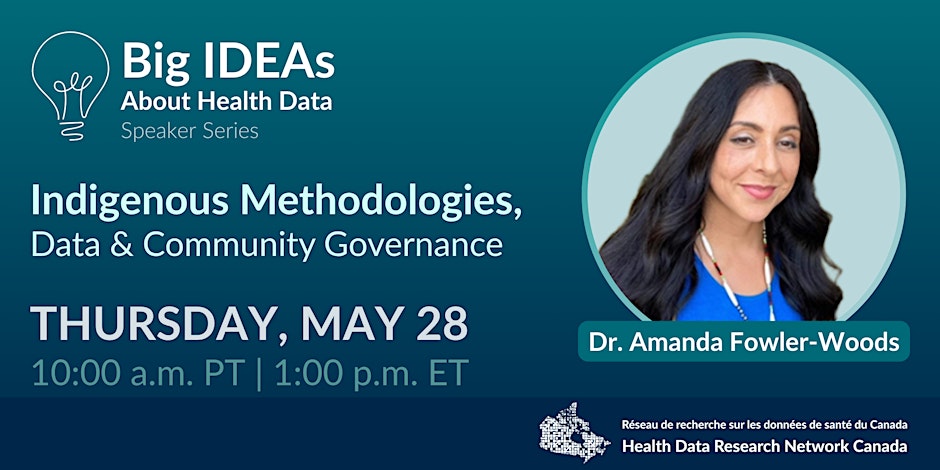
Indigenous Methodologies, Data & Community Governance

This webinar is presented by the Health Data Research Network (HDRN) Canada as part of their 2025-26 Big IDEAs About Health Data Speaker Series. The Big IDEAs About Health Data Speaker Series features a variety of experts discussing how data can be used to advance health equity.

Event poster showing title, date/time, speaker name and portrait, and HDRN logo

# About the Speaker

Dr. Amanda Fowler-Woods is an Assistant Professor with the Manitoba Centre for Health Policy. She has a PhD in Community Health Sciences from the University of Manitoba and has studied Indigenous Knowledge programs with Traditional Medicine Teachers and Elders. Previously, Dr. Fowler-Woods worked as a research associate with Ongomiizwin, where she co-led the development of the Indigenous Healthcare Quality Framework. Her research program focuses on the use of Indigenous research methodologies in health and health services research, health equity and health care quality, anti-racism, and Indigenous data governance and sovereignty.

# Other Webinars in this Series

Details
Thursday, May 28, 2026 - 13:00
1:00 - 2:00 pm
Cost: 
Free
Internal/External: 
Event Type: 
Location
Webinar