
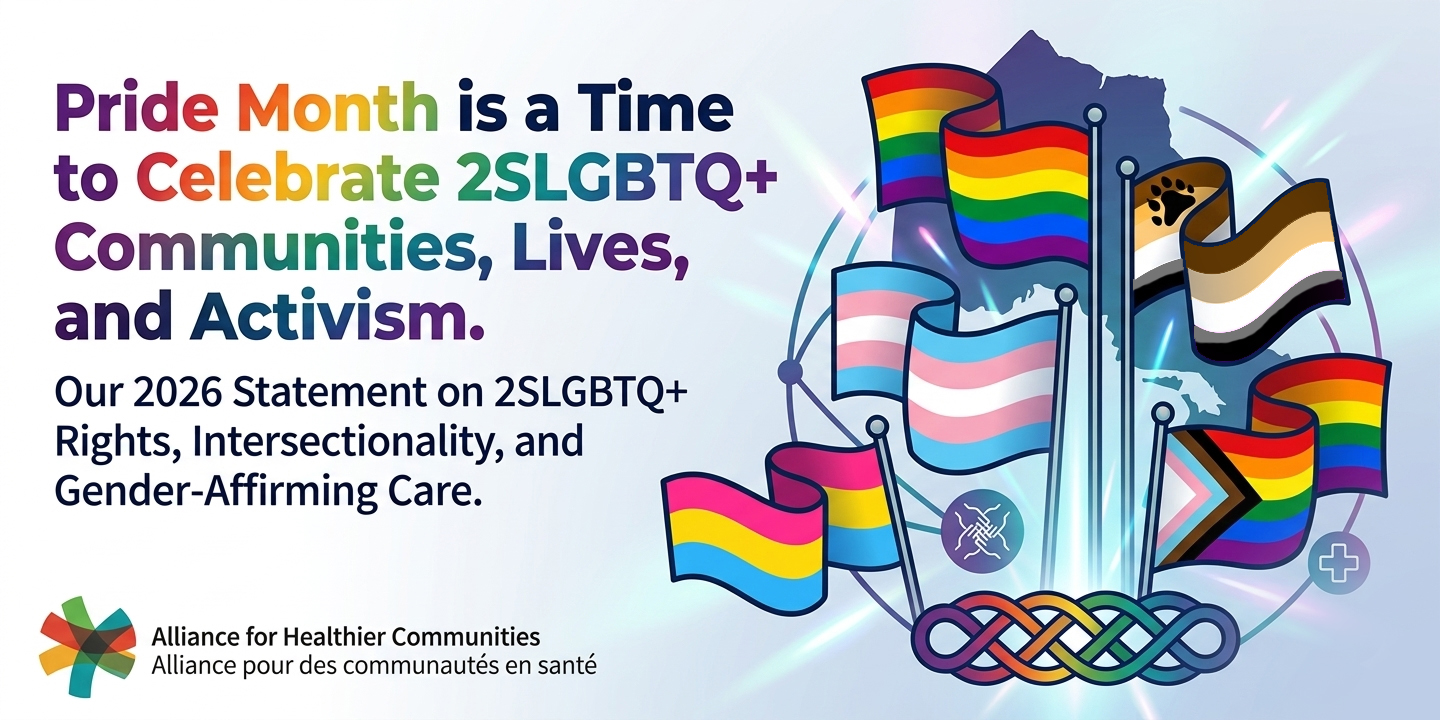
Pride Month is a time to celebrate 2SLGBTQ+ (Two-Spirit, Lesbian, Gay, Bisexual, Trans, and Queer) communities, lives and activism. It is also a time to reaffirm our commitment to upholding and further advancing the rights of gender and sexually diverse people in our province and beyond. As threats to the safety and wellbeing of 2SLGBTQ+ and other marginalized communities in Canada and across the world continue to grow, our opposition to these threats and the erosion of their human rights must also grow. So must our determination to build communities where everyone can fully access, participate, and thrive in all aspects of life.
As we work towards a more inclusive society, let us not forget that the origins of Pride are deeply intersectional. Black, Latinx and people of colour played a key role in the 1969 Stonewall Riots that sparked the movement for 2SLGBTQ+ rights. Two of them, Marsha P. Johnson, a Black transgender woman, and Sylvia Rivera, a Trans Latinx activist, spent the rest of their lives as leaders in the fight for Trans rights and the rights of other marginalized communities. Here in Canada, Black, Indigenous and racialized Trans and Queer people were at the forefront of building the modern-day Pride and continue to serve as leaders and changemakers in the fight for equity and justice.
Intersectionality must always be at the core of our ongoing efforts to create more inclusive, equitable societies. It is essential that, as we work to eradicate homophobia and transphobia in our communities, we acknowledge and address other forms of oppression that impact the lives and wellbeing of Trans and Queer people, such as colonialism, racism, and ableism.
A crucial aspect of this is recognizing and addressing the damage of colonial practices that have sought to erase Two-Spirit people and the important roles they played in First Nations, Metis and Inuit communities. We must examine how enforcing adherence to Eurocentric concepts of gender identity, roles, presentation, and sexuality was a key part of the colonial agenda. As we celebrate both Pride and National Indigenous History Month this June, it is important to remember that Queer liberation and Indigenous-settler reconciliation are incomplete without meaningful inclusion of Two-Spirit and Queer Indigenous people.
It is also crucial that we continue advocating for timely, equitable access to gender-affirming care for all Trans and gender-diverse people in Ontario. The Alliance is led in this work by our 2SLGBTQ+ Advisory Committee, which raises gender-affirming care as the standard across community health. Through education and promotion of this work, they are helping to ensure that everyone in Ontario who needs gender-affirming care can access it, regardless of where they live.
The leadership of this committee informs the work of Alliance member organizations across the province that bridges gaps in care for Trans and gender-diverse people. The Community Health Centres of Northumberland, one of this year’s Transformative Change Award recipients, is a notable example of this work. Before they established their Gender Affirming Care Team, people in the community had to travel for hours and face long wait times for such services. Now, they have access to a comprehensive, community-informed program that integrates medical care, peer support, and system navigation in a trusted primary care setting. Unfortunately, the funding for this program, and others like it, is precarious. To ensure ongoing, equitable access to essential care for Trans and gender-diverse people in Ontario, we need stable investments and a commitment to permanently embedding gender-affirming care in primary health care settings.
Delivering clinically and culturally competent care for 2SLGBTQ+ communities across Ontario calls for continuous learning and capacity-building. At the Alliance, we are committed to sharing knowledge resources with our members and communities, and we are proud to promote the capacity-building work of system and community partners like Rainbow Health Ontario, The 519, and others. Through their work, they are advancing 2SLBGTQ+ rights and health equity across the province.
Pride Month is a celebration of the incredible diversity, creativity and courage of 2SLGBTQ+ communities. It is also a call to action for all of us: A call to educate ourselves and others. A call to centre Trans and Queer people in our work, to work with them to build more inclusive communities. A call to protect and advance 2SLGBTQ+ rights, especially in spaces where these rights are being threatened. A call to stand together for Trans and Queer liberation.