HEC Spotlight Series Webinar - What We've Learned (So Far): Preparing and Responding to Natural Disasters

Our most pressing challenges in healthcare require focused, constructive discussions. Sharing openly and listening to diverse perspectives and experiences. At Healthcare Excellence Canada, we’ve developed the Spotlight Series to do just that.

It’s about connecting people to have conversations with a purpose. Responding quickly to current issues by featuring strategies for improvement that are transferable. We’ll explore solutions to make improvements last, as we work together to shape the future of quality and safety in healthcare across the country.

#What We've Learned (So Far): Preparing and Responding to Natural Disasters

We've seen more wildfires, floods, hurricanes, and other natural disasters in recent years. These events significantly affect individuals and communities - physically, mentally and spiritually. Needing to evacuate homes and communities can be traumatizing. Likewise, the evacuation of health facilities is challenging and complex for staff, patients, and families. This is especially true for people who live in rural and remote areas at higher risk of wildfires.

Natural disasters affect the ability of health systems to deliver safe and high-quality health and social care. What strategies can we use to prepare for, and respond to, these emergencies to reduce the burden on people, communities and health systems?

Join us as we explore the lessons learned from responding to natural disasters through the lens of policy-makers, health leaders, and emergency responders.

#Host

Colleen Ferris, Director, Innovations & Strategic Development, Healthcare Excellence Canada

#Panelists

  • Andrew Moull, Manager, Emergency and Disaster Management, Hamilton Health Sciences
  • Trevor Jain, MD, Clinical Health Service Member, Canadian Armed Forces
  • Michelle Villeneuve, PhD, Associate Professor, University of Sydney; Deputy Director, Centre for Disability Research and Policy
  • Graham Dodd, MD, Associate Medical Director, Health Emergency Management BC (HEMBC); Physician Lead, Emergency Preparedness, Thompson Region Division of Family Practice
 

Details
Wednesday, October 11, 2023 - 12:00
12:00 ET
Cost: 
Free
Internal/External: 
Event Type: 
Location
Online

Canadian Patient Safety Week 2023

#Overview

Small changes. Big impact. Safer care.

Join Healthcare Excellence Canada, October 23-27, to explore a new approach to safer care and how we can all make an even bigger difference every day.

Change doesn’t have to be overwhelming—let’s start with a week of important conversations

Too many people experience unintended physical and psychological harms, including those caused by culturally unsafe care.

Change is needed. Even small changes can have a big impact when it comes to delivering safer care. Small things like asking a question. Having a quick conversation.

Or proactively taking action. That’s all part of a new approach to patient safety grounded in exploring, learning and acting to create safer care and reduce all forms of harm.

Exploring this new approach is the focus of Canadian Patient Safety Week (CSPW) 2023.

#Who should register?

CPSW is for everyone involved in delivering or receiving care. Let’s talk about how we can be curious, collaborative and proactive to co-create safer care and reduce all forms of healthcare harm together.

  • Safety and quality leads
  • Health care providers
  • Clients and caregivers
  • Health care leaders and workers

#How to participate?

Organized by Healthcare Excellence Canada, Canadian Patient Safety Week is an annual campaign to inspire extraordinary improvements in healthcare safety and quality. Here are some ways you will be able to participate:

  • Have a CPSW booth, display, meeting or event at your organization
  • Put up posters and hand out materials
  • Take part in webinars that explore the new approach to safer care and how it can help address day-to-day and broader systemic challenges
  • Read the Rethinking Patient Safety discussion guide
  • Learn about HEC's upcoming action series and how you can participate
  • Download activities that facilitate conversations about safer care
  • Use the communications toolkit to engage your networks in this important conversation


Details
Monday, October 23, 2023 - 07:00
October 23-27
Cost: 
Free
Internal/External: 
Location
Canada-wide

Diversity, Equity, and Inclusion (DEI) in Public Participation and Engagement

#Overview

In today's diverse and interconnected world, public participation and engagement must be inclusive and equitable. This course has been meticulously designed to empower practitioners like you with the knowledge and tools to identify power imbalances and other barriers that hinder inclusive and equitable engagement practices.

#Learning Objectives

By the end of this course, participants will be able to:

  • Identify the impacts of exclusion and inequity on P2/engagement processes and decision making
  • Enhance understanding of the terms diversity, equity and inclusion relative to P2/engagement
  • Explore how individual biases and stereotypes become embedded in systems and lead to systemic discrimination and marginalisation
  • Critically reflect on how practitioner identities and social location might impact P2/engagement
  • Reflect on concepts of power, privilege and intersectionality and their relevance to designing and implementing P2/engagement
  • Identify strategies for decolonising P2/engagement
  • Develop and apply an Equity Lens for P2/engagement

This course provides a unique opportunity to gain the skills and insights necessary to foster more inclusive and equitable public participation and engagement. By participating in this course, you will be better equipped to navigate the challenges and complexities of today's diverse communities and environments.

#Who Should Attend?

  • Public engagement practitioners
  • Planners and decision-makers
  • Community leaders
  • Anyone passionate about fostering diversity, equity, and inclusion in public processes


Details
Tuesday, October 10, 2023 - 12:30
October 10-13, 12:30 pm - 3:30 pm
Cost: 
$745-795
Internal/External: 
Event Type: 
Location
Online

Culturally Focused Social Prescribing for Older Adults

Tuesday, September 19, 2023
#Culturally Focused Social Prescribing for Older Adults

Loneliness and social isolation have emerged as serious challenges, disproportionately affecting older adults. In an era marked by a growing need for innovative solutions, the concept of Social Prescribing has taken center stage, offering a dynamic approach to enhancing the health and wellbeing of seniors. Beyond this, an even more powerful tool:  culturally focused social prescribing poised to transform our communities.

Social prescribing is a holistic approach that works in harmony with conventional medical interventions by integrating activities such as arts, culture, nature, and social engagement into healthcare plans. This approach aims to address social needs by connecting people to activities that align with individual interests and goals. In this model, healthcare providers can formally refer patients to social and community -based programs, thereby empowering people to acquire new skills, engage in meaningful activities, forge stronger connections with their communities and, since social prescribing plans are co-designed, help them to manage their own health. For physicians, it is a game-changer. 

"Social prescribing empowers us to address older adults' holistic wellbeing, going beyond medications and treatments," said Dr. Lara Kent at Centretown Community Health Centre . “This has become an important tool, particularly when we are dealing with people that are isolated and alone, factors that have a great impact on health. It feels good to have something that really makes a difference.”

For underrepresented communities however, this may require a different approach, one that considers the limitations of a health care system based on Eurocentric foundations. Recognizing this, the Alliance for Healthier Communities, through its Black Health Strategy, is pioneering a groundbreaking initiative: Black-focused Social Prescribing. The goal is to create a culturally appropriate model based in Black and Afrocentric values and principles, a holistic approach to improve the health of people in Black communities. As this initiative unfolds across four Community Health Centers in Ontario, it holds the promise of showing a path forward for tailored social prescribing programs.

Culture, as a social prescription, is a large part of the kinds of programs offered. This means prescribing cultural activities that connect people to the vibrancy and strengths of their own communities and, in doing so, enhancing their overall health. One such prescription saw a group of clients attending the play "Da Kink in My Hair" followed by a meal at a Black-owned restaurant and open discussions on the play's content. 

Renika Hall, a link worker at Black Creek Community Health Centre, affirms the importance of this kind of cultural relevance in programming. "I work closely with older adults and Black families, connecting them to community resources and programs at Black Creek and our community partners, and I know that this enhances social and emotional health," says Hall. "I've also noticed the significance of creating spaces for different generations to connect, it truly makes a remarkable impact. Even now, I continue to hear stories about attending 'Da Kink in My Hair'. The seniors who participated walked away with a sense of revitalization and purpose."

TAIBU Community Health Centre has introduced a Kemetic yoga program, providing an additional opportunity for Black seniors. "This ancient practice from Egypt not only nurtures physical health but also fosters a sense of cultural connection and self-awareness," says Tameika Shaw, program manager at TAIBU. "Through social prescribing we have been able to offer our seniors a sense of belonging, enhancing their overall quality of life."

Sabrina Morrison, the Black Focused Social Prescribing Navigator at TAIBU that organized the program also talks about the impact to participants.  “The seniors involved left energized and had a lot of fun.  I think it was an important event on many levels including for developing a sense of connection with our community.”

Recognizing the unique needs of older adults, social prescribing becomes a powerful tool for improving the health and wellbeing of seniors. This approach not only helps individuals but also strengthens communities and supports our overburdened healthcare systems. Culturally focused social prescribing goes even further, offering a hopeful path toward a better and more satisfying life for older adults by tackling issues like loneliness, sense of belonging, and addresses factors affecting health such as racism. This is especially important in our diverse society, where our aging population can benefit greatly. As we move forward, it's crucial to keep adapting and improving these programs to ensure that every older adult gets the care and support they need for a healthier, more fulfilling life.

TAIBU Community Health Centre Kimetic Yoga Program

ABOUT THE ALLIANCE FOR HEALTHIER COMMUNITIES 

The Alliance for Healthier Communities is the voice of a vibrant network of community-governed primary health care organizations that serve diverse communities across the province. These organizations share a commitment to advancing health equity through the delivery of comprehensive primary health care. 

To learn more about our Social Prescribing Initiatives or join the community of practice, click here:  https://www.allianceon.org/Social-Prescribing

References:

National Academies of Sciences, Engineering, and Medicine. (2020). Social isolation and loneliness in older adults: Opportunities for the health care system. National Academies Press.

Bhatti, S., Rayner, J., Pinto, A. D., Mulligan, K., & Cole, D. C. (2021). Using self-determination theory to understand the social prescribing process: a qualitative study. BJGP open, 5(2).

Black Health Committee, (2022). The Black Health Strategy

Alliance for Healthier Communities (2020). Black-Focused Social Prescribing Project Charter 


La prescription sociale axée sur la culture pour les aînés

Tuesday, September 19, 2023
#La prescription sociale axée sur la culture pour les aînés

La solitude et l’isolement social sont devenus des enjeux importants, touchant de manière disproportionnée les personnes âgées. À une époque où des solutions innovantes sont nécessaires, la prescription sociale occupe une place de premier plan en offrant une approche dynamique pour améliorer la santé et le bien-être des aînés. Cependant, il existe un outil encore plus puissant : la prescription sociale axée sur la culture, qui est en passe de transformer nos communautés.

La prescription sociale est une approche holistique qui fonctionne en harmonie avec les interventions médicales conventionnelles en intégrant des activités telles que les arts, la culture, la nature et l’engagement social dans les plans de soins de santé. Cette approche vise à répondre aux besoins sociaux en mettant les individus en contact avec des activités qui correspondent à leurs champs d’intérêt et à leurs objectifs personnels. Dans ce modèle, les professionnels de la santé peuvent aiguiller formellement les patients vers des programmes sociaux et communautaires, ce qui permet aux personnes d’acquérir de nouvelles compétences, de s’adonner à des activités enrichissantes, de renforcer leurs liens avec leur communauté et, étant donné que les plans de prescription sociale sont conçus de manière collaborative, de les aider à gérer leur propre santé. Pour les médecins, c’est un changement de paradigme.

« La prescription sociale nous permet de prendre en compte le bien-être holistique des personnes âgées, au-delà des médicaments et des traitements », affirme Dre Lara Kent du Centre de santé communautaire du centre-ville. « C’est devenu un outil important, en particulier lorsque nous traitons des personnes isolées et seules, des facteurs qui ont un impact considérable sur la santé. C’est gratifiant d’avoir quelque chose qui fait vraiment une différence. »

Cependant, pour les communautés sous-représentées, cela peut nécessiter une approche différente, qui tient compte des limites d’un système de soins de santé fondé sur des principes eurocentriques. Consciente de cette réalité, l’Alliance pour des communautés en santé, par sa Stratégie pour la santé des Noirs, lance une initiative révolutionnaire : la prescription sociale à l’intention des personnes de race noire. L’objectif est de créer un modèle respectueux de la culture fondé sur les valeurs et les principes noirs et afrocentriques, une approche holistique visant à améliorer la santé des personnes des communautés noires. Alors que cette initiative est mise en œuvre dans quatre centres de santé communautaire en Ontario, elle promet de montrer la voie à suivre pour des programmes de prescription sociale adaptés.

La culture, en tant que prescription sociale, représente une partie importante des programmes proposés. Dans cette optique, une prescription est rédigée pour des activités culturelles qui mettent les personnes en contact à la vitalité et aux forces de leurs propres communautés, et ce faisant, améliorent leur état de santé global. Une de ces prescriptions a permis à un groupe de clients d’assister à la pièce de théâtre « Da Kink in My Hair » et de partager un repas dans un restaurant appartenant à des personnes noires, avec des discussions ouvertes en préparation au contenu de la pièce.

Renika Hall, agente de liaison au Centre de santé communautaire Black Creek, souligne l’importance de cette pertinence culturelle dans la programmation. « Je travaille en étroite collaboration avec les personnes âgées et les familles noires; je les mets en contact avec les ressources communautaires et les programmes de Black Creek et de nos partenaires communautaires, et je sais que cela améliore leur santé sociale et émotionnelle », affirme-t-elle. « J’ai également pris conscience de l’importance de la création d’espaces pour que différentes générations se rencontrent; cela a vraiment un impact important. Même maintenant, j’entends encore des histoires sur “Da Kink in My Hair” des personnes qui ont assisté à la pièce. Les personnes âgées qui y ont assisté sont reparties avec un sentiment de revitalisation et de raison d’être. »

Le Centre de santé communautaire TAIBU a lancé un programme de yoga kémétique, offrant ainsi une autre possibilité aux aînés noirs. « Cette pratique ancienne d’Égypte favorise non seulement la santé physique, mais aussi un sentiment d’affinité culturelle et de conscience de soi », explique Tameika Shaw, responsable de programme à CSC TAIBU. « Grâce à la prescription sociale, nous avons pu offrir à nos aînés un sentiment d’appartenance, améliorant ainsi leur qualité de vie globale. »

« Les personnes âgées qui ont participé ont passé un bon moment et sont reparties pleines d’énergie. Je pense que c’était un évènement important pour divers aspects, y compris le développement d’un sentiment d’attachement. Une personne m’a remerciée et m’a dit : “Tu ne sais pas à quel point mon corps en avait besoin” », explique Sabrina Morrison, la navigatrice de la prescription sociale à l’intention des Noirs au CSC TAIBU qui a mis sur pied le programme. « C’était aussi la première fois que des personnes âgées francophones et anglophones se réunissaient et elles ont pu établir un sentiment de communauté malgré leurs différences de langue. Bien sûr, la présence d’un interprète nous a également aidés à être inclusifs. En fin de compte, il ne s’agissait pas seulement de mouvements, mais aussi de santé mentale, physique, spirituelle et émotionnelle. »

Reconnaissant les besoins particuliers des personnes âgées, la prescription sociale devient un outil puissant dans l’amélioration de la santé et du bien-être des aînés. Cette approche aide non seulement les individus, mais renforce également les communautés et soutient nos systèmes de santé débordés. La prescription sociale axée sur la culture va encore plus loin, offrant une voie prometteuse vers une vie meilleure et plus épanouie pour les personnes âgées en abordant des problèmes tels que la solitude, le sentiment d’appartenance et les facteurs qui ont un impact sur la santé comme le racisme. Cela est particulièrement important dans notre société diversifiée, où notre population vieillissante peut en bénéficier grandement. Alors que nous poursuivons notre parcours, il faut continuer à adapter et à améliorer ces programmes pour garantir que chaque personne âgée reçoive les soins et l’accompagnement dont elle a besoin pour une vie plus saine et plus épanouie.

Cliquez ici pour visionner une vidéo de l’évènement :


Project Launch: Social Prescribing for Youth Wellness Hub

#Combatting Isolation and Empowering Human Connection Through Social Prescribing

Access Alliance is excited to host a Human Connection Event during Ontario's Community Health and Wellness Week at AccessPoint on Danforth. This event will launch of their Social Prescribing for Youth Wellness Hub Initiative, which revolves around non-medical interventions aimed at addressing the social determinants of youth wellness and mental health in the most vulnerable newcomer communities. They will highlight the collaborative efforts of their partners in making social prescribing accessible to City's most equity deserving youth populations.


Details
Friday, October 20, 2023 - 11:30
11:30 am - 1:30 pm
Cost: 
Free
Internal/External: 
Event Type: 
Location
AccessPoint on Danforth
3079 Danforth Ave
Scarborough, ON M1L 1A8

Ensuring Equitable Health Care Through Interpretation: From Concept to Practice

The need for interpreter services has never been greater. Good, clear, and accurate communication is essential in delivering exceptional care to any child or youth.  When families enter a healthcare organization and do not speak one of the official languages, they are often at their most vulnerable state. Organizations should have interpreter services that are accessible, and staff should be provided with the tools necessary to provide the highest quality interpreter services to their families. CHEO has recently expanded their interpreter services. The aim of this webinar is to share these new services and strategies. 

#The following key goals of this webinar are:

  • Discuss the benefits of using an interpreter’s services
  • Review CHEO’s interpreter services
  • Share tips for working with interpreters

#Speakers

  • Jill Sullivan, Manager, Patience Experience, CHEO
  • Jocelyn Lamont, Patient Experience Specialist, CHEO
  • Catherine Penney, QI Specialist, N4

#Event Host

National Newcomer Navigation Network

# 

# 

Details
Wednesday, September 27, 2023 - 13:00
1-2 pm
Cost: 
Free
Internal/External: 
Event Type: 
Location
Online

How to support clients who are making a Humanitarian and Compassionate (H&C) application

Many community workers support clients who want to apply for permanent resident status in Canada. One way to do this is by making a Humanitarian and Compassionate (H&C) application. An H&C is a request to apply for PR status from inside Canada that is based on all of the person’s circumstances.

This webinar will outline important details about the H&C process - who can apply and what supporting evidence community workers can help clients gather. Our speakers will also share resources, tips, and cautions about making an H&C application. 

 ASL Interpretation will be provided. 

Presented by Community Legal Education Ontario (CLEO).

#Speakers:

  • Kristin Marshall, Legal Skills Trainer, Community Legal Education Ontario (CLEO) 
  • Rathika Vasavithasan, Staff Lawyer-Migrant Rights, Parkdale Community Legal Services (PCLS)  
Details
Wednesday, September 27, 2023 - 12:00
12:00-1:30pm
Cost: 
Free
Internal/External: 
Event Type: 
Location
Online

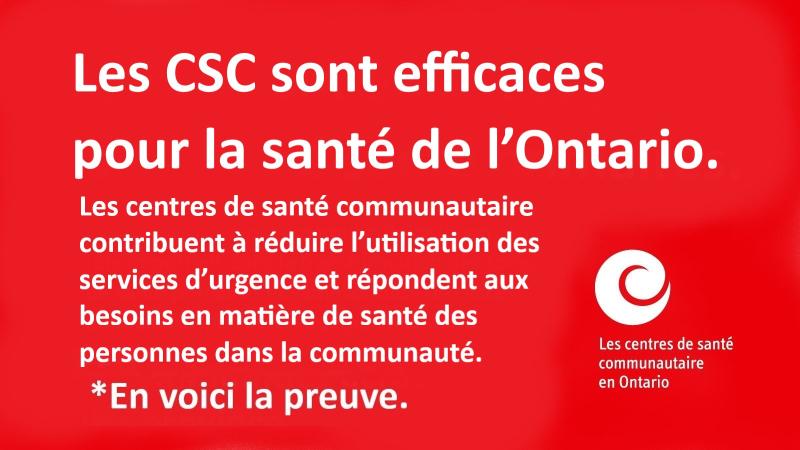
Les preuves démontrent que les centres de santé communautaire (CSC) permettent de maintenir les gens en meilleure santé et hors des salles d’urgence, et aident le système à économiser.

Date: 
Monday, September 25, 2023

Pour diffusion immédiate

Les preuves démontrent que les centres de santé communautaire (CSC) permettent de maintenir les gens en meilleure santé et hors des salles d’urgence, et aident le système à économiser.

(Toronto, ON — 25 septembre 2023) — Alors que les leaders de la santé en Ontario et ailleurs au Canada continuent de faire face aux défis reliés au système de santé, les preuves s’accumulent et démontrent que l’accès à des soins de santé primaires complets et à des services de promotion de la santé est l’un des éléments les plus importants dans la transformation et la pérennisation de notre système de santé. 

« Nous entendons dire que les centres de santé communautaire (CSC) sont souvent considérés comme coûteux et inefficaces comparativement à d’autres modèles de soins primaires en Ontario, mais ces affirmations reposent sur des données obsolètes », explique Sarah Hobbs, directrice générale de l’Alliance pour des communautés en santé. « Les données actuelles démontrent que les centres de santé communautaire voient activement autant, voire plus, de patients par année que d’autres modèles et qu’ils constituent un modèle efficace qui contribue de manière importante au système de santé. »

  • Les CSC fournissent des soins à des personnes qui nécessitent en général 68 % plus de soins primaires cliniques que la moyenne de la population ontarienne. Malgré cette complexité, les clients des CSC se rendent moins souvent aux services d’urgence que prévu, ce qui permet au système de santé d’économiser plus de 27 millions de dollars chaque année.
  • Le coût moyen par patient pour les soins primaires cliniques est similaire pour les CSC et les ESF (respectivement 483 $ et 430 $ en 2022-23) lorsque les coûts sont rajustés en fonction de l’âge, du sexe et des diagnostics cliniques.

L’Alliance pour des communautés en santé et ses membres estiment que tous les modèles de soins primaires sont importants et contribuent au système de santé. Cependant, les preuves démontrent que les CSC servent des personnes qui font face aux plus importants obstacles dans notre communauté, en fournissant des soins équitables, efficients en matière de coût, et respectueux des valeurs culturelles, assurément le secret le mieux gardé en Ontario. Les CSC font partie intégrante de la solution pour la transformation du système qui est nécessaire pour remédier à la crise de soins de santé en Ontario.

Pour plus d’informations ou pour planifier une entrevue, veuillez contacter :

Jason Rehel

Spécialiste des relations avec le public et les médias

Alliance pour des communautés en santé

jason.rehel@allianceON.org

416-817-9518

À propos de l’Alliance pour des communautés en santé

L’Alliance pour des communautés en santé représente un réseau dynamique de 111 organisations de soins de santé primaires interprofessionnels régis par la communauté. Les membres de l’Alliance servent des communautés diversifiées partout dans la province, et sont bien établis dans les communautés qu’ils servent. L’Alliance et ses membres ont en commun un engagement envers l’amélioration de l’équité en santé grâce à la prestation de soins de santé primaires complets.

Contexte :

Les centres de santé communautaire, introduits pour la première fois en Ontario dans les années 1960, offrent un accès à des soins de santé primaires complets aux personnes qui rencontrent des obstacles dans toutes les régions de la province, que ce soit en milieu urbain, suburbain, rural ou nordique. Les CSC y parviennent en fournissant directement des services tels que des soins primaires prodigués par du personnel infirmier praticien et des médecins salariés.

La prestation de soins complets passe par toute une équipe, notamment des diététistes, des travailleurs sociaux, des podologues, des physiothérapeutes, des professionnels de la santé mentale, des travailleurs de soutien par les pairs, et des navigateurs du système de santé. La promotion de la santé, le développement communautaire et d’autres services de soutien social et communautaire se font dans de nombreuses communautés de l’Ontario grâce à ce modèle intégré de santé et de bien-être. Ce modèle permet aux personnes d’être prises en charge par une équipe, plutôt que de devoir s’y retrouver seules dans des démarches d’aiguillage parfois complexes et dans la planification de la continuité de leurs soins. Les CSC ouvrent également leurs portes à la communauté et proposent des services et des programmes aux personnes qui ne reçoivent pas directement leurs soins médicaux des CSC.

Les preuves sont faites, et elles ne cessent de montrer que les CSC élargissent l’accès aux programmes et aux services, servent mieux les personnes marginalisées en améliorant les résultats en santé et en réduisant l’utilisation des services d’urgence, et permettent au système de santé d’économiser. Ils apportent également une aide à d’autres fournisseurs de soins de santé et de services sociaux pour mieux servir les personnes tout au long du continuum de soins.

Evidence shows that Community Health Centres (CHCs) keep people healthier, out of the emergency department, and help save the system money

CHCs Work for Ontario’s Health Community Health Centres help lower emergency department usage and address people’s health needs in the community. And here’s the proof.
Date: 
Monday, September 25, 2023

For Immediate Release

Evidence shows that Community Health Centres (CHCs) keep people healthier, out of the emergency department, and help save the system money

(September 25, 2023 – Toronto, ON) --. As health care leaders across Ontario and Canada continue to grapple with health system challenges, evidence continues to accumulate that one of the most important components to transforming our health system for sustainability is access to comprehensive primary health care and health promotion services.

“We’ve heard Community Health Centres (CHCs) are often said to be expensive and ineffective when compared to other primary care models in Ontario, but this is based on outdated data,” said Sarah Hobbs, CEO, Alliance for Healthier Communities. “Current data shows that as a sector, community health centres see as many or more patients actively a year as other models and are an effective model making contributions to the health system in important ways.”

  • CHCs provide care for populations that are 68% more complex, on average, compared to the average Ontarian. Despite this complexity, clients served at CHCs go to emergency departments less than expected – saving the health system over $27 million every year.
  • The average cost per patient for clinical primary care is similar between CHCs and FHTs ($483 and $430 respectively in 2022/23) when costs are adjusted for age, sex and clinical diagnoses.

The Alliance for Healthier Communities and its members believe that all primary care models are important and contribute to the health system. However, the evidence shows, and it’s time to let everyone in on the best kept secret in Ontario, that CHCs serve people who face the most barriers in our community, providing culturally safe and equitable care while still being cost effective. CHCs are part of the solution in the system transformation that is needed to address the healthcare crisis in Ontario.

For additional information or to schedule an interview, contact:

Jason Rehel

Public and Media Relations Specialist

Alliance for Healthier Communities

jason.rehel@allianceON.org

416-817-9518


About the Alliance for Healthier Communities

The Alliance for Healthier Communities is a vibrant network of 111 community-governed, inter-professional comprehensive primary health care organizations. Alliance members serve diverse communities across the province, and they are rooted in the communities they serve. They share a commitment to advancing health equity through the delivery of comprehensive primary health care.

Background:

Community Health Centres, first introduced in Ontario in the 1960s, provide access to comprehensive primary health care for people who experience barriers all across the province in urban, suburban, rural and northern communities. CHCs do this through direct provision of services such as primary care via salaried physicians and nurse practitioners.

Part of the comprehensive care includes a full team of providers that can include: dietitians, social workers, chiropodists, physiotherapists, mental health professionals, peer support workers, system navigators and more. Health promotion, community development and other social and community support services are delivered in many Ontario communities through this integrated model of health and wellbeing. This model allows for people to be cared for by one team, instead of having to navigate sometimes complex referral and continuity of care planning on their own. CHCs also open their doors to the community and provide services and programs to people who do not receive their medical care directly from CHCs.

The evidence is in – and it consistently shows that CHCs expand access to programs and services overall, better serve marginalized people by improving outcomes and reducing emergency department use, and overall save health system spending. They also help support other allied health care and social services providers to better serve people along the continuum of care.