Staying ahead of the curve: A unified public oral health program for Ontario

Date: 
Monday, October 1, 2012

The report, Staying ahead of the curve: A unified public oral health program for Ontario?, focuses on getting publicly funded dental programs in Ontario working for all Ontarians. It underlines the fact that the current model of funding of oral health care programs through various provincial ministries and local/regional governments in Ontario is no longer sustainable and needs to be delivered more efficiently. Authors and publishers of the report are concerned that the current delivery models leave many vulnerable populations behind.

The short report was compiled from a panel on oral health at the Ontario Public Health Convention in April, 2012, which included AOHC executive director Adrianna Tetley. Joining authors from the University of Toronto's Faculty of Dentistry, the Ontario Association of Public Health Dentistry, and the Association of Public Health Agencies, Adrianna notes the patchwork of oral health programs and the lack of services for low income adults.

AOHC supports the recommendations of the report and calls for unifying the current five fragmented oral health programs, beginning with those for low income children. Income eligibility criteria for the Healthy Smiles Program need to be increased so more children can access the program. The Ministry then needs to extend publicly funded emergency dental programs to low income adults who currently have nowhere to turn but hospital emergency rooms. Public investments need to recognize oral health as essential to overall health and well-being.

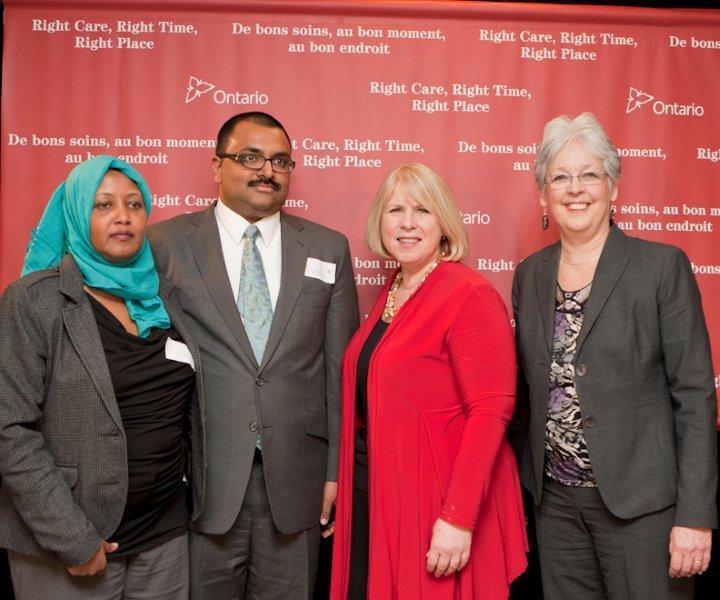
Photo of the oral health panel participants

A GROUP PHOTO after the panel discussion at the Ontario Public Health Convention, April 2, 2012, Toronto,Ontario. From left to right: Garry Aslanyan, Policy Manager, World Health Organization, Carlos Quiñonez,Assistant Professor and Discipline Head, Dental Public Health, Faculty of Dentistry, University of Toronto;Andrea Feller, Associate Medical Officer of Health, Niagara Regional Public Health Department; StephenAbrams, Chair, Dental Benefits Committee, Ontario Dental Association (ODA), Adrianna Tetley, ExecutiveDirector, Association of Ontario Health Centres (AOHC) and Member, Ontario Oral Health Coalition; PaulSharma, President, Ontario Association of Public Heath Dentistry (OAPHD) and Manger, Peel PublicHealth Department.
Submission from the Association of Ontario Health Centres to Consultations on Ontario’s Poverty Reduction Strategy

Date: 
Wednesday, October 16, 2013

The Association of Ontario Health Centres (AOHC) is the voice of community-governed primary health care in Ontario. We share the government’s commitment for a fairer society where every person has the opportunity to achieve his or her full potential for health and wellbeing. Our vision is the best possible health and wellbeing for everyone living in Ontario. We know that reducing and eradicating poverty is essential to achieve this vision.

Recommendations in this submission are based on the frontline experience of our member centres: 123 Community Health Centres (CHC), Aboriginal Health Access Centres (AHAC), Community Family Health Teams (CFHT), and Nurse Practitioner-led Clinics (NPLC). As they deliver Primary Health Care throughout the province, health providers in these Centres see how strategic investments in poverty reduction, health and wellbeing not only improve health outcomes but also ease financial burdens on the health care system.

As noted in the Drummond Commission report, more than 50% of population health outcomes are determined by socio-economic factors such as income and education. Community Health Centres and Aboriginal Health Access Centres have a special mandate to serve people with barriers accessing health services. These include low income people, Aboriginal People, people with disabilities, newcomers, people who are LGBT, Francophones and people in rural or remote communities. Our members provide both primary health care services and a wide range of health promotion and community development services which address the social determinants of health. Their work at the community level will be more effective if the Ontario government continues along the path to develop a bold Poverty Reduction Strategy for 2013-2018 with a comprehensive action plan and a commitment to invest the funds required to meet poverty reduction targets.

Analysis of Ontario’s Poverty Reduction Strategy 2008-2013

Ontario’s first Poverty Reduction Strategy demonstrated a significant new commitment for the province to make progress toward eliminating poverty. Initiatives within the Strategy helped reduce Ontario’s child poverty rate by almost 10% between 2008 and 2011. For these efforts we commend the government.

Initiatives which helped achieve this success and which worked well include:

  • Setting specific targets for poverty reduction and tracking the results with annual progress reports;
  • Introducing the Ontario Child Benefit (although annual increases were halted in 2012);
  • Increasing the minimum wage (although increases stalled after 2010);
  • Bringing in full day kindergarten, and investing in early learning and childcare;
  • Expanding oral health programs for low income children (but income eligibility criteria are set too low);
  • HST tax credit for low income people and the Trillium Benefit;
  • Capital investments to expand access to 16 Community Health Centres and Aboriginal Health Access Centres.

However, progress stalled during the economic downturn when the government failed to make the necessary investments in poverty reduction. The decision to postpone full implementation of the OCB in the 2012 and 2013 Budgets makes it unlikely that Ontario will reach the target to cut child poverty by 25% by 2013. Freezing the minimum wage and cutting the Community Start Up and Maintenance Benefit (CSUMB) for people receiving social assistance drives more people into poverty and increases inequality in our province.

With respect to health care delivery, the Ministry of Health and Long Term Care (MOHLTC) has not implemented a population and health equity planning approach to provide primary health care services which meet the special needs of populations living in poverty. Primary care providers can establish their services wherever they want, although the need may be highest in low income, rural and remote communities. Community Health Centres and Aboriginal Health Access Centres specialize in providing medical and community services which address the complex medical and social needs of vulnerable populations, including low income people. Yet they currently serve only 4% of the Ontario population. AOHC commissioned a detailed research study which examined where people in poverty live by sub LHIN and where vulnerable populations experience greatest barriers accessing health care. This research found that 15.2% of Ontario’s population is most in need of primary health care and recommended expansion of CHCs and AHACs to reach these populations. [1]

Recommendations for Ontario’s Poverty Reduction Strategy, 2013-2018

1.Set bold new poverty reduction targetsAOHC supports the targets of the 25 in 5 Network for Poverty Reduction which in 2008 called on the government of Ontario to reduce poverty by 25% in five years and 50% in ten years. We recommend that the government set the next target to cut poverty for everyone in Ontario by 50% by 2018. This means that Ontario’s next Poverty Reduction Strategy should aim to reduce the overall poverty rate in Ontario to below 6%, and the child poverty rate to below 7.5% (Low Income Measure After Tax, LIM-AT). These figures use 2008 as the base year.

We recommend the Strategy aim to eradicate deep poverty in Ontario by 2018. People who live on less than 40% of median adjusted household income (LIM40) live in deep poverty. In 2010 a single person with an income of less than $15,328 (LIM40 AT) would be considered living in deep poverty. No one should live in poverty in a province as rich as Ontario, especially in deep poverty. Yet Ontario's basic income security system relegates thousands of households to living in deep poverty.2.Develop and implement a comprehensive action plan including:

Secure and Livable Incomes

Everyone is entitled to an adequate income, regardless of whether you are working or receiving government funded assistance. All Ontarians deserve secure and adequate incomes that enable them to live in dignity with good health and wellbeing. Access to nutritious food is a key component of health, but the fact that 400,000 people in Ontario need to rely on food banks each month is evidence that too many Ontarians are struggling to afford the basics.The next Poverty Reduction Strategy should:

  • Increase income supports for people relying on social assistance. Implement the Commission for the Review of Social Assistance recommendation to increase OW rates for single people by a full $100/month to begin to bring rates up to an adequate level. Do not fund this by cutting the Special Diet Allowance. Keep raising income supports for all people on assistance to ensure an adequate income that meets the costs of living
  • Enrich the Ontario Child Benefit and index it to inflation
  • Reform social assistance so that it provides adequacy and dignity, and supports inclusion in the community and the workplace
  • Address Higher Poverty Rates faced by Diverse Communities

The next Poverty Reduction Strategy should set a target to cut poverty for all in Ontario by 50% by 2018. The Strategy should not have a specific focus on any one group. But it should include programs to address the inequities of diverse communities who experience disproportionately higher rates of poverty: Aboriginal People, people in racialized groups (whether immigrants or Canadian born), single mothers, and people with disabilities. Such programs should include: strong employment equity programs, and more effective training and employment programs focusing on people in communities with higher poverty rates.

A separate Aboriginal Poverty Reduction Strategy should be developed to address the specific challenges faced by Aboriginal People, both on and off reserve. Aboriginal Health Access Centres are well positioned to play a supportive role in a strategy that addresses the social determinants of health in First Nations communities.

Ensure Access to Good Jobs

A recent report from the Wellesley Institute found that the working poor in Ontario experienced the sharpest decline in their health between 1996 and 2009 resulting in a widening health gap between low income and upper income workers. [2] The shift towards part-time and contract work, and work without health and pension benefits puts our communities at risk. To lift working Ontarians out of poverty there must be better access to stable and sustaining jobs. Ontarians require training and upgrading programs which enable them to acquire the skills necessary to pursue employment opportunities and support a thriving economy. To ensure that work is a path out of poverty, Ontario must:

  • Increase the minimum wage
  • Update and rigorously enforce Employment Standards for all workers
  • Provide more accessible and effective training, workforce development and job placement programs.
  • Invest in Strong Public Programs and Services
  • Effective public programs and services that appropriately address the needs of Ontario’s vulnerable populations are critical to improving our quality of life. Many of these programs address the social determinants of health such as education, and safe housing. Ontario needs to invest in programs and services that build healthy communities where everyone thrives. This means:
  • Building more affordable housing;
  • Establishing a new Housing Benefit for low-income households to help meet high rent costs. This could be flowed through the Property Tax Credit components of the Trillium Benefit;
  • Ensuring access to affordable, high-quality, non-profit childcare for families;
  • Offering affordable public transit options for low income people in urban areas, and appropriate transportation solutions for people in rural and remote communities with low incomes;
  • Sustained investments in community services, including expanded mental health and addictions programs, and services for marginalized youth;
  • Extending dental care to low-income adults and creating a prescription drug benefit program.

#Oral Health Programs – Detailed Recommendations

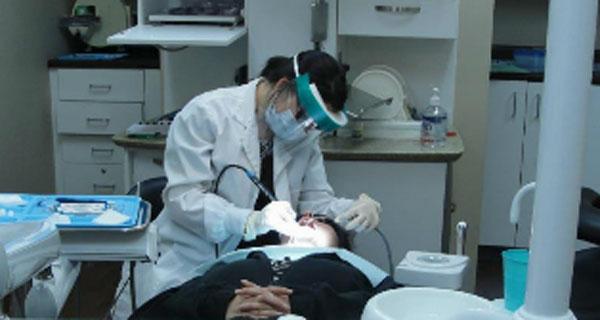
There are no public oral health programs in Ontario for low income adults who do not receive social assistance. Public Health Ontario reports that 1 in every 5 Ontarians does not visit a dentist because they cannot afford the cost.[3] Many people with decaying, broken and abscessed teeth have no choice but to visit hospital emergency rooms. In 2011 there were almost 57,000 visits to Ontario hospital emergency rooms for dental problems according to data from MOHLTC IntelliHEALTH Ontario.

In 2010 the Ontario government took an important step forward when it introduced the Healthy Smiles Ontario program which offers preventive and early treatment dental care for low income children under 18. Twenty-six Community Health Centres (CHC) are now offering oral health services as a result of this program, but a number of these centres are experiencing operating shortfalls as they were not provided operational funding by their public health units. Two of the CHC dental suites have had to close. Many CHCs and public health units report they have to turn children away because their family income is just above the $20,000 eligibility level. Yet the program reached only 12,000 children and was underspent by $4.2 million in 2011/12.

AOHC recommends:

  • Operational funding should be provided by public health units to all CHCs offering oral health services.
  • To ensure more low income children can benefit, MOHLTC should increase the income eligibility criteria so that the children of any family receiving the Ontario Child Benefit are eligible for treatment in the Healthy Smiles Ontario program.
  • As recommended by the Chief Medical Officer of Health, Dr. Arlene King, the government should better integrate low income oral health services and seek efficiencies to extend programs to other low income populations. AOHC calls for the five fragmented oral health programs to be unified into one quality program managed by MOHLTC. A logical first step would be to combine the programs for low income children: Healthy Smiles, CINOT and Ontario Works / Ontario Disability Support Program dental programs for children.
  • The province should develop a pilot program to extend publicly funded oral health care programs to low income adults. Community Health Centres and Aboriginal Health Access Centres are well positioned to play a strengthened role given their experience in working with marginalized and vulnerable people.
  • Pharmacare

Nearly one in every ten Canadians cannot afford to fill, renew or follow a prescription for medication. [4] Due to the ad hoc nature of prescription drug coverage, many people are not getting the medicine they need because of their economic situation. Community Health Centres and Aboriginal Health Access Centres witness this on a regular basis. We believe it is critical to make medicine more accessible in Canada in order to improve health outcomes, particularly for those living in poverty and on low incomes.

An economic study done for the Canadian Centre for Policy Alternatives found that implementation of universal pharmacare in Canada could generate savings for all Canadians of up to $10.7 billion in prescription drugs. [5] An upcoming report prepared for the Canadian Federation of Nurses will identify the cost savings for Ontario if a provincial pharmacare program were put in place.

  • AOHC recommends that Ontario take a lead role in developing a publicly funded provincial universal drug plan which ensures equitable access for everyone to prescription drugs.

Shift Ontario’s Healthcare System to an Upstream Approach

Ontario’s Poverty Reduction Strategy should recognize that the biggest barrier to good health is poverty. But our health care system is poorly equipped to address the most important determinants of health such as access to good nutrition, housing, adequate income, employment and education. Ontario needs to shift the health care system from a focus on treating sickness, to an upstream approach that prevents illnesses before they take hold.An upstream approach to promote health and wellbeing includes:

  • Investing in Community Health Centres and Aboriginal Health Access Centres which provide both medical services and a wide range of health promotion and community development services to vulnerable people in their communities.
  • The Canadian Index of Wellbeing in their 2012 report call for a strategy to expand access to Community Health Centres stating that this would benefit the long-term health of Canadians and that expanded access to the CHC model would help to reduce health disparities in Canada. The benefits would include: a better start for children, fewer avoidable hospital visits, better prevention and management of mental illnesses and complex chronic diseases, and improved opportunities for seniors to age at home. [6]
  •  MOHLTC and the LHINs implementing a population-needs based planning approach to the provision of primary healthcare services with an equity focus to ensure expanded access to CHCs and AHACs for vulnerable populations. Research has identified where the 15.2% of Ontarians with barriers to access to healthcare are located.
  • An effective Poverty Reduction Strategy with investments in the social determinants of health to ensure secure and livable incomes, safe housing, and accessible education and training programs.

3. Ensure Sufficient Public Revenues to Make the Needed Investments

These investments require a significant investment of public revenue during a period of deficit. We believe it is time to move beyond austerity and rebuild Ontario’s fiscal capacity. According to analysis done by the Canadian Centre for Policy Alternatives, Ontario loses $17 billion of revenue each year as a result of tax cuts made by governments since the mid- 1990s. [7]

In 2012 the Ontario government received the Drummond Report with a deficit elimination plan focused on cost cutting measures. The provincial government should now identify the revenue tools necessary within the context of a progressive tax system to ensure sufficient public revenues to invest effectively in Ontario’s Poverty Reduction Strategy. The work of the Canadian Centre for Policy Alternatives provides a menu of options to begin the discussion on how Ontario can raise additional revenues to help balance the budget and fund important health and social investments.Poverty reduction should be prioritized in every Ontario budget over the next five years to achieve the targets of reducing overall poverty by an additional 25% and eradicating deep poverty by 2018.

Conclusion

As primary health care providers AOHC’s 123 members know that treating illness is important. But we also need to look at the root causes of what makes people ill or well – income, education, employment, social supports, housing, nutrition and our environment. Public investment to address the social determinants of health is part of the shift required to move Ontario’s health system to an upstream focus which promotes the best possible health and wellbeing for everyone in the province. AOHC urges all parties in the Ontario Legislature to make a renewed commitment to taking the bold steps needed to make a real difference toward eradicating poverty for all Ontarians.*************** *****************Sources:[1] Steps to Equity, “Towards Equity in Access to Community-based Primary Health Care: A Population Needs-Based Approach” 2013 report for AOHC.[2]Block, Sheila. ”Rising Inequality, Declining Health: Health Outcomes and the Working Poor” Wellesley Institute, July 2013.http://www.wellesleyinstitute.com/publication/rising-inequality-declinin...[3] L Sadeghi, H. Manson and C Quinonez, “Report on Access to Dental Care and Oral Health Inequalities in Ontario”. Public Health Ontario, July 2012. http://www.publichealthontario.ca/en/eRepository/Dental_OralHealth_Inequ...[4]M.R. Law, L. Cheng, I.A. Dhalla, D. Heard and S.G. Morgan, “The effect of cost on adherence to prescription medications in Canada,” Canadian Medical Association Journal 184(3) (February 21, 2012): 297-302, http://www.cmaj.ca/content/184/3/297.full.pdf+html[5] M.-A. Gagnon, The Economic Case for Universal Pharmacare: Costs and Benefits of Publicly Funded Drug Coverage for all Canadians, Canadian Centre for Policy Alternatives & Institut de recherche et d’informations socio-économiques (2010),9https://s3.amazonaws.com/policyalternatives.ca/sites/default/files/uploa...[6] “How are Canadians Really Doing? 2012 Canadian Index of Wellbeing Report”https://uwaterloo.ca/canadian-index-wellbeing/sites/ca.canadian-index-we...[7]“Austerity is holding back Ontario’s economy’, by Hugh Mackenzie and Trish Hennessy. Toronto Star, March 20, 2013. ttp://www.thestar.com/opinion/commentary/2013/03/20/austerity_is_holding_back_...

Commission for the Review of Social Assistance in Ontario Report

Date: 
Tuesday, October 29, 2013

#Recommendations and next steps:

AOHC has a mixed review for the report released last week by Frances Lankin and Munir Sheikh, heads of The Commission for the Review of Social Assistance, called Brighter Prospects: Transforming Social Assistance in Ontario.

AOHC supports a number of the report's 108 recommendations related to employment supports and social assistance rules and will be calling on the government to implement these recommendations immediately. We also support the Commission's recommendation to immediately increase the single adult Ontario Works (OW) rate by $100 a month.

However, AOHC opposes recommendations related to the "streamlining" of social assistance special benefits and eliminating of the Special Diet Allowance. A guiding principle must be that rate increases should not be offset by cuts to other benefits.

Still other of the report's recommendations require more careful analysis to ensure that people would actually be better off as a result of the proposed changes.

This briefing note provides an overview of key recommendations, our response, as well as follow-up actions you can take to ensure the provincial government takes appropriate follow-up action. Despite concerns about some of the report's recommendations, it must not sit on the shelf. It's been over 20 years since the government reviewed Social Assistance and the worst thing that could happen is nothing at all.

#Recommendations that AOHC supports

Rates:

  • Immediate rate increase of $100/month recommended for single adults on OW as a down payment on adequacy while the system undergoes transformation (current rate is $599/month).

We support this recommendation. But it should not be funded partly through the elimination of Special Diet Allowance. (see below)

#Employment Supports:

  • Strengthened supports that enable people on social assistance to be employed and access Employment Ontario training programs.
  • Strengthened employment supports for people with disabilities.
  • Municipalities would become full partners with the Province in managing and planning employment services in their communities, with more municipalities designated by the Province as Employment Ontario deliverers.

If implemented effectively these changes should help support people transition off social assistance and into the workforce.

#Changes in Social Assistance Rules:

  • Increase the assets that people are allowed to keep before accessing OW to the higher level allowed now for ODSP clients (ie. $6,000 for singles, and $7,500 for couples).
  • Increase earnings exemptions allowing people to keep $200 of earned income before the 50% clawback kicks in.
  • Allow parents to keep 50% of their child support, and not require sole support parents to seek child support.

The recommendations will increase social assistance incomes; the Ontario government should implement them immediately.

  • Examine ways to make prescription drugs, dental and other health benefits available to all low income Ontarians.

#First Nations:

  • Recognizing that First Nations have unique needs and priorities, the report recommends First Nations have flexibility to define employment-related activities for social assistance clients in their communities. It also calls for tripartite discussions to explore a greater role for First Nations to design and manage social assistance in their communities.

#Recommendations AOHC does not support

#Rates:

  • As part of a new simplified rate structure an estimated 30 social assistance benefits would be "streamlined". This would include elimination of the Special Diet Allowance.

Rate increases should not be funded through cuts to other benefits and so we are concerned about the proposal to streamline 30 benefits. In particular we do not support cutting the Special Diet Allowance. This will undermine people's health. We seek assurance the proposed changes will leave people better off with incomes, indexed to inflation, that meet the real costs of living.

#Recommendations that require further analysis and consultation:

#Calculation of Rates:

  • The commission recommends the rate structure be simplified so there is one standard rate for all adults. People with disabilities would receive a disability supplement; families with children and sole-support parents would also receive a supplement.
  • Going forward the commission recommends the government set criteria and a methodology for setting social assistance rates. The commissioners propose that the government develop a new "Basic Measure of Adequacy" based on the costs of food, clothing and footwear, basic personal and household needs, transportation and shelter in different Ontario regions. The commission recommends that rates then be calculated in a way that achieves balance between three objectives: the new Basic Measure of Adequacy; fairness between social assistance clients and low wage workers; and financial incentives for social assistance clients to seek employment.

AOHC believes these recommendations require more study because it is unclear whether the methodology the Commission proposes will actually lead to people on social assistance being better off.

#Program Delivery:

  • The Commission has recommended that Ontario Works (OW) and the Ontario Disability Support Program (ODSP) be integrated into one program that provides income and services to all social assistance recipients. The new program would be delivered by municipalities and First Nations.
  • A Provincial Commissioner of Social Assistance would be appointed to work with municipalities, First Nations and other stakeholders to establish performance measures, and track progress with annual reports.

AOHC believes the recommendation to integrate OW and ODSP into one program requires further analysis and consultation with those who would be affected. For example, the ODSP Action Coalition has expressed concern that people with disabilities could be negatively affected by these changes. Bringing in a Commissioner of Social Assistance and setting performance measures for program delivery agents should ensure greater accountability in the system.

More on the Social Assistance Review Commission and its report.

AOHC's work on oral health featured in Toronto Star editorial

Date: 
Monday, April 1, 2013

Access to affordable oral health care is a priority issue for AOHC. We've been doing behind the scenes advocacy work over the past year with MOHLTC, and public advocacy with the Ontario Oral Health Alliance. On April 1st, the Toronto Star ran an editorial showcasing this work.

Read Toronto Star editorial 

Help us keep this story alive. Does your centre/team see first hand the challenges that low income people have accessing oral health care? Do your health practitioners have examples of the impact that poor oral health has on overall health and ability to work/participate in the community?

Here are 2 actions to take:

  • Take 2 minutes to send a short letter to the editor of your local paper
  • If you have a communications staff person, ask them to tweet a few comments on oral heath using hashtags #onpoli and #Ondental.

CHC and AHAC Oral Health Data Collection Report

Date: 
Wednesday, October 30, 2013

Read the results of AOHC’s 2013 oral health survey  in this report by  Nancy LaPlante. 

Highlights of the report:

  • 21 Centres responded that they offer oral health services. 14 of these have a monthly shortfall in funding.
  • Availability of oral health services ranges from once/month - 6 days/week.
  • Data collection is limited and inconsistent between Centres.  About 50% of respondents were dissatisfied with their access to oral health data, and the quality and amount of data.
  • Given that funding decisions are driven by data and health outcomes, there’s a need to improve data quality, reliability, access and consistency among oral health service providers.

The report was presented to PMC which decided to begin this work  by conducting over the next year some case studies of a few CHCs . We want to identify best practices on data management in order to measure treatment and health outcomes, and share the findings.