Héros de l’équité en santé : « Chaque jour, je dois faire partie de la solution »
Friday, October 20, 2017

Qu’est-ce que l’équité en santé? Quel est le travail qui la permet et qui la favorise? Pourquoi ce travail est-il si important? Au cours de la Semaine santé communautaire et bien-être 2017, les membres de l’ACSO démontrent comment ils mettent l’équité en santé au Centre. Dans le cadre de ces efforts, nous allons vous présenter une brochette exceptionnelle de Héros de l’équité en santé tout au long de la semaine (et au-delà). Apprenez à reconnaître les héros parmi vous, et ceux des communautés voisines, et célébrons et soutenons tous cet important travail qui aide chaque personne à atteindre le meilleur état de santé et de bien-être possible. Surveillez cet espace pour en savoir plus au sujet d’autres héros, et consultez les mots-clics #CHWW2017 et #HealthEquityHeroes dans les médias sociaux pour en savoir encore plus sur d’autres sujets.

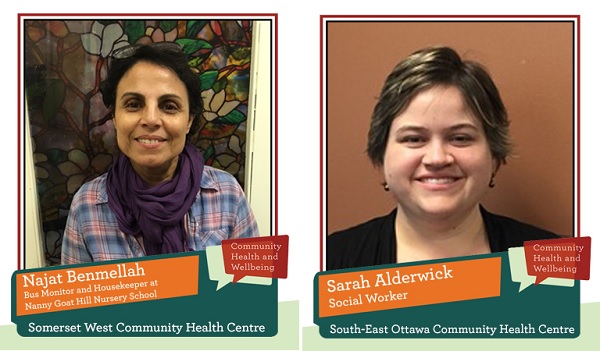
Quel est votre nom, depuis combien de temps travaillez-vous au centre et quel rôle y jouez-vous?Je m’appelle Najat Benmellah et je travaille au CSC de Somerset-Ouest à Ottawa depuis 13 ans en tant que monitrice d’autobus et aide ménagère à la prématernelle Nanny Goat Hill.

Que signifie pour vous l’équité en matière de santé et comment intégrez-vous la démarche d’équité en santé dans votre travail?En tant que monitrice d’autobus à la prématernelle Nanny Goat Hill, je suis souvent le principal lien entre les parents et l’école. En établissant des relations solides et confiantes avec les parents, j’ai pu mieux mettre en contact les familles vulnérables avec les ressources dont elles ont besoin, des services offerts à notre CSC, en passant par les dons de vêtements et les ressources de soutien parental. Ma relation avec les parents les a aussi encouragés à participer à nos ateliers mensuels sur le rôle parental et aux événements familiaux. Avoir des parents mobilisés, dotés des bonnes ressources, encourage chaque enfant à réaliser son plein potentiel.

Pourquoi adopter une approche d’équité en santé est-il si important pour votre travail?Quand j’ai déménagé à Ottawa, j’ai découvert que le CSC de Somerset-Ouest était un carrefour du quartier, où je pouvais participer à des groupes de jeu avec mes enfants, accéder aux services de soins de santé primaires et j’ai vite appris à connaître et les programmes de prématernelle Bon départ et j’y ai participé.

Il y a quelques années, j’ai rencontré une mère qui voulait inscrire son enfant à notre programme. Son enfant avait reçu un diagnostic d’autisme, et en tant que parent célibataire récemment divorcé, elle avait très peu de soutien. Nous avons travaillé avec cette maman pour s’assurer que tous les documents étaient prêts pour que son enfant puisse commencer le plus rapidement possible. En apprenant à connaître cette mère et en bâtissant une relation de confiance, j’ai pu la mettre en contact avec d’autres ressources essentielles, notamment des services de counselling à Somerset-Ouest, et des articles pratiques, comme des vêtements de notre armoire à dons. Cette maman a également pu apprendre les différentes techniques utilisées par le personnel de la prématernelle pour gérer le comportement de son enfant. Cela a eu un effet positif sur ce parent, car elle se sentait plus autonome et en contrôle de sa famille et savait qu’elle avait un système de soutien en place.

De quelle façon votre centre est-il en mesure de soutenir votre approche de l’équité en santé?Le centre nous permet de rencontrer les gens sur un pied d’égalité. Tous nos programmes tentent de réduire les obstacles éventuels qui empêcheraient les familles vulnérables d’avoir accès à nos services. Dans le programme de l’école maternelle, nous offrons le transport, pour que les enfants puissent y assister très facilement. La présence d’un moniteur dans l’autobus permet de s’assurer que le personnel peut vraiment communiquer avec les parents tous les jours. En construisant cette relation, nous sommes en mesure de rencontrer les parents là où ils sont et de procéder à des orientations et des connexions plus réussies.

__________________________________________________________________________

Quel est votre nom, depuis combien de temps travaillez-vous au centre et quel rôle y jouez-vous?Je m’appelle Sarah Alderwick. Je suis travailleuse sociale au Centre de santé communautaire du Sud-Est d’Ottawa depuis près d’un an. Actuellement, j’offre des programmes pour les personnes âgées à faible revenu et isolées.

Que signifie pour vous l’équité en matière de santé et comment intégrez-vous la démarche d’équité en santé dans votre travail?L’équité en santé signifie que chaque personne peut accéder aux services de santé dont elle a besoin, et que sa santé n’est pas affectée négativement en raison de son sexe, de sa race, de son revenu, etc.

Pourquoi adopter une approche d’équité en santé est-il si important pour votre travail?Dans mon travail, j’appuie l’équité en santé en réfléchissant constamment aux différents obstacles qui pourraient se dresser sur la route des personnes qui essaient d’accéder à un programme ou à un service. J’essaie de ne jamais tenir rien pour acquis lorsque je planifie des activités, et cela a une incidence sur tous les aspects de l’offre d’un programme. Par exemple, je peux avoir à assurer la liaison dans plusieurs langues et par divers moyens (par exemple, appeler les gens au lieu de me contenter d’une affiche), offrir de l’aide pour le transport, fournir de la nourriture aux participants et réfléchir à la façon de créer un espace sécuritaire pour divers groupes de personnes. L’un des moyens que j’utilise actuellement pour surmonter les obstacles consiste à amener les programmes directement aux personnes âgées là où elles vivent!

De quelle façon votre centre est-il en mesure de soutenir votre approche de l’équité en santé?Réfléchir à l’équité en santé est aussi important dans mon travail parce qu’il m’est inacceptable que les membres de notre communauté continuent de souffrir de problèmes de santé en raison de droits fondamentaux comme l’accès au transport, la sécurité alimentaire et le logement. Chaque jour, je dois faire partie de la solution. Accueillir quelqu’un au centre dans sa propre langue, lui remettre des tickets d’autobus pour se rendre à un programme, ou remplir un sac pour lui à partir du placard peut sembler n’être pas grand-chose, mais cela peut avoir un impact considérable.
 

Health Equity Heroes: 'Every day I need to be part of the solution'

Friday, October 20, 2017

What is health equity? What is the work that enables and promotes it? Why is this work so vital? During Community Health and Wellbeing Week 2017, AOHC members are demonstrating the ways that they put Health Equity at the Centre. As part of those efforts, we're going to bring you a stellar lineup of Health Equity Heroes all of this week (and beyond). Get to know the heroes among you, and the ones in neighbouring communities, and let's all celebrate and support this important work that helps everyone achieve their best possible health and wellbeing. Follow this space to read about more heroes, and check out the hashtags #CHWW2017 and #HealthEquityHeroes on social media to learn about even more.

What’s your name, how long have you worked at the centre, and what role(s) do you fill there?

My name is Najat Benmellah, and I’ve worked at Somerset West CHC in Ottawa for 13 years as Bus Monitor and Housekeeper at Nanny Goat Hill Nursery School.

What does health equity mean to you, and how do make a health equity approach part of your work?

As the bus monitor at the Nanny Goat Hill Nursery School, I am often the main connection between parents and the school. By building strong, trusting relationships with parents, I have been able to better connect vulnerable families to the resources that they need; from services offered at our CHC, clothing donations, and parenting supports. My relationship with parents has also helped to encourage their involvement in our monthly parenting workshops and family events. Having engaged parents, equipped with the right resources, helps to encourage each child to realize his or her full potential.

Why is taking a health equity approach so important to your work?

When I first moved to Ottawa, I discovered that Somerset West CHC is a neighbourhod hub, where I could attend playgroups with my children, access primary health care services, and I soon learned about and became involved in the Headstart Nursery School programs.

A few years ago, I met a mother who wanted to enroll her child in our program. Her child had been diagnosed with autism, and as a newly divorced single parent, she had very little support. We worked with this parent to make sure that all paperwork was in place, so her child could start as quickly as possible. By getting to know this parent and building trust, I was able to connect her with other much needed resources, including counselling services at Somerset West, and practical items, such as clothing from our donation cupboard. This mom was also able to learn about different techniques that staff at the nursery school were using to manage her child’s behaviour. This had a positive impact on this parent, as she felt more empowered and in control of her family, and knew she had a support system in place.

In what ways is your centre able to support your health equity approach?

The centre enables us to meet people on a level playing field. All of our programs attempt to reduce any possible barriers that would prevent vulnerable families from accessing our services. In the nursery school program, we offer transportation, to make it very easy for children to attend. Having a monitor on the bus helps to ensure that staff can really connect with parents every day. By building this relationship, we are able to meet parents where they are at and make more successful referrals and connections.

__________________________________________________________________________

What’s your name, how long have you worked at the centre, and what role(s) do you fill there?

My name is Sarah Alderwick. I have been a Social Worker at South-East Ottawa Community Health Centre for almost one year. Currently I am providing programs for low-income and isolated seniors.

What does health equity mean to you, and how do make a health equity approach part of your work?

Health equity means that everyone can access the health services they need, and that their health is not negatively affected because of their gender, race, income, etc.

Why is taking a health equity approach so important to your work?

In my work, I support health equity by constantly thinking about the different barriers that could exist for people trying to access a program or service. I try and never make assumptions when planning activities, and this impacts every aspect of offering a program. For example, I may have to do outreach in different languages and ways (for example call people instead of just relying on a poster), offer help with transportation, provide food for participants, and think about how to create a safe space for diverse groups of people. One way I currently address barriers is by bringing programs directly to seniors where they live!

In what ways is your centre able to support your health equity approach?

Thinking about health equity is so important in my work because it is unacceptable to me that members of our community continue to have poor health outcomes due to things that are basic human rights such as access to transportation, food security, and housing. Every day I need to be part of the solution. Welcoming someone to the centre in their own language, giving bus tickets to get to a program, or filling a bag for them from the food cupboard may seem like small things, but they can have a huge impact.

Health Equity Heroes: 'This is by far the most important work I do'

Thursday, October 19, 2017

What is health equity? What is the work that enables and promotes it? Why is this work so vital? During Community Health and Wellbeing Week 2017, AOHC members are demonstrating the ways that they put Health Equity at the Centre. As part of those efforts, we're going to bring you a stellar lineup of Health Equity Heroes all of this week (and beyond). Get to know the heroes among you, and the ones in neighbouring communities, and let's all celebrate and support this important work that helps everyone achieve their best possible health and wellbeing. Follow this space to read about more heroes, and check out the hashtags #CHWW2017 and #HealthEquityHeroes on social media to learn about even more.

What’s your name, how long have you worked at the centre, and what role(s) do you fill there?

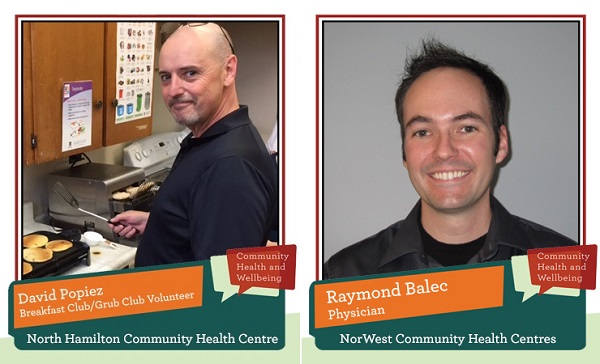
My name is David Popiez, and I’ve worked for a year as a volunteer at North Hamilton Community Health Centre’s Breakfast Program and Grub Club.

What does health equity mean to you, and how do make a health equity approach part of your work?

It means providing equal access to health care and social programs, regardless of your socioeconomic status. I volunteer at the centre’s programs to try and provide proper nutrition and knowledge to help youth be more independent, so they can learn important life skills.

Why is taking a health equity approach so important to your work?

It helps me to know I can make a difference. It is important that everyone has access to nutrition, and also that youth know that they are important. That way they can learn to care for and respect all people, and can develop skills and confidence to be contributors to society. This work is by far the most important work that I do, and it is the favourite part of my week.

In what ways is your centre able to support your health equity approach?

Watching Scott Paige and Jenna McHugh (Community Development Workers at North Hamilton CHC) – in the approach to how they deliver their programs, and how they interact with youth – has inspired me beyond words. They are amazing.

__________________________________________________________________________

What’s your name, how long have you worked at the centre, and what role(s) do you fill there?

I'm Raymond Balec, and I’ve worked for six years as a Family Physician at NorWest Community Health Centres.

What does health equity mean to you, and how do make a health equity approach part of your work?

A system with health equity is a system in which measures are taken to equalize the determinants of health. I make health equity a part of my work by offering health services to people who might not otherwise receive health care.

Why is taking a health equity approach so important to your work?

I have had a number of transgender patients tell me they had not previously been able to find a health care provider able to meet their needs for primary care. This has been rewarding.

In what ways is your centre able to support your health equity approach?

Our centre has supported a health equity approach to providing care to transgender patients by ensuring access to primary care providers and therapists experienced in addressing gender dysphoria, providing access to support groups, and by using inclusive language on all of our forms that ask about gender identity.