Commission for the Review of Social Assistance in Ontario Report

Date: 
Tuesday, October 29, 2013

#Recommendations and next steps:

AOHC has a mixed review for the report released last week by Frances Lankin and Munir Sheikh, heads of The Commission for the Review of Social Assistance, called Brighter Prospects: Transforming Social Assistance in Ontario.

AOHC supports a number of the report's 108 recommendations related to employment supports and social assistance rules and will be calling on the government to implement these recommendations immediately. We also support the Commission's recommendation to immediately increase the single adult Ontario Works (OW) rate by $100 a month.

However, AOHC opposes recommendations related to the "streamlining" of social assistance special benefits and eliminating of the Special Diet Allowance. A guiding principle must be that rate increases should not be offset by cuts to other benefits.

Still other of the report's recommendations require more careful analysis to ensure that people would actually be better off as a result of the proposed changes.

This briefing note provides an overview of key recommendations, our response, as well as follow-up actions you can take to ensure the provincial government takes appropriate follow-up action. Despite concerns about some of the report's recommendations, it must not sit on the shelf. It's been over 20 years since the government reviewed Social Assistance and the worst thing that could happen is nothing at all.

#Recommendations that AOHC supports

Rates:

  • Immediate rate increase of $100/month recommended for single adults on OW as a down payment on adequacy while the system undergoes transformation (current rate is $599/month).

We support this recommendation. But it should not be funded partly through the elimination of Special Diet Allowance. (see below)

#Employment Supports:

  • Strengthened supports that enable people on social assistance to be employed and access Employment Ontario training programs.
  • Strengthened employment supports for people with disabilities.
  • Municipalities would become full partners with the Province in managing and planning employment services in their communities, with more municipalities designated by the Province as Employment Ontario deliverers.

If implemented effectively these changes should help support people transition off social assistance and into the workforce.

#Changes in Social Assistance Rules:

  • Increase the assets that people are allowed to keep before accessing OW to the higher level allowed now for ODSP clients (ie. $6,000 for singles, and $7,500 for couples).
  • Increase earnings exemptions allowing people to keep $200 of earned income before the 50% clawback kicks in.
  • Allow parents to keep 50% of their child support, and not require sole support parents to seek child support.

The recommendations will increase social assistance incomes; the Ontario government should implement them immediately.

  • Examine ways to make prescription drugs, dental and other health benefits available to all low income Ontarians.

#First Nations:

  • Recognizing that First Nations have unique needs and priorities, the report recommends First Nations have flexibility to define employment-related activities for social assistance clients in their communities. It also calls for tripartite discussions to explore a greater role for First Nations to design and manage social assistance in their communities.

#Recommendations AOHC does not support

#Rates:

  • As part of a new simplified rate structure an estimated 30 social assistance benefits would be "streamlined". This would include elimination of the Special Diet Allowance.

Rate increases should not be funded through cuts to other benefits and so we are concerned about the proposal to streamline 30 benefits. In particular we do not support cutting the Special Diet Allowance. This will undermine people's health. We seek assurance the proposed changes will leave people better off with incomes, indexed to inflation, that meet the real costs of living.

#Recommendations that require further analysis and consultation:

#Calculation of Rates:

  • The commission recommends the rate structure be simplified so there is one standard rate for all adults. People with disabilities would receive a disability supplement; families with children and sole-support parents would also receive a supplement.
  • Going forward the commission recommends the government set criteria and a methodology for setting social assistance rates. The commissioners propose that the government develop a new "Basic Measure of Adequacy" based on the costs of food, clothing and footwear, basic personal and household needs, transportation and shelter in different Ontario regions. The commission recommends that rates then be calculated in a way that achieves balance between three objectives: the new Basic Measure of Adequacy; fairness between social assistance clients and low wage workers; and financial incentives for social assistance clients to seek employment.

AOHC believes these recommendations require more study because it is unclear whether the methodology the Commission proposes will actually lead to people on social assistance being better off.

#Program Delivery:

  • The Commission has recommended that Ontario Works (OW) and the Ontario Disability Support Program (ODSP) be integrated into one program that provides income and services to all social assistance recipients. The new program would be delivered by municipalities and First Nations.
  • A Provincial Commissioner of Social Assistance would be appointed to work with municipalities, First Nations and other stakeholders to establish performance measures, and track progress with annual reports.

AOHC believes the recommendation to integrate OW and ODSP into one program requires further analysis and consultation with those who would be affected. For example, the ODSP Action Coalition has expressed concern that people with disabilities could be negatively affected by these changes. Bringing in a Commissioner of Social Assistance and setting performance measures for program delivery agents should ensure greater accountability in the system.

More on the Social Assistance Review Commission and its report.

AOHC's work on oral health featured in Toronto Star editorial

Date: 
Monday, April 1, 2013

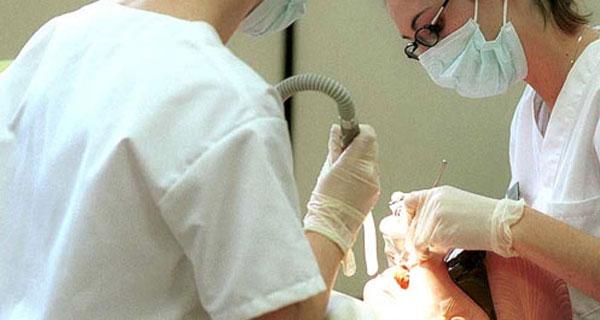
Access to affordable oral health care is a priority issue for AOHC. We've been doing behind the scenes advocacy work over the past year with MOHLTC, and public advocacy with the Ontario Oral Health Alliance. On April 1st, the Toronto Star ran an editorial showcasing this work.

Read Toronto Star editorial 

Help us keep this story alive. Does your centre/team see first hand the challenges that low income people have accessing oral health care? Do your health practitioners have examples of the impact that poor oral health has on overall health and ability to work/participate in the community?

Here are 2 actions to take:

  • Take 2 minutes to send a short letter to the editor of your local paper
  • If you have a communications staff person, ask them to tweet a few comments on oral heath using hashtags #onpoli and #Ondental.

CHC and AHAC Oral Health Data Collection Report

Date: 
Wednesday, October 30, 2013

Read the results of AOHC’s 2013 oral health survey  in this report by  Nancy LaPlante. 

Highlights of the report:

  • 21 Centres responded that they offer oral health services. 14 of these have a monthly shortfall in funding.
  • Availability of oral health services ranges from once/month - 6 days/week.
  • Data collection is limited and inconsistent between Centres.  About 50% of respondents were dissatisfied with their access to oral health data, and the quality and amount of data.
  • Given that funding decisions are driven by data and health outcomes, there’s a need to improve data quality, reliability, access and consistency among oral health service providers.

The report was presented to PMC which decided to begin this work  by conducting over the next year some case studies of a few CHCs . We want to identify best practices on data management in order to measure treatment and health outcomes, and share the findings.


New investments in 17 capital projects for Ontario’s CHC's and AHACs

Date: 
Sunday, June 30, 2013

#New investments in Community Health Centres and Aboriginal Health Access Centres will yield high returns.

TORONTO – April 3, 2013 - Today’s announcement from the provincial government, that it is making new investments in 17 capital projects for Ontario’s Community Health Centres (CHCs) and Aboriginal Health Access Centres (AHACs), means thousands more people will have access to a primary health care models that improve health, reduce health disparities and ease the pressures on the rest of the our health system. “CHCs and AHACs keep people –and the communities where they live– healthy and strong,” said Adrianna Tetley, Executive Director of Association of Ontario Health Centres which represents 105 community-governed primary health care organizations throughout the province. “The investment being made today will yield a very high return tomorrow, preventing larger amounts of money being spent on sickness treatment and care.” Tetley also noted that because CHCs and AHACs focus on populations whose health is most at risk: “This is also an investment in the fairer society Premier Wynne has promised us.” Tetley was speaking at an event at the Jamestown Hub, a satellite of the Rexdale CHC, one of 13 CHCs sites that now have the capital dollars to upgrade and expand their facilities. Other announcements of capital projects are happening today at Niagara Falls CHC and Quest CHC in St. Catharines. CHC stand out from other models of primary care because medical services are delivered under the same roof as health promotion and community development services. And because they address the social determinant of health, they are especially effective serving populations which have traditionally faced barriers accessing health services. AOHC also applauded the government announcement today that it will invest in upgrading and expanding facilities at four AHACs throughout the province. AHACs provide a combination of traditional healing, primary care, cultural programs, health promotion programs, community development initiatives, and social support services to First Nations, Métis and Inuit communities. “Both AHACs and CHCs can play a huge role in enabling the province’s new action plan to make Ontario the healthiest place to grow up and grow old,” said Tetley. “We hope this is just the beginning of a series of steps to expand access to community-governed models that do such a good job promoting the best possible health and wellbeing for everyone.” For more information on CHCs click here. Centres announced as of May 22, 2013 Rexdale CHC - Jamestown satellite Belleville Quinte West CHC - Trenton satellite CSC Chigamik CHC City of Kawartha Lakes CHC Gateway CHC Gizhewaadiziwin AHAC Niagara Falls CHC Noojmowin Teg AHAC Norwest CHC Quest CHC Rexdale CHC - Kipling Dixon satellite Sault Area Hospital Residential Withdrawal Management Services South Georgian Bay CHC South Riverdale CHC Southwest Ontario AHAC Waasegiizhig Nanaandawe'lyewigamig AHAC Woodstock and Area CHC